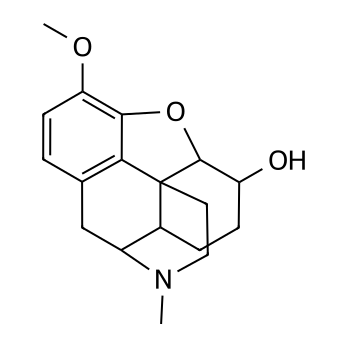
Dihydrocodeine is a semi-synthetic opioid analgesic of the morphinan class. Developed in Germany in 1908 and first marketed in 1911, it was originally created during efforts to find more effective antitussive medications to curb the spread of airborne diseases like tuberculosis. Slightly more potent than codeine, it is prescribed for moderate to severe pain, dyspnea, and cough suppression. It is commonly sold in combination formulations containing paracetamol or aspirin, which pose additional overdose risks if not accounted for.
ثنائي هيدروكودايين molecular structure diagram from the DrugsPRO substance library.
Also known as: Dhc, Df-118, Drocode, Parzone, Paramol, Dihydrocodeine bitartrate
Classification
Chemical: Medicine
Chemical: Morphinan
Chemical: Opioid
Psychoactive: Depressant
Tag: Habit-Forming
Tag: Sedative
Tag: substituted morphinan
Effects
Pain Relief
Physical Euphoria
Itchiness
Respiratory Depression
Sedation
Cough Suppression
Cognitive Euphoria
Anxiety Suppression
Compulsive Redosing
Euphoria
Mood Lift
Drowsiness
Dulled Perception
Increased Music Appreciation
Internal Hallucination
Cognitive Dysphoria
Decreased Libido
Sound Amplification
Routes of Administration
Oral
Dosage
Heavy: 150-200 mg
Light: 50 – 100 mg
Common: 100 – 150 mg
Strong: 150 – 200 mg
Threshold: 50 mg
Duration
Onset: 0.5-0.75 h
After Effects: 6-12 h
Peak: 1-2 h
Offset: 3-6 h
Total Duration: 4-8 h
Insufflated
Dosage
Heavy: 90+ mg
Light: 10-20 mg
Common: 20-60 mg
Strong: 60-90 mg
Threshold: 5 mg
Duration
Onset: 0.1-0.5 h
Peak: 0.5-1 h
Offset: 2-5 h
After Effects: 4-8 h
Total Duration: 3-6 h
Harm Reduction
Check interactions before mixing substances, pay attention to dose spacing and hydration, and treat all dosage guidance as approximate rather than guaranteed safe.
Sources
Substance data is aggregated from the following public harm-reduction and reference sources.
This static page is intended as a readable non-JS and prerender-friendly library export.
Get the full DrugsPRO experience
Open the interactive DrugsPRO app for search, saved items, interactions, and deeper harm reduction tools.
Get the PRO test kit. The simple, quick and reliable drug checking test kit. Visit https://protestkit.eu
Dihydrocodeine - دليل المواد DrugsPRO
Dihydrocodeine: Dihydrocodeine is a semi-synthetic opioid analgesic of the morphinan class. Developed in Germany in 1908 and first marketed in 1911, it was originally created during efforts to find more effective antitussive medications to curb the spread of airborne diseases like tuberculosis. Slig