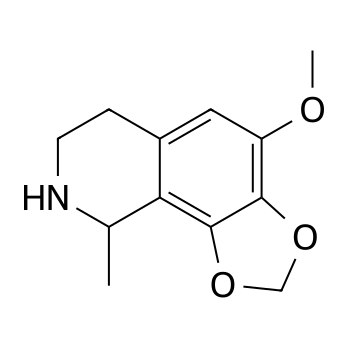
Anhalonine, also known as 1-methyl-6-methoxy-7,8-methylenedioxy-1,2,3,4-tetrahydroisoquinoline, is a tetrahydroisoquinoline alkaloid found in Lophophora williamsii (peyote) and many other cactus species. Peyote contains 3% anhalonine. The drug is known to be pharmacologically active and is said to be similar in its activity to anhalonidine. Arthur Heffter tried anhalonine via self-experimentation at an oral dose of 100 mg and found that it was inactive aside from mild sleepiness. Similarly, Prentiss and Morgan (P&M) tried pure anhalonine at doses of up to 200 mg without any effects. Anhalonine was isolated from peyote by Louis Lewin in 1888 and was bioassayed by Heffter with his report published in 1898. P&M's report was published in 1896.
Anhalonin molecular structure diagram from the DrugsPRO substance library.
Classification
Psychoactive: Psychedelic
Tag: Plant-based
Effects
Dilated Pupils
Nausea
Sedation
Pupil Dilation
Stimulation
Introspection
Analysis Enhancement
Euphoria
Confusion
Anxiety
Visual Distortions
Color Enhancement
Drifting
Auditory Distortion
Internal Hallucination
Routes of Administration
No route information available yet.
Harm Reduction
Check interactions before mixing substances, pay attention to dose spacing and hydration, and treat all dosage guidance as approximate rather than guaranteed safe.
Sources
Substance data is aggregated from the following public harm-reduction and reference sources.
This static page is intended as a readable non-JS and prerender-friendly library export.
Get the full DrugsPRO experience
Open the interactive DrugsPRO app for search, saved items, interactions, and deeper harm reduction tools.
Get the PRO test kit. The simple, quick and reliable drug checking test kit. Visit https://protestkit.eu
Anhalonine - DrugsPRO substansvejledning
Anhalonine: Anhalonine, also known as 1-methyl-6-methoxy-7,8-methylenedioxy-1,2,3,4-tetrahydroisoquinoline, is a tetrahydroisoquinoline alkaloid found in Lophophora williamsii (peyote) and many other cactus species. Peyote contains 3% anhalonine. The drug is known to be pharmacologically active and