Pipradrol is a central nervous system stimulant of the diphenylmethane class. Originally developed in the 1940s, it saw clinical use in the treatment of depression, fatigue, dementia, and ADHD, among other conditions. Despite demonstrating therapeutic efficacy across a range of psychiatric applications, its significant abuse potential and associated adverse effects led to its withdrawal from medical use and subsequent international scheduling beginning in the 1970s.
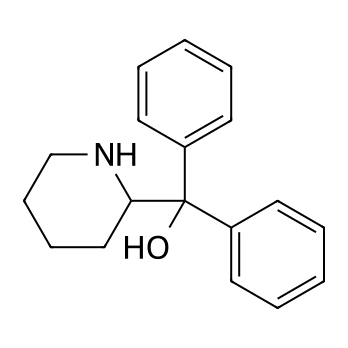
Pipradrol molecular structure diagram from the DrugsPRO substance library.
Also known as: Meratran, Alertonic
Classification
Psychoactive: Stimulant
Tag: Pipradrol homologue
Effects
Stimulation
Nausea
Seizure
Restlessness
Increased Heart Rate
Loss Of Appetite
Euphoria
Anxiety
Wakefulness
Thought Acceleration
Increased Focus
Irritability
Light Sensitivity
Increased Libido
Appetite Suppression
Auditory Hallucination
External Hallucination
Increased Sexuality
Routes of Administration
Insufflated
Dosage
Heavy: 60 mg
Strong: 60 mg
Light: Not established (avoid) mg
Common: Not established (avoid) mg
Threshold: Not established (avoid) mg
Duration
Onset: 0.33 h
Comeup: 0.67 h
Peak: 1 h
Offset: 2 h
Oral
Dosage
Light: 0.5 mg
Strong: 5-10 mg
Heavy: Above 10 mg
Common: 2-4 mg
Threshold: 0.5 mg
Duration
Onset: 0.25-1 h
Peak: 1-3 h
Offset: 4-8 h
After Effects: 6-24 h
Total Duration: 6-12 h
Harm Reduction
Check interactions before mixing substances, pay attention to dose spacing and hydration, and treat all dosage guidance as approximate rather than guaranteed safe.
Sources
Substance data is aggregated from the following public harm-reduction and reference sources.
This static page is intended as a readable non-JS and prerender-friendly library export.
Get the full DrugsPRO experience
Open the interactive DrugsPRO app for search, saved items, interactions, and deeper harm reduction tools.
Get the PRO test kit. The simple, quick and reliable drug checking test kit. Visit https://protestkit.eu
Pipradrol - DrugsPRO substance guide
Pipradrol: Pipradrol is a central nervous system stimulant of the diphenylmethane class. Originally developed in the 1940s, it saw clinical use in the treatment of depression, fatigue, dementia, and ADHD, among other conditions. Despite demonstrating therapeutic efficacy across a range of psychiatri