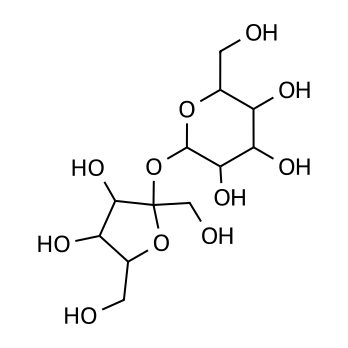
Sugar is a class of sweet-tasting, soluble carbohydrates, many of which are used in food. Simple sugars, also called monosaccharides, include glucose, fructose and galactose. Compound sugars, also called disaccharides or double sugars, are molecules made of two bonded monosaccharides; common examples are sucrose, lactose and maltose. White sugar is almost pure sucrose. During digestion, compound sugars are hydrolysed into simple sugars.
Azúcar molecular structure diagram from the DrugsPRO substance library.
Also known as: Sucrose, Saccarose, Saccharose, Sacarose
Classification
Tag: Adulterant
Effects
Increased Heart Rate
Stimulation
Alertness Enhancement
Talkativeness
Light Sensitivity
Routes of Administration
No route information available yet.
Harm Reduction
Check interactions before mixing substances, pay attention to dose spacing and hydration, and treat all dosage guidance as approximate rather than guaranteed safe.
Sources
Substance data is aggregated from the following public harm-reduction and reference sources.
This static page is intended as a readable non-JS and prerender-friendly library export.
Get the full DrugsPRO experience
Open the interactive DrugsPRO app for search, saved items, interactions, and deeper harm reduction tools.
Get the PRO test kit. The simple, quick and reliable drug checking test kit. Visit https://protestkit.eu
Sugar - Guía de sustancias de DrugsPRO
Sugar: Sugar is a class of sweet-tasting, soluble carbohydrates, many of which are used in food. Simple sugars, also called monosaccharides, include glucose, fructose and galactose. Compound sugars, also called disaccharides or double sugars, are molecules made of two bonded monosaccharides; common