Library

El tocino

Thebacon, or dihydrocodeinone enol acetate, is a semisynthetic opioid that is similar to hydrocodone and is most commonly synthesised from thebaine. Thebacon was invented in Germany in 1924, four years after the first synthesis of hydrocodone. Thebacon is a derivative of acetyldihydrocodeine, where only the 6–7 double bond is saturated. Thebacon is marketed as its hydrochloride salt under the trade name Acedicon, and as its bitartrate under Diacodin and other trade names. The hydrochloride salt has a free base conversion ratio of 0.846. Other salts used in research and other settings include thebacon's phosphate, hydrobromide, citrate, hydroiodide, and sulfate.
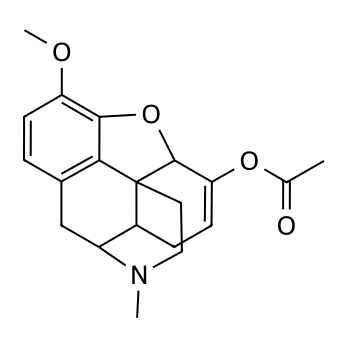

El tocino molecular structure
El tocino molecular structure diagram from the DrugsPRO substance library.

Classification

No data available for this section yet.

Effects

No data available for this section yet.

Routes of Administration

No route information available yet.

Harm Reduction

Check interactions before mixing substances, pay attention to dose spacing and hydration, and treat all dosage guidance as approximate rather than guaranteed safe.

Sources

Substance data is aggregated from the following public harm-reduction and reference sources.

Links

This static page is intended as a readable non-JS and prerender-friendly library export.

Get the full DrugsPRO experience

Open the interactive DrugsPRO app for search, saved items, interactions, and deeper harm reduction tools.

Get the PRO test kit. The simple, quick and reliable drug checking test kit. Visit https://protestkit.eu

Thebacon - Guía de sustancias de DrugsPRO

Thebacon: Thebacon, or dihydrocodeinone enol acetate, is a semisynthetic opioid that is similar to hydrocodone and is most commonly synthesised from thebaine. Thebacon was invented in Germany in 1924, four years after the first synthesis of hydrocodone. Thebacon is a derivative of acetyldihydrocodei

Related pages