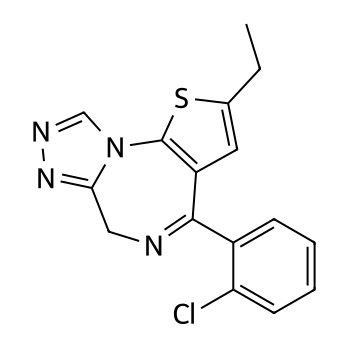
Metizolam is a synthetic depressant of the thienotriazolodiazepine class and the demethylated analogue of etizolam. A Japanese company patented it in 1995 as a possible anxiolytic, but it saw little to no human use before appearing as a grey-area research chemical in September 2015. Compared to etizolam, it is reportedly half as potent with a 60% longer half-life, producing similar anxiolytic, sedative, and muscle relaxant effects.
Metisolaam molecular structure diagram from the DrugsPRO substance library.
Also known as: Metiz, Desmethyletizolam
Classification
Chemical: Benzodiazepine
Psychoactive: Depressant
Tag: Anxiolytic
Tag: GABAergic
Tag: Habit-Forming
Tag: Muscle Relaxant
Tag: Research-Chemical
Tag: Tentative
Tag: Thienodiazepine
Tag: Thienotriazolodiazepine
Effects
Sedation
Respiratory Depression
Muscle Relaxation
Motor Impairment
Anxiolytic
Sedative
Anxiety Suppression
Thought Deceleration
Analysis Suppression
Information Processing Suppression
Euphoria
Compulsive Redosing
Disinhibition
Dulled Perception
Blurred Vision
Decreased Libido
Environmental Transfiguration
Morphing
Routes of Administration
Oral
Dosage
Heavy: 6 mg
Light: 1 – 2 mg
Common: 2 – 4 mg
Strong: 4 – 6 mg
Threshold: < 1 mg
Duration
Onset: 0.5-1.5 h
After Effects: 10-30 h
Harm Reduction
Check interactions before mixing substances, pay attention to dose spacing and hydration, and treat all dosage guidance as approximate rather than guaranteed safe.
Sources
Substance data is aggregated from the following public harm-reduction and reference sources.
This static page is intended as a readable non-JS and prerender-friendly library export.
Get the full DrugsPRO experience
Open the interactive DrugsPRO app for search, saved items, interactions, and deeper harm reduction tools.
Get the PRO test kit. The simple, quick and reliable drug checking test kit. Visit https://protestkit.eu
Metizolam - DrugsPRO ainejuhend
Metizolam: Metizolam is a synthetic depressant of the thienotriazolodiazepine class and the demethylated analogue of etizolam. A Japanese company patented it in 1995 as a possible anxiolytic, but it saw little to no human use before appearing as a grey-area research chemical in September 2015. Compa