Meclonazepam is a benzodiazepine derivative structurally related to clonazepam, first developed by Hoffmann-La Roche during the 1960s. It was initially investigated for potential antiparasitic applications, particularly in the treatment of schistosomiasis. Although it has appeared on the grey market as a recreational depressant, it has not achieved widespread use. As with other benzodiazepines, meclonazepam is considered habit-forming and carries the risk of physical dependence with repeated administration.
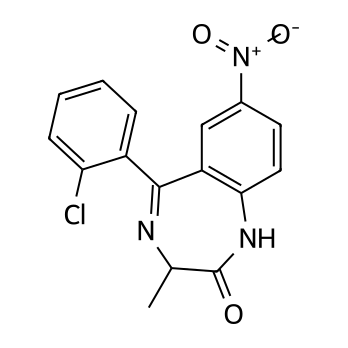
Meklonatsepaami molecular structure diagram from the DrugsPRO substance library.
Also known as: Methylclonazepam, 3-Methylclonazepam
Classification
Chemical: Benzodiazepine
Chemical: Medicine
Psychoactive: Depressant
Tag: 1,4-Benzodiazepine
Tag: Anticonvulsant
Tag: Anxiolytic
Tag: GABAergic
Tag: Habit-Forming
Tag: Muscle Relaxant
Tag: Sedative
Tag: Tentative
Effects
Sedation
Muscle Relaxation
Anxiolytic
Sedative
Dystaxia
Hypnotic
Anxiety Suppression
Amnesia
Motor Control Loss
Reduced Anxiety
Thought Deceleration
Euphoria
Dulled Perception
Disinhibition
Blurred Vision
Closed Eye Visuals
Color Enhancement
Open Eye Visuals
Routes of Administration
Oral
Dosage
Heavy: 6-12 mg
Common: 3 – 6 mg
Duration
Onset: 0.33-1 h
After Effects: 1-6 h
Harm Reduction
Check interactions before mixing substances, pay attention to dose spacing and hydration, and treat all dosage guidance as approximate rather than guaranteed safe.
Sources
Substance data is aggregated from the following public harm-reduction and reference sources.
This static page is intended as a readable non-JS and prerender-friendly library export.
Get the full DrugsPRO experience
Open the interactive DrugsPRO app for search, saved items, interactions, and deeper harm reduction tools.
Get the PRO test kit. The simple, quick and reliable drug checking test kit. Visit https://protestkit.eu
Meclonazepam - DrugsPRO aineopas
Meclonazepam: Meclonazepam is a benzodiazepine derivative structurally related to clonazepam, first developed by Hoffmann-La Roche during the 1960s. It was initially investigated for potential antiparasitic applications, particularly in the treatment of schistosomiasis. Although it has appeared on t