Library

Pyrovaleroni

Pyrovalerone was originally prescribed for chronic fatigue and obesity in the 1960s at daily doses of 60 mg (20 mg three times daily), but patients frequently developed tolerance and compulsive redosing, leading to discontinuation of its clinical use. Modern reports describe it as a stimulant with a profile between methylphenidate and MDPV, with strong drive to redose every 2-3 hours. Its pharmacology shows high affinity inhibition of dopamine and norepinephrine transporters, with negligible serotonin activity. The short half-life contributes to a sharp comedown marked by irritability, low mood, and insomnia. Accurate dosing is critical as pyrovalerone is active at low milligram amounts, making volumetric measurement safer than weighing single doses.

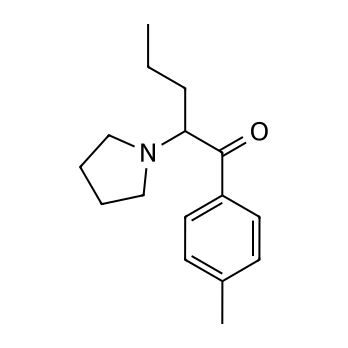
Pyrovaleroni molecular structure
Pyrovaleroni molecular structure diagram from the DrugsPRO substance library.

Also known as: Pyrovaleron, O-2371, Centroton, Thymergix, 4-methyl-β-keto-prolintane, Beta-keto-prolintane, pirovalerone

Classification

  • Chemical: Cathinone
  • Psychoactive: Stimulant
  • Tag: Pyrrolidine
  • Tag: Pyrrolidinophenone
  • Tag: Research-Chemical

Effects

  • Stimulation
  • Teeth Grinding
  • Increased Heart Rate
  • Loss Of Appetite
  • Dry Mouth
  • Tremor
  • Motivation Enhancement
  • Euphoria
  • Increased Focus
  • Anxiety
  • Compulsive Redosing
  • Irritability
  • Appetite Suppression
  • Light Sensitivity
  • Tactile Enhancement
  • Increased Libido
  • Disinhibition
  • Dehydration

Routes of Administration

Oral

Dosage

  • Threshold: 5–10 mg
  • Light: 10-25 mg
  • Common: 25-60 mg
  • Strong: 60-100 mg
  • Heavy: 100+ mg

Duration

  • Onset: 0.17-0.5 h
  • Comeup: 0.5-1 h
  • Peak: 0.5-2 h
  • Offset: 1-3 h
  • After Effects: 2-24 h
  • Total Duration: 3-6 h

Insufflated

Dosage

  • Threshold: 3–5 mg
  • Light: 5-15 mg
  • Common: 15-40 mg
  • Strong: 40-80 mg
  • Heavy: 80+ mg

Duration

  • Onset: 0.08-0.17 h
  • Comeup: 0.25-0.5 h
  • Peak: 0.25-1 h
  • Offset: 1-2.5 h
  • After Effects: 2-24 h
  • Total Duration: 2.5-5 h

Rectal

Dosage

  • Threshold: 3–5 mg
  • Light: 5-15 mg
  • Common: 15-35 mg
  • Strong: 35-70 mg
  • Heavy: 70+ mg

Duration

  • Onset: 0.17-0.33 h
  • Comeup: 0.33-0.67 h
  • Peak: 0.5 h
  • Offset: 1-3 h
  • After Effects: 2-24 h

Intravenous

Dosage

  • Threshold: 0.5–1 mg
  • Light: 1-5 mg
  • Common: 5-15 mg
  • Strong: 15-30 mg
  • Heavy: 30+ mg

Duration

  • Onset: 0.02-0.05 h
  • Comeup: 0.03-0.08 h
  • Peak: 0.05-0.5 h
  • Offset: 0.5-2 h
  • After Effects: 2-24 h
  • Total Duration: 2-4 h

Harm Reduction

Check interactions before mixing substances, pay attention to dose spacing and hydration, and treat all dosage guidance as approximate rather than guaranteed safe.

Sources

Substance data is aggregated from the following public harm-reduction and reference sources.

Links

This static page is intended as a readable non-JS and prerender-friendly library export.

Get the full DrugsPRO experience

Open the interactive DrugsPRO app for search, saved items, interactions, and deeper harm reduction tools.

Get the PRO test kit. The simple, quick and reliable drug checking test kit. Visit https://protestkit.eu


Pyrovalerone - DrugsPRO aineopas

Pyrovalerone: Pyrovalerone was originally prescribed for chronic fatigue and obesity in the 1960s at daily doses of 60 mg (20 mg three times daily), but patients frequently developed tolerance and compulsive redosing, leading to discontinuation of its clinical use. Modern reports describe it as a st

Related pages