Kava is a psychoactive beverage and herbal product derived from the rootstock of Piper methysticum, a tropical shrub native to the western Pacific. It has been consumed in Pacific Island communities for over 3,000 years in social, ceremonial, and religious contexts. Its active constituents, known as kavalactones, produce anxiolytic, sedative, and mildly euphoric effects often compared to alcohol without significant cognitive impairment. The beverage characteristically causes a temporary numbing sensation in the mouth.
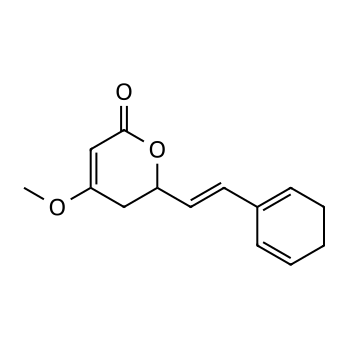
Cava molecular structure diagram from the DrugsPRO substance library.
Also known as: Awa, Ava, Waka, Wati, Sakau, Kava Kava
Classification
Psychoactive: Depressant
Tag: Anxiolytic
Tag: GABAergic
Tag: Habit-Forming
Tag: Muscle Relaxant
Tag: Sedative
Effects
Muscle Relaxation
Sedation
Stimulation
Motor Impairment
Respiratory Depression
Anxiolytic
Euphoria
Anxiety Suppression
Focus Enhancement
Sociability Enhancement
Reduced Anxiety
Amnesia
Tactile Suppression
Visual Acuity Enhancement
Dulled Perception
Disinhibition
Blurred Vision
Open Eye Visuals
Routes of Administration
Oral
Dosage
Heavy: 200 mg
Light: 50 – 70 mg
Common: 70 – 150 mg
Strong: 150 – 200 mg
Threshold: 50 mg
Duration
Onset: 0.33-0.5 h
Peak: 3 h
After Effects: 9-18 h
Harm Reduction
Check interactions before mixing substances, pay attention to dose spacing and hydration, and treat all dosage guidance as approximate rather than guaranteed safe.
Sources
Substance data is aggregated from the following public harm-reduction and reference sources.
This static page is intended as a readable non-JS and prerender-friendly library export.
Get the full DrugsPRO experience
Open the interactive DrugsPRO app for search, saved items, interactions, and deeper harm reduction tools.
Get the PRO test kit. The simple, quick and reliable drug checking test kit. Visit https://protestkit.eu
Kava - Treoir substaint DrugsPRO
Kava: Kava is a psychoactive beverage and herbal product derived from the rootstock of Piper methysticum, a tropical shrub native to the western Pacific. It has been consumed in Pacific Island communities for over 3,000 years in social, ceremonial, and religious contexts. Its active constituents, kn