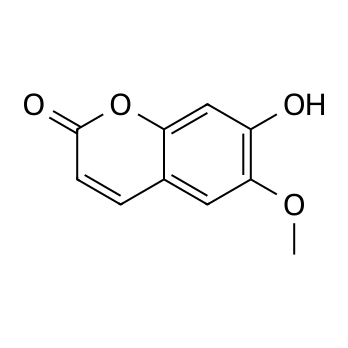
Scopoletin is a coumarin found in the root of plants in the genus Scopolia such as Scopolia carniolica and Scopolia japonica, in chicory, in Artemisia scoparia, in the roots and leaves of stinging nettle, in the passion flower, in Brunfelsia, in Viburnum prunifolium, in Solanum nigrum, in Datura metel, in Mallotus resinosus, and in Kleinhovia hospita. It can also be found in fenugreek, vinegar, some whiskies and in dandelion coffee. A similar coumarin is scoparone. Scopoletin is highly fluorescent when dissolved in DMSO or water and is regularly used as a fluorimetric assay for the detection of hydrogen peroxide in conjunction with horseradish peroxidase. When oxidized, its fluorescence is strongly suppressed.
Scopoletine molecular structure diagram from the DrugsPRO substance library.
Classification
Chemical: Tropane
Tag: Alkaloid
Effects
Nausea
Stimulation
Loss Of Appetite
Lightheadedness
Dry Mouth
Increased Heart Rate
Euphoria
Increased Focus
Anxiety
Compulsive Redosing
Contentment
Paranoia
Open Eye Visuals
Appetite Suppression
Disinhibition
Internal Hallucination
Dehydration
Increased Libido
Routes of Administration
No route information available yet.
Harm Reduction
Check interactions before mixing substances, pay attention to dose spacing and hydration, and treat all dosage guidance as approximate rather than guaranteed safe.
Sources
Substance data is aggregated from the following public harm-reduction and reference sources.