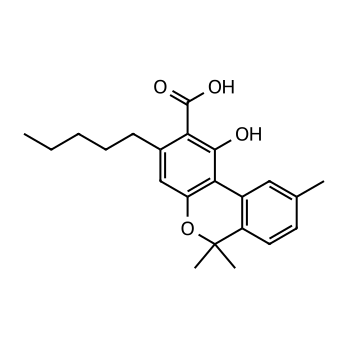
CBNA is classified as Cannabinoid (largely non-intoxicating; precursor to CBN). It belongs to the Phytocannabinoid acid; oxidative degradation product of Δ9-THCA/Δ9-THC chemical class.
CBNA molecular structure diagram from the DrugsPRO substance library.
Also known as: Cannabinolic acid, 2-carboxy-cannabinol
Classification
Chemical: Cannabinoid
Effects
Muscle Relaxation
Sedation
Pain Relief
Physical Comfort
Dry Mouth
Lightheadedness
Anxiety Suppression
Drowsiness
Euphoria
Routes of Administration
Oral
Dosage
Heavy: 100 mg +
Light: 10 – 25 mg
Common: 25 – 50 mg
Strong: 50 – 100 mg
Threshold: 5 mg
Duration
Onset: 0.5-1.5 h
Peak: 1.5-3 h
Offset: 3-5 h
After Effects: 5-12 h
Total Duration: 4-8 h
Sublingual
Dosage
Heavy: 60 mg +
Light: 5 – 15 mg
Common: 15 – 30 mg
Strong: 30 – 60 mg
Threshold: 2 mg
Duration
Onset: 0.17-0.5 h
Peak: 1-2.5 h
Offset: 2.5-4 h
After Effects: 4-10 h
Total Duration: 3.5-7 h
Harm Reduction
Check interactions before mixing substances, pay attention to dose spacing and hydration, and treat all dosage guidance as approximate rather than guaranteed safe.
Sources
Substance data is aggregated from the following public harm-reduction and reference sources.
No external data sources listed for this substance yet.
Links
This static page is intended as a readable non-JS and prerender-friendly library export.
Get the full DrugsPRO experience
Open the interactive DrugsPRO app for search, saved items, interactions, and deeper harm reduction tools.
Get the PRO test kit. The simple, quick and reliable drug checking test kit. Visit https://protestkit.eu
CBNA - przewodnik po substancji DrugsPRO
CBNA: CBNA is classified as Cannabinoid (largely non-intoxicating; precursor to CBN). It belongs to the Phytocannabinoid acid; oxidative degradation product of Δ9-THCA/Δ9-THC chemical class.