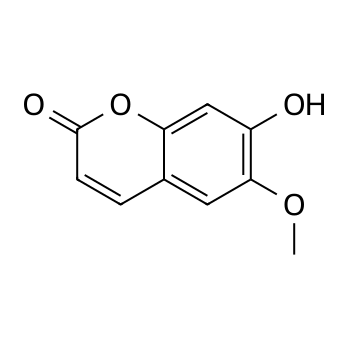
Scopoletin is a coumarin found in the root of plants in the genus Scopolia such as Scopolia carniolica and Scopolia japonica, in chicory, in Artemisia scoparia, in the roots and leaves of stinging nettle, in the passion flower, in Brunfelsia, in Viburnum prunifolium, in Solanum nigrum, in Datura metel, in Mallotus resinosus, and in Kleinhovia hospita. It can also be found in fenugreek, vinegar, some whiskies and in dandelion coffee. A similar coumarin is scoparone. Scopoletin is highly fluorescent when dissolved in DMSO or water and is regularly used as a fluorimetric assay for the detection of hydrogen peroxide in conjunction with horseradish peroxidase. When oxidized, its fluorescence is strongly suppressed.
Escopoletina molecular structure diagram from the DrugsPRO substance library.
Classification
Chemical: Tropane
Tag: Alkaloid
Effects
Nausea
Dry Mouth
Stimulation
Loss Of Appetite
Lightheadedness
Sedation
Euphoria
Increased Focus
Compulsive Redosing
Anxiety
Cognitive Euphoria
Confusion
Appetite Suppression
Dulled Perception
Disinhibition
Dehydration
Open Eye Visuals
Internal Hallucination
Routes of Administration
No route information available yet.
Harm Reduction
Check interactions before mixing substances, pay attention to dose spacing and hydration, and treat all dosage guidance as approximate rather than guaranteed safe.
Sources
Substance data is aggregated from the following public harm-reduction and reference sources.
This static page is intended as a readable non-JS and prerender-friendly library export.
Get the full DrugsPRO experience
Open the interactive DrugsPRO app for search, saved items, interactions, and deeper harm reduction tools.
Get the PRO test kit. The simple, quick and reliable drug checking test kit. Visit https://protestkit.eu
Scopoletine - Guia de substâncias DrugsPRO
Scopoletine: Scopoletin is a coumarin found in the root of plants in the genus Scopolia such as Scopolia carniolica and Scopolia japonica, in chicory, in Artemisia scoparia, in the roots and leaves of stinging nettle, in the passion flower, in Brunfelsia, in Viburnum prunifolium, in Solanum nigrum,