Library

AEM

AEM is an extremely rare and poorly documented phenethylamine psychedelic first synthesized by Alexander Shulgin and described in PiHKAL as entry #1. Shulgin reported that doses exceeding 220 mg produced few to no psychoactive effects, classifying it as essentially inactive. The compound's inactivity discouraged Shulgin from synthesizing further alpha-position-extended mescaline analogues (such as alpha-propylmescaline or alpha-butylmescaline). Research in rodents suggests these extended homologues are non-hallucinogenic. Due to the complete lack of human psychoactive data and unknown safety profile, AEM should be considered an inactive research chemical with no established use case.
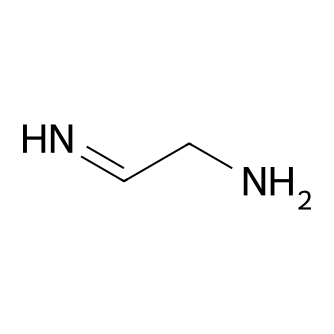
AEM molecular structure
AEM molecular structure diagram from the DrugsPRO substance library.

Also known as: Α-ethylmescaline, Α-ethyl-3,4,5-trimethoxyphenethylamine, Alpha-Ethylmescaline

Classification

  • Chemical: Phenethylamine
  • Tag: Inactive
  • Tag: Research-Chemical
  • Tag: Scaline

Effects

  • No Significant Psychoactive Effects Reported

Routes of Administration

Oral

Dosage

  • Threshold: No activity observed up to 220 mg (sub‑threshold testing only)

Duration

No data available for this section yet.

Harm Reduction

Check interactions before mixing substances, pay attention to dose spacing and hydration, and treat all dosage guidance as approximate rather than guaranteed safe.

Sources

Substance data is aggregated from the following public harm-reduction and reference sources.

Links

This static page is intended as a readable non-JS and prerender-friendly library export.

Get the full DrugsPRO experience

Open the interactive DrugsPRO app for search, saved items, interactions, and deeper harm reduction tools.

Get the PRO test kit. The simple, quick and reliable drug checking test kit. Visit https://protestkit.eu

AEM - DrugsPRO vodič po substancah

AEM: AEM is an extremely rare and poorly documented phenethylamine psychedelic first synthesized by Alexander Shulgin and described in PiHKAL as entry #1. Shulgin reported that doses exceeding 220 mg produced few to no psychoactive effects, classifying it as essentially inactive. The compound's inac

Related pages