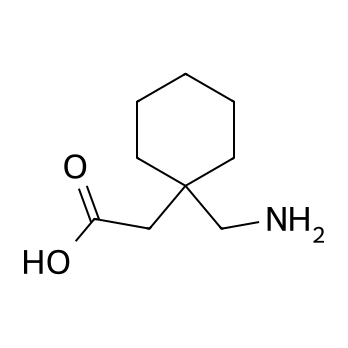
Gabapentin is a depressant substance of the gabapentinoid class and a structural analogue of the neurotransmitter GABA. Originally developed in the 1970s to treat epilepsy, it was first approved in the United States in 1993 and is now widely prescribed for neuropathic pain, postherpetic neuralgia, and partial-onset seizures. Its anxiolytic, sedative, and mildly euphoriant properties have led to recreational use, though tolerance is known to develop rapidly.
Габапентин molecular structure diagram from the DrugsPRO substance library.
Also known as: Gralise, Gabbies, Gabarone, Neurontin, CI-945, DM-1796, Gabapentinum
Classification
Chemical: Gabapentinoid
Chemical: Medicine
Psychoactive: Depressant
Tag: Anticonvulsant
Tag: Anxiolytic
Tag: GABA analogue
Tag: GABAergic
Tag: Habit-Forming
Tag: Muscle Relaxant
Tag: Sedative
Effects
Sedation
Muscle Relaxation
Seizure Suppression
Anxiolytic
Sedative
Dystaxia
Anxiety Suppression
Thought Deceleration
Cognitive Euphoria
Emotion Suppression
Dizziness
Amnesia
Increased Music Appreciation
Increased Libido
Blurred Vision
Closed Eye Visuals
Decreased Libido
Depth Distortion
Routes of Administration
Oral
Dosage
Heavy: 1500+ mg
Light: 200 – 600 mg
Common: 900 - 1500 mg
Strong: 1500 mg
Threshold: 200 mg
Bioavailability: 2400 mg
Duration
Onset: 0.5-2 h
Peak: 2-3 h
After Effects: 1-6 h
Harm Reduction
Check interactions before mixing substances, pay attention to dose spacing and hydration, and treat all dosage guidance as approximate rather than guaranteed safe.
Sources
Substance data is aggregated from the following public harm-reduction and reference sources.
This static page is intended as a readable non-JS and prerender-friendly library export.
Get the full DrugsPRO experience
Open the interactive DrugsPRO app for search, saved items, interactions, and deeper harm reduction tools.
Get the PRO test kit. The simple, quick and reliable drug checking test kit. Visit https://protestkit.eu
Gabapentin - DrugsPRO vodič o supstancama
Gabapentin: Gabapentin is a depressant substance of the gabapentinoid class and a structural analogue of the neurotransmitter GABA. Originally developed in the 1970s to treat epilepsy, it was first approved in the United States in 1993 and is now widely prescribed for neuropathic pain, postherpetic