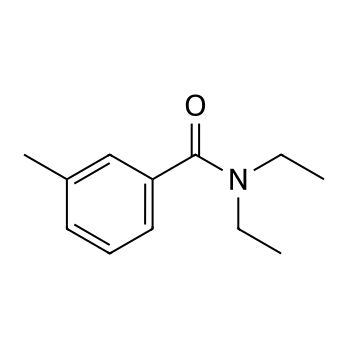
N,N-Diethyl-meta-toluamide, also called diethyltoluamide or DEET, is the oldest active ingredient, and one of the most effective and common, in commercial insect repellents. It is a colorless to slightly yellow oil intended to be applied to the skin or to clothing and provides protection against mosquitoes, biting flies, ticks, fleas, chiggers, and leeches.
DEET molecular structure diagram from the DrugsPRO substance library.
Also known as: Pesticide-DEET
Classification
Tag: Not psychoactive
Effects
No data available for this section yet.
Routes of Administration
No route information available yet.
Harm Reduction
Check interactions before mixing substances, pay attention to dose spacing and hydration, and treat all dosage guidance as approximate rather than guaranteed safe.
Sources
Substance data is aggregated from the following public harm-reduction and reference sources.
This static page is intended as a readable non-JS and prerender-friendly library export.
Get the full DrugsPRO experience
Open the interactive DrugsPRO app for search, saved items, interactions, and deeper harm reduction tools.
Get the PRO test kit. The simple, quick and reliable drug checking test kit. Visit https://protestkit.eu
DEET - DrugsPRO substansguide
DEET: N,N-Diethyl-meta-toluamide, also called diethyltoluamide or DEET, is the oldest active ingredient, and one of the most effective and common, in commercial insect repellents. It is a colorless to slightly yellow oil intended to be applied to the skin or to clothing and provides protection again