Research article
Study: test kits are linked with safer use
PRO Test and Chemical Safety sp. z o.o. Exploratory community survey 2025–2026
Published online: 21 September 2026
This article has been translated to English.
Key finding
People with drug-checking test kit experience report using a wider variety of harm-reduction strategies.
Abstract. Among the 694 respondents who answered whether they had ever used a drug-checking test kit or laboratory service, 41% had previous experience. The other 59% wanted to test but had not done so before, giving us a group of intended first-time testers to compare with experienced respondents. Respondents with previous experience reported using more harm-reduction practices. They also reported using more kinds of substances and experiencing more harms, so we cannot tell whether drug checking itself encourages safer behaviour, whether people who test are better informed, or whether they simply use more substances and face more risk. Harm-reduction practices also appeared in broader strategies, including groups of practices connected with snorting, avoiding mixtures, and preparing for use. In the small, self-selected follow-up, 65% of tested samples with recorded ingestion data were reportedly ingested and 35% were not.
Introduction
The Drug Checking Community Report (DCCR2025) is a project launched in 2025 to explore the role of drug checking test kits as a harm-reduction method. The survey was announced publicly in PRO Test’s call for participants .
Drug checking is increasingly recognised as a public-health and harm-reduction approach. Brunt’s 2017 EMCDDA background paper describes its role in tailored prevention and risk communication, and the EUDA drug checking overview now places it within a wider public-health response. Yet the evidence is weighted towards staffed services; comparatively little research addresses how people use test kits at home for psychoactive-substance analysis.
Winstock, Wolff and Ramsey (2001) questioned whether simple colour-reagent kits could create an artificial sense of safety and thereby encourage drug use. DCCR2025 addresses that behavioural question: whether prior test kit use is related to safer use practices, reported harms and decisions after testing.
Murray et al. (2003) examined the analytical limitations of a particular three-reagent kit, rather than user behaviour. Since then, home-testing practice has expanded to include multi-reagent approaches, test strips and newer reference material; these methods can be more comprehensive than the model Murray evaluated, but they remain presumptive screening tools. DCCR2025 does not evaluate chemical accuracy; it focuses on how people use test kits and the behaviours that accompany their use.
This exploratory report describes a community survey collected through an online form and offline events. It asks how prior drug checking experience and reported substance use relate to harm-reduction practices, harms, motivations to test, and the decisions respondents report after receiving a result.
Conflict of interest
The survey and report author, Jerzy Afanasjew, is co-owner of Chemical Safety sp. z o.o., the company operating the PRO Test store and manufacturing drug checking test kits. This relationship is relevant to the survey’s subject and should be considered when reading the findings.
Sources for this section. [1] Brunt (2017) · [2] EUDA overview · [3] Winstock et al. (2001) · [4] Murray et al. (2003) · [5] Alonzo (2022) . Full citations appear in References.
Methodology
DCCR2025 consists of an online and offline, two-part community survey. A total of 738 Survey 1 submissions were collected from 2025-04-04 to 2026-01-29 and reconciled to 737 deduplicated respondents. Survey 1 covers substance use, harms, safer use practices, drug checking and expectations. Survey 2 is an optional follow-up on testing outcomes, reported here per tested sample.
For the main comparison, respondents were grouped by whether they said they had ever used a drug-checking test kit or laboratory service: previous experience or no previous experience. This was a comparison within the survey, not an experiment.
Survey 1 contained 14 questions and Survey 2 contained seven. Most used single-choice or multiple-choice responses; only a few asked for short free-text details, such as country, typical amount or route, and a test-result description.
The questionnaire was based on survey templates shared by the TEDI Network and the Neutravel organisation. We thank both organisations for sharing their work.
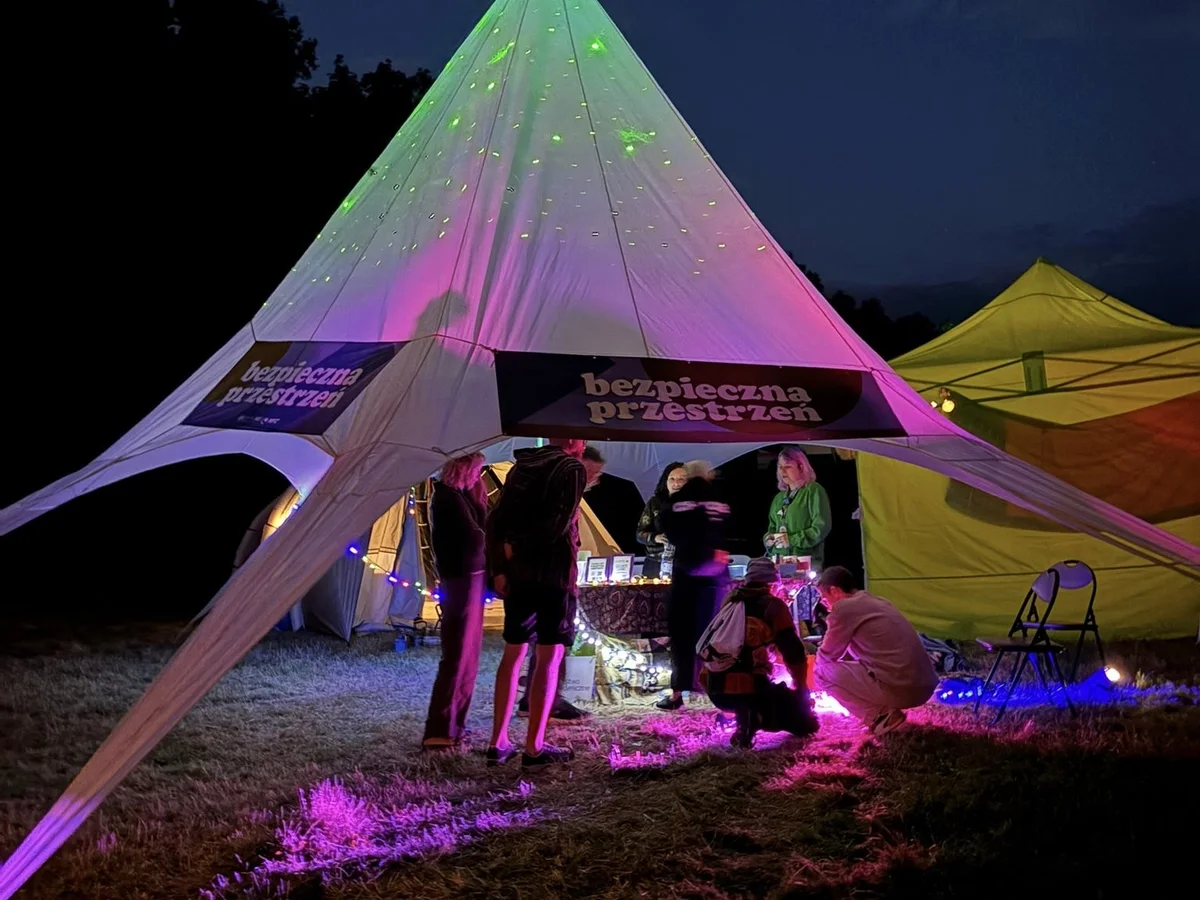
Offline Survey 1 collection took place at music festivals in summer 2025. Jerzy Afanasjew (PRO Test) collected responses with the harm-reduction project Bezpieczna Przestrzeń at the LAS and Uroczysko festivals; SIN (Społeczna Inicjatywa Narkopolityki), a non-profit organisation, collected further offline responses in Poland. We thank both organisations and the festival organisers who made in-person collection possible. 47 retained respondents came through offline/event-based collection.
The survey was available online throughout the collection period, following PRO Test’s public call for participants and invitations to PRO Test customers, including printed fliers. 690 retained respondents came through the online route.
Every participant was offered a free single-use identification test. A simple contest question at the end of the survey gave one participant who completed both surveys the opportunity to win a full laboratory-analysis service.
Challenges
Several question descriptions changed during fieldwork, one English-language Survey 2 question was defective, and a Raspberry Pi connection problem affected offline collection at one event. Survey data collected in multiple MySQL databases were merged and reconciled. At this exploratory stage, these issues have not been judged to change the overall interpretation; further details are provided later in this report.
Privacy and data handling
A participant-created code was used only to reconnect Survey 1 and follow-up responses. No names or contact details were collected. The online form did not require JavaScript, and printed fliers supported participation without contact collection. Although PRO Test customers were invited to take part, no customer data were collected or used to match a respondent to a customer record.
Results are descriptive and exploratory. The full research backend applies a minimum-cell rule; this article suppresses any category with fewer than five respondents. Personal codes, dates of birth, free text and respondent-level records are absent from this article app.
Funding. DCCR2025 was self-funded by Chemical Safety sp. z o.o.


Summary
- Of 694 respondents, 41% had previous drug-checking experience. The other 59% wanted to test but had not done so before.
- Respondents with previous experience reported 8.4 harm-reduction practices on average, compared with 6.2 among intended first-time testers. They also reported using more kinds of substances and experiencing more harms.
- Harm-reduction practices appeared in broader strategies rather than as random individual tips. This suggests that respondents deliberately used ways to reduce risk even when their substance use involved risky behaviour.
Broader strategies. Harm-reduction practices appeared in recognisable groups. Practices connected with snorting formed one strategy, avoiding mixtures formed another, while hydration, researching substances, planning and starting with a small dose formed a third. This may seem intuitive, but it shows that respondents deliberately combined methods to reduce risk.
Previous testing and safer use. Among the 694 respondents, 41% had previous drug-checking experience. The other 59% wanted to test but had not done so before. Respondents with previous experience reported 8.4 harm-reduction practices on average, compared with 6.2 among intended first-time testers. Checking ingredients before use was reported by 65% and 21%, respectively.
What we cannot yet tell. Respondents with previous drug-checking experience also reported using more kinds of substances and experiencing more harms. We therefore cannot tell whether testing encourages safer behaviour, whether people who test are already better informed, or whether they use more substances and encounter more risk. The survey shows a relationship, not which factor causes the other.
Next edition. A future edition should recruit a comparison group of people who do not use drug checking and do not intend to start. The demographic and substance-use profiles collected in this survey can help make that comparison more informative. The interactive figures above also provide detailed information about harm-reduction practices for individual substances.
Data quality and limitations
- Self-selected respondents and mixed online/offline recruitment limit generalisability.
- The personal code is a weak identifier; deduplication and anomalous codes are documented in the research backend.
- The English form did not display the drug checking frequency question.
- Survey 2 has few, self-selected follow-up respondents and samples.
Declarations
Conflict of interests. Jerzy Afanasjew is co-owner of PRO Test and Chemical Safety sp. z o.o., which makes drug checking test kits. PRO Test supported recruitment and survey delivery.
Funding. DCCR2025 was self-funded by Chemical Safety sp. z o.o.
Ethics and privacy. A participant-created code linked Survey 1 and follow-up responses; no names or contact details were collected. Customers were invited to participate, but customer records were not collected or linked. The article reports aggregate results only.
Data availability. Publication tables come from the private research backend; underlying records are not publicly released.
Acknowledgements. Dr Jan Szczypiński was initially announced as a co-author but, owing to other obligations, contributed only as an adviser. We thank him for his support.
References
- Brunt TM. Drug checking as a harm reduction tool for recreational drug users: opportunities and challenges. EMCDDA background paper; 2017. EUDA record .
- European Union Drugs Agency. Drug checking. EUDA topic overview . Accessed 2026.
- Winstock AR, Wolff K, Ramsey J. Ecstasy pill testing: harm minimization gone too far? Addiction. 2001;96:1139–1148. doi:10.1046/j.1360-0443.2001.96811397.x .
- Murray RA, Doering PL, Boothby LA, et al. Putting an Ecstasy Test Kit to the Test: Harm Reduction or Harm Induction? Pharmacotherapy. 2003;23:1238–1244. doi:10.1592/phco.23.12.1238.32704 .
- Alonzo CA. Portable testing techniques for the analysis of drug materials. WIREs Forensic Science. 2022;4:e1461. doi:10.1002/wfs2.1461 .
- Maghsoudi N, Tanguay J, Scarfone K, et al. Drug checking services for people who use drugs: a systematic review. Addiction. 2022;117:532–544. doi:10.1111/add.15734 .
- Peacock A, et al. Profile and correlates of colorimetric reagent kit use among people who use ecstasy/MDMA and other illegal stimulants in Australia. International Journal of Drug Policy. 2021;97:103334. doi:10.1016/j.drugpo.2021.103334 .