


Psychedelic trip: set, setting and harm reduction
A trip is the state a person is in after taking a psychoactive substance. Perception of the world changes, incoming stimuli intensify, and thoughts and emotions transform and take on new content — all caused by the substance acting on the nervous system.
Your current mental and emotional state is amplified. Unusual associations appear: people, objects, places, situations, past experiences. But it can also happen that the psychedelic world stops being a source of enjoyment and spiritual elevation and turns into a waking nightmare you want to escape as fast as possible.
So remember: although difficult experiences on psychedelics are rare, psychedelic journeys are unpredictable and can take a very unpleasant course.
Difficult experiences and unpleasant states can occur after LSD, psilocybin, mescaline, salvinorin A, DMT, 2C-X, DOX, NBOMe or MXE. Sometimes also after alcohol, cannabis, stimulants (such as MDMA or amphetamine) or new psychoactive substances, which are less predictable, last longer or are more toxic.
Think about where and when you use. Is it getting in the way of your daily life? If so, you should ease off. If you cannot manage it on your own, do not be afraid to ask for help.
You decide where, how, with whom and what you take. Respect other people’s decisions. Everyone makes their own.
Set & setting
The term, popularised by Timothy Leary, refers to the mindset, circumstances and surroundings that accompany a psychedelic experience.
Set — the individual’s own resources
- Sense of safety — internally, with yourself and with your surroundings
- Physical state — illness, injury, whether you have eaten, time since the last meal
- Mental state — mood, difficult events, illness
- Knowledge, life philosophy, view of the world and of yourself
- Experience with taking substances
- Choice of dose
Setting — conditions, surroundings and situational context
- Place — home, flat, nature, festival, club, city
- Level of safety — familiarity with the place, security at the venue or event, access to a safe space
- Basic needs covered — comfortable temperature, access to water, food and a toilet
- Quality of your relationships with the people around you or your travel companions
- Presence of a tripsitter, or a dedicated ceremony
- Volume and type of music
Proper preparation and attention to the points above will have a positive effect on the experience.
Do not trip if:
- you are experiencing mental health problems or your mood is low — a psychedelic experience amplifies your inner state, both thoughts and emotions;
- you are not properly prepared or your surroundings are not favourable, for example you are among people who may react badly to your state, or you feel this is not the right moment.
People with mood disorders or psychotic disorders — or with a predisposition to them — should give up such experiments entirely. The occurrence of similar problems among close relatives also matters. Know your own tendencies.
If you decide to trip:
- Be careful, because you may end up with a substance other than the one you expected — always test your substances.
- Gather information about the substance: source, effects, consequences, contraindications, risks and how to avoid them.
- Try to take it in relaxed conditions, where you feel comfortable and have no obligations. Psychedelics increase your sensitivity to the surroundings — be somewhere you feel safe, with people you trust.
- Watch the dose, especially during your first experiments. Start with a quarter of a portion and observe the effects. Do not start with microdots or drops, as they are harder to measure.
- Take them only on special occasions. Psychedelics amplify the state you are already in: feeling good can lead to bliss, and discomfort to despair.
- Remember that psychedelics can cause hallucinations and distort your perception of reality. Things may sometimes seem other than they are.
- Avoid mixing psychoactive substances. The experience can become too intense.
- If you start to feel your experience is becoming too unpleasant, try to relax. Remind yourself that your state is temporary, that it is the effect of a substance and that everything will return to normal. Go to a quiet place; being with someone can also help.
Adverse states
Sensations after taking psychedelics are highly individual and it is impossible to list them all. We must remember, however, that psychedelics amplify every inner state, including the difficult ones, which can bring on:
- Distortions of time and space — usually not a problem, but in unfavourable conditions this can cause a feeling of being lost and a fear that the state will never pass.
- Waves of anxiety — amplification of hidden and unfounded fears, panic and paranoia, fear of going mad, suicidal thoughts.
- An urge to escape — a sense of being trapped and fixation on the need to get out of the state.
- Impaired motor coordination — unpleasant bodily sensations or loss of the sense of the body (detachment from it), over-arousal, confused thoughts and speech.
- Somatic symptoms — nausea, hot flushes, accelerated heart rate, raised blood pressure, dilated pupils, tachycardia, altered sense of one’s own body.
To avoid the states above, we need to pay particular attention to our sense of safety — both inner and outer — and to the resources and skills that can positively influence the experience (see: set & setting).
When you feel bad:
- If you cannot help yourself, find someone around you who can — for example a tripsitter, or someone you trust.
- Try to identify what is lowering your comfort and sense of safety, then remove it. If it is the people you are with, find another place and company. If it is a need such as hunger or thirst, meet it.
- Make yourself comfortable: water, something sweet, the right temperature.
- Find your “safe harbour” — a place where you will feel well.
- Remember that it is normal to feel bad sometimes, and that the unpleasant state is caused by the substance and will soon pass.
When you want to help
Different forms of help should be considered, depending on how intense the unpleasant experience is for the person you want to help. Start by giving them a safe space, through full supervision until the symptoms have completely subsided, and up to physical restraint if the person poses a danger to themselves or others.
- Minimise external stimuli — take the person somewhere comfortable, quiet and safe, without noise, loud music, crowds or harsh lighting.
- Reassure them that the state they are in comes from taking a substance and that the symptoms will pass in time.
- Suggest a change of surroundings, such as going outside or for a walk — provided the person is ready for it and conditions allow. Movement and having something to do is calming, whereas lying down with eyes closed can intensify the symptoms.
- Assess your own strength and skills realistically. Are you genuinely able to help this person effectively and keep them safe? This is not the time for experiments, for playing the hero or for playing shaman.
- Do not hesitate to call for help. If you feel unsure and know you cannot provide adequate help, and there is nobody else around who could, call an ambulance and be sure to tell the doctor what the person has taken.
Test your substances first
It happens that instead of the expected substance there is a different, unexpected one, or a whole mixture. Some of them differ in dose, and some can be very dangerous. This is especially true of substitutions such as NBOMe, which are active in micrograms and have a far narrower safety margin than LSD.
Always try to check your substances. Reagent tests will not tell you the dose, but they will distinguish the most common substitutions:
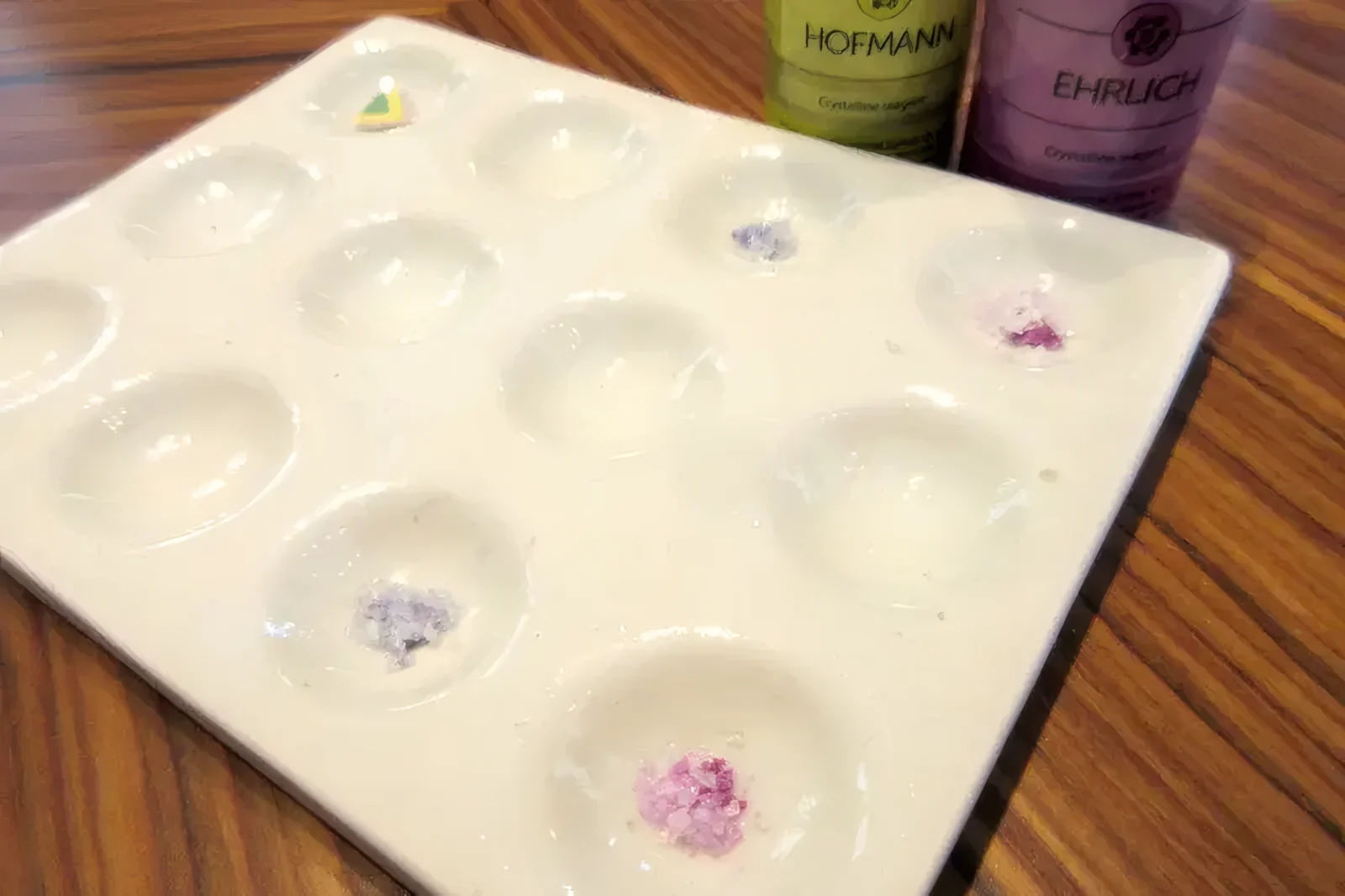
- LSD identification kit — Ehrlich and Hofmann reagents
- 2C-B identification kit
- Full range of drug tests and reagents
Source
This text comes from the article “TRIP (Psychodeliczna Podróż)” published by SIN — Społeczna Inicjatywa Narkopolityki, and is republished here with permission. This version has been translated from Polish and links to the relevant test kits have been added.
In a life-threatening situation call 112.
No test result can tell you a substance is safe. No substance is 100% safe.This article is published for harm reduction purposes. It does not encourage the use of psychoactive substances and does not replace medical advice.