Does the bleach test work on methamphetamine or cocaine?
The bleach test shows you how fast a powder sinks through household bleach and whether it changes colour on the way down. That is enough to flag a few specific cuts, and nothing like enough to tell you there is cocaine in the glass at all. It was a reasonable thing to do in 1976. The people who popularised it had written it off by 1980, and the cuts that matter most today were not on the market yet.
The bleach test measures dissolving and sinking, not cocaine
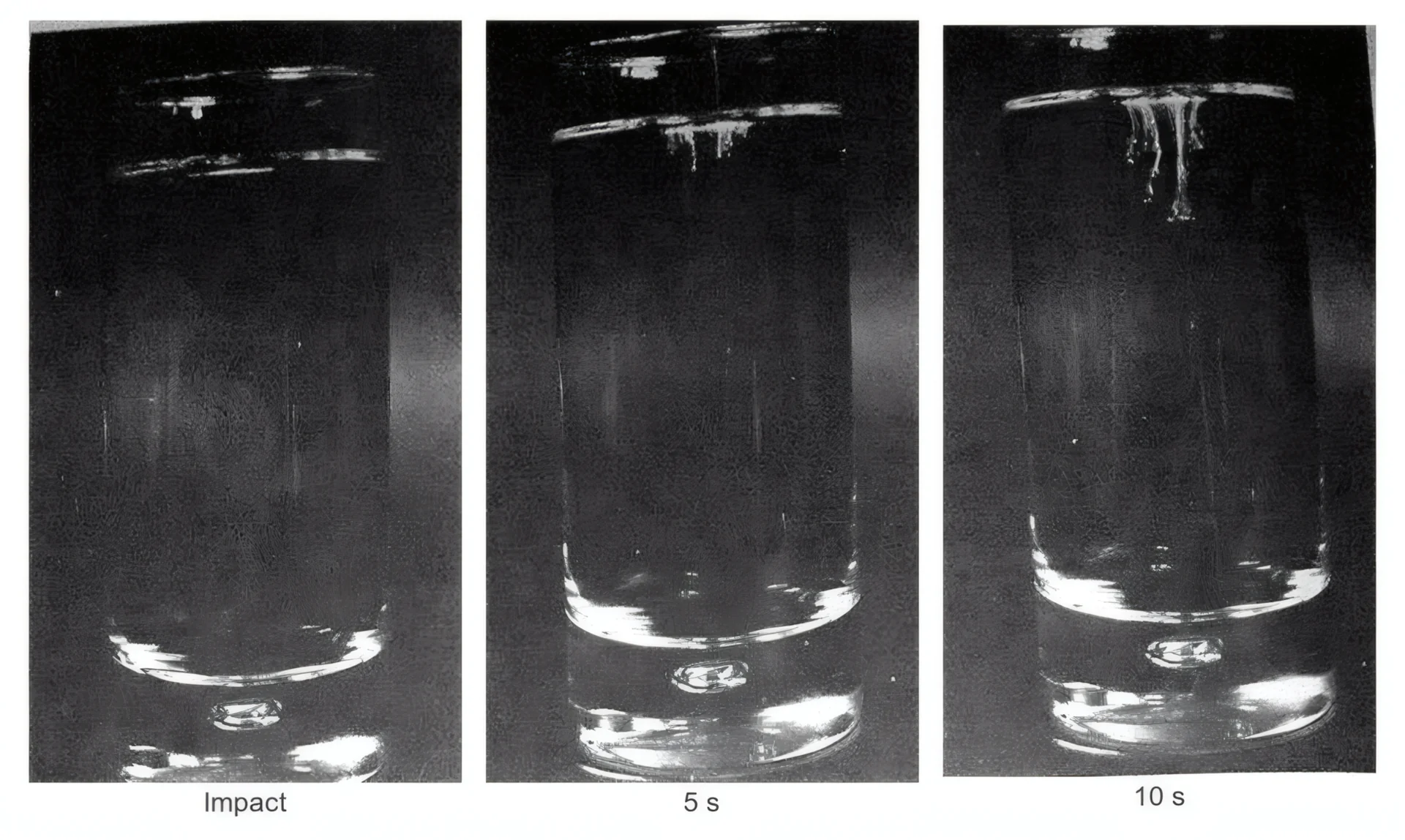
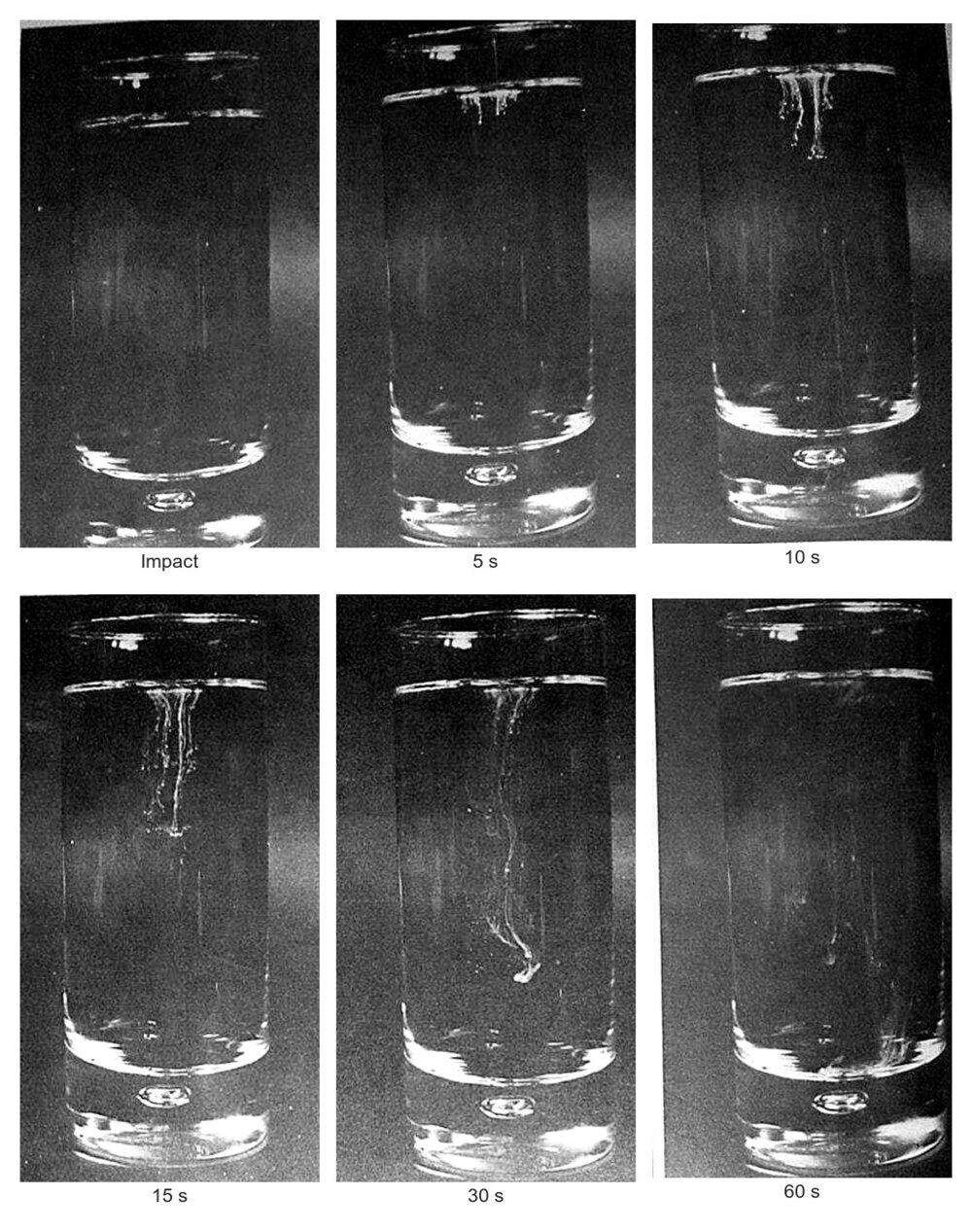
The method is fixed and simple. Fill a tall clear glass, six inches or so, with fresh bleach at room temperature, leave it until the liquid is completely still, then drop a small sample onto the surface from a clean blade and watch. Refined cocaine hesitates for ten to fifteen seconds, then trails slowly down to the bottom. That trail is the entire signal. You are watching how quickly something dissolves and how it falls, which is a property shared by a great many white powders.
Cocaine on bleach at impact, 5, 10, 15, 30 and 60 seconds. From David Lee’s Cocaine Handbook.
The Cocaine Handbook abandoned the bleach test by 1980
David Lee’s Cocaine Handbook is where most people met this test, and it is also where the test is abandoned. In 1976, it records, the bleach test gave a buyer a reasonable idea of what an unknown sample was worth. By 1980 it could no longer confirm that cocaine was present at all. The reason it gives is that sellers learn what buyers check.
How common cocaine cuts behave in bleach
The handbook tested cocaine against its common adulterants one at a time and recorded what each did in the glass. It also named, for every cut, which test identifies it best. For some the answer is bleach. For others the book sends you elsewhere, Read that carefully before trusting a clean-looking glass.
What each cut does in bleach, and which test the book prefers for it
Cut
Behaviour in bleach
What the book says about it
Caffeine
Falls quickly, settles on the bottom, little trail
The book’s clearest bleach result
Lidocaine
Falls quickly and settles; the free base stays on top
The book’s clearest bleach result
Inositol
Falls first, dragging the cocaine down with it
Bleach is the right test for it
Procaine, benzocaine, tetracaine
Particles and trails turn brick-red or orange
Procaine is the most common cut today
Quinine
Stays on top, turns pink then red
Rare now
Mannitol, lactose
Falls quickly, then trails like cocaine
Bleach is the wrong test; the book sends you to melting point or foil burn
Levamisole
Sinks much like cocaine
Not in the book, common today
Fentanyl, nitazenes
Nothing visible at all
Most lethal
The cuts that actually turn up are known. Across 790 samples sold as cocaine where cocaine was detected, the substances recorded alongside it most often were procaine, then caffeine, then levamisole, followed by phenacetin. Two of the top three are local anaesthetics, That matters if you judge a sample by how much it numbs. Those are figures for other people’s samples. They show what cocaine on the market usually carries, which is the reason to test what you have.
Bleach can flag procaine, caffeine and some local anaesthetics
The bleach test has one narrower use. The revised chapter rates caffeine and lidocaine base as the most distinguishable of all the cuts it tried, with lidocaine hydrochloride and inositol close behind. Separately, the synthetic benzoic esters turn brick-red or orange in bleach water, as free bases or as salts: procaine, benzocaine, tetracaine and butacaine. Cocaine does not do that, and neither does lidocaine, because lidocaine is not a benzoic ester. Since procaine is the single most common thing found alongside cocaine in lab samples, remember that colour.
The flip side is in the same table. For mannitol the book sends you to a melting point test and for lactose to a foil burn, because both fall quickly and then trail like cocaine. Those are the cuts the glass flatters.
Bleach cannot distinguish methamphetamine from MSM
Methamphetamine hydrochloride dissolves readily, so there is no slow trail to interpret in the first place. The classic meth cut, MSM, is also a white crystalline solid that goes into solution, which means the glass gives you the same picture either way. Anyone judging meth by how it behaves in bleach is reading a result that the method cannot produce.
Bleach cannot confirm cocaine or measure purity
None of it tells you there is cocaine in the glass. The book records a sample that contained only lidocaine and lactose, with no cocaine whatsoever, which danced on the surface and left an orange residue. It fails the other way too: hygrine oil in poorly refined cocaine makes a sample hesitate on the surface even longer than pure cocaine would, producing what the book calls an excellent looking test that may not reflect the true quality at all.
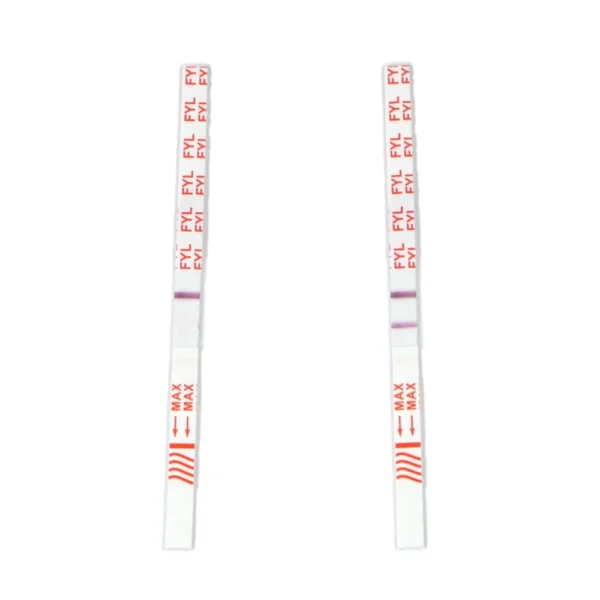
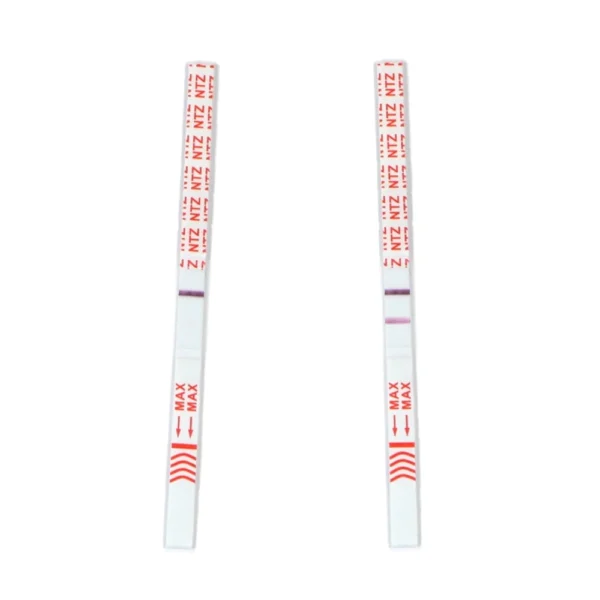
The reading is subjective by the book’s own admission, since different testers looking at the same glass reach different conclusions. It gives you no number, so nothing about how much of the sample is cut. Levamisole was not on the market when this was written and sinks much as cocaine does. Fentanyl and the nitazenes are active in amounts far too small to move anything in a liquid, which is rare in cocaine and still worth ten seconds, because a strip settles it outright and no amount of watching a glass ever will.
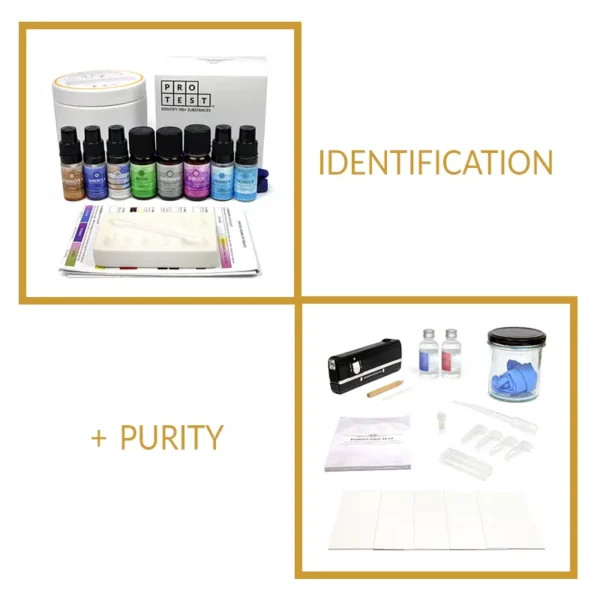
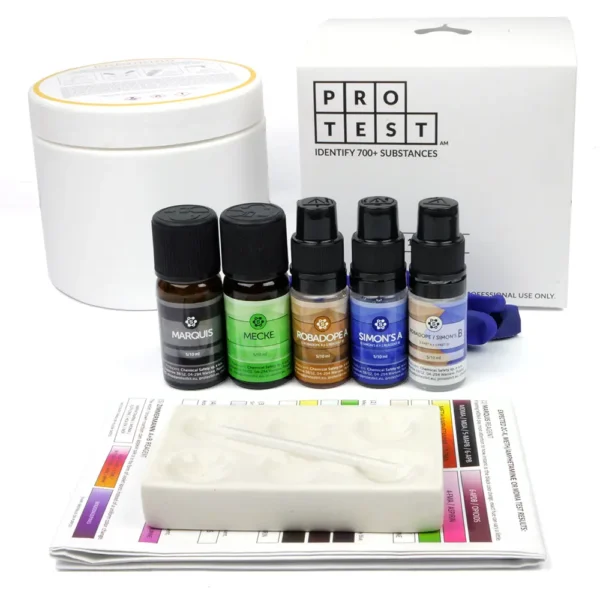
Reagents, testing cards and strips answer what bleach cannot
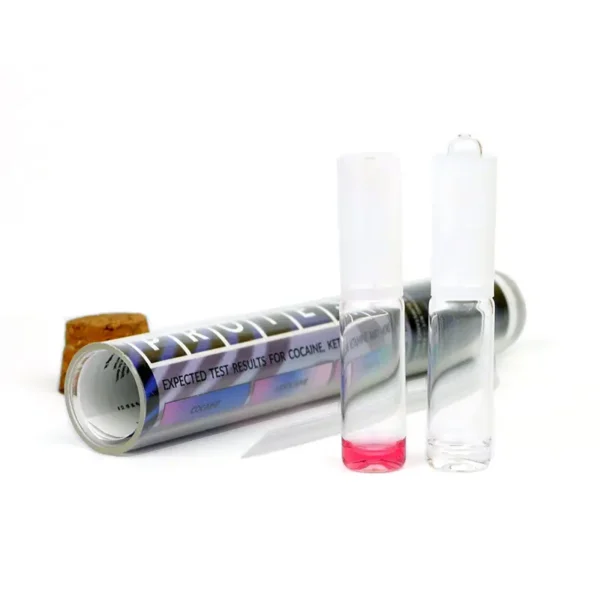
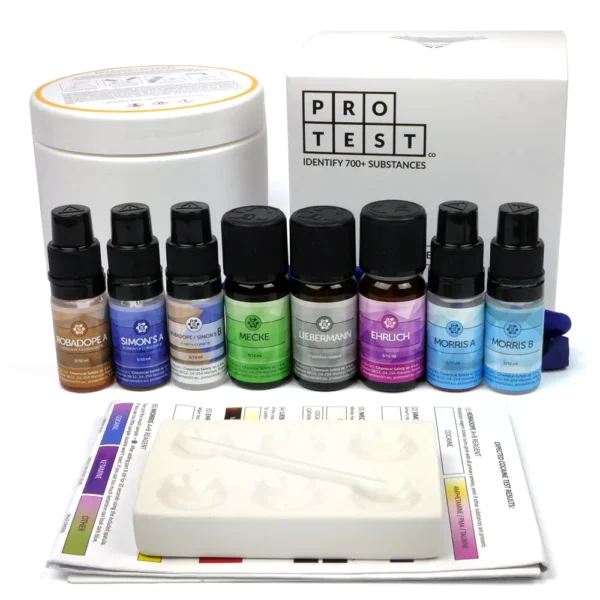
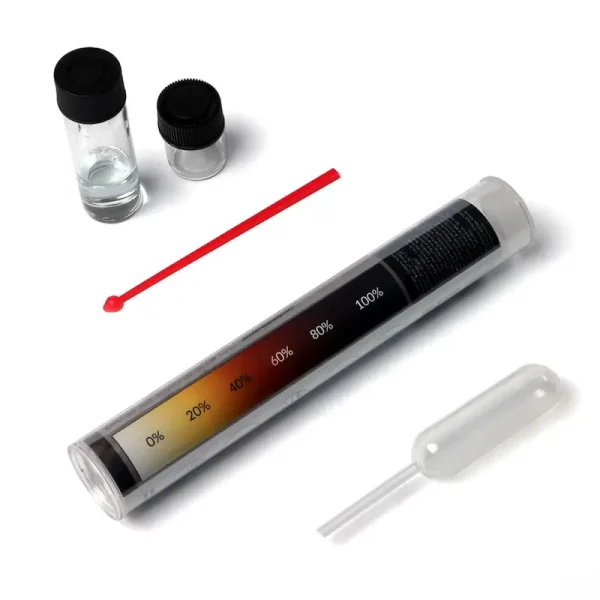
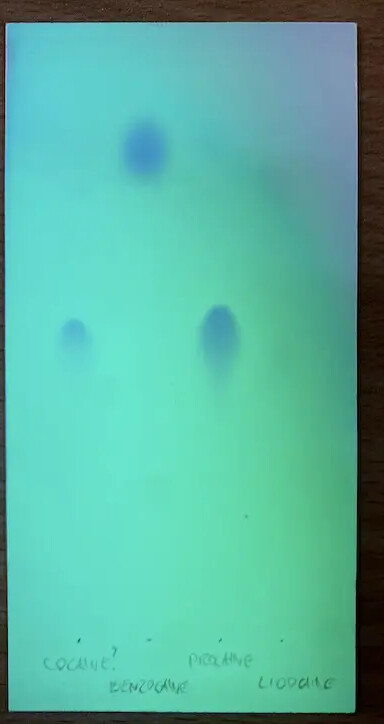
Each thing the bleach test cannot do has something cheap that can. To find out whether it is cocaine at all, a single reagent test costs less than a coffee and takes three minutes. To see what else is in it, a multi-reagent kit compares several reactions at once. To find out how strong it is, which no colour change can tell you, a quantity test gives you a number. A reagent names the substance but not the amount, and a strip catches what no colour change will, so the three answer different questions rather than replacing each other. The bleach test answers none of them, and it destroys your sample doing it.
The bleach test for cocaine and methamphetamine: common questions
Does the bleach test work on meth?
No. Meth dissolves rather than trailing, and its usual cut dissolves too, so the glass looks the same whatever you put in it.
Does real cocaine dissolve in bleach?
It hesitates for ten to fifteen seconds, then trails to the bottom. Several cuts do much the same, mannitol and lactose among them, so a good-looking trail proves nothing on its own.
Will it show fentanyl?
No. Fentanyl and the nitazenes work in microgram amounts and change nothing you can see. Use a strip.
Is the foil burn test any better?
It is the same kind of observation, a physical behaviour rather than an identification, and it has the same blind spots.
Does the test ruin the sample?
Yes. Whatever you drop in the glass is gone, and you have learned nothing you can act on.
No test result can tell you a substance is safe. No substance is 100% safe.This article is published for harm reduction purposes. It does not encourage the use of psychoactive substances and does not replace medical advice.