


MDMA colour chart and how to check purity
How to test MDMA (Ecstasy / XTC / Molly): if you intend to use a psychoactive substance first you need a test kit to check purity. Pure MDMA can look white, brown or tan and can’t be identified by appearence. Check your sample with a single or multi-use MDMA test kit.
MDMA tester

Recommended MDMA testing kits
Recommended multi-use MDA/MDMA reagent test kit includes reagents Marquis, Mecke, Simon’s, Robadope and Zimmermann. Reagents Marquis, Mecke, Simon’s are required to identify MDMA. Robadope reagent helps detect 2C-B, amphetamine, MDA, PMA or taurine. Zimmermann reagent helps detect benzodiazepines and cathinones. To discover full ingredients and estimate MDMA % pair reagents with TLC MDMA Purity Test Kit. To detect fentanyl use the fentanyl test strips.
STEP ONE How to identify MDMA?
How to use reagent tests?
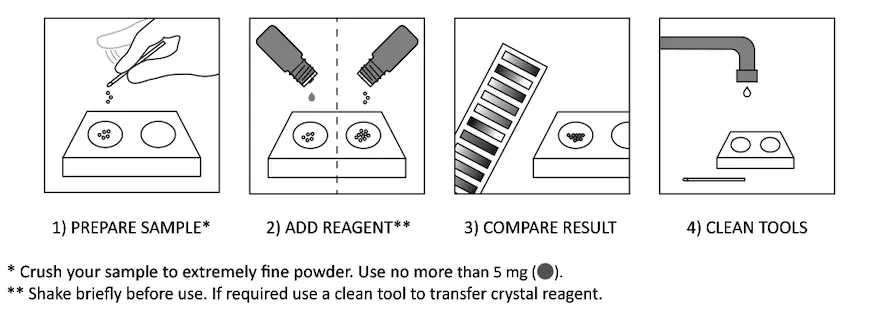
TL;DR: Below is an image with a quick cheat sheet how to use the MDMA Test Kit and further down you can check out more detailed guide how to test MDMA. Use the MDMA reagent test chart to see how to use Marquis reagent, Mecke, Robadope, Simon’s and Zimmermann, check the expected results.
MDMA test results chart:
| TEST | MDMA |
| MARQUIS | Instant purple / brown > black |
| MECKE | Instant green > black |
| MANDELIN | Instant black |
| LIEBERMANN | Instant black |
| FROEHDE | Instant black |
| EHRLICH | No color change |
| HOFMANN | No color change |
| SIMON’S | Instant blue |
| ROBADOPE | No pink color change |
| MORRIS | Green |
| ZIMMERMANN | No color change / faint yellow |
| CANNABIS (4-AP) | No color change |
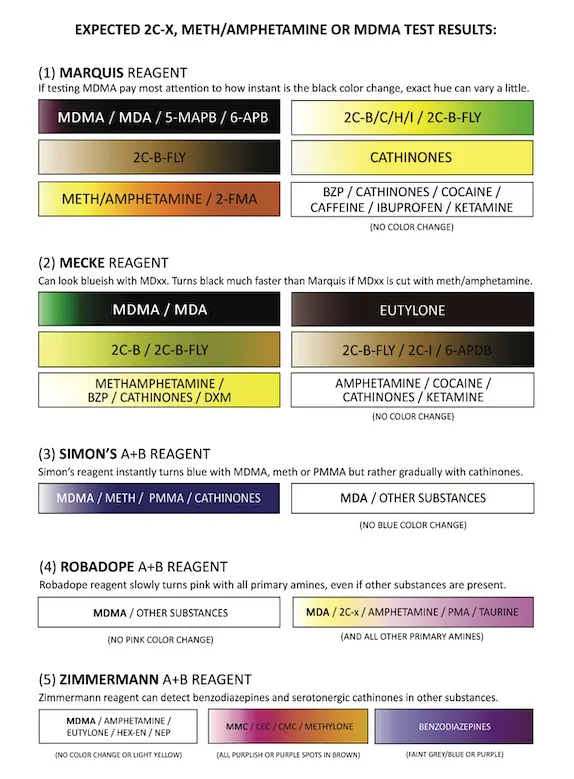
MDMA reagent test chart
What are MDMA test kit reagents used for?
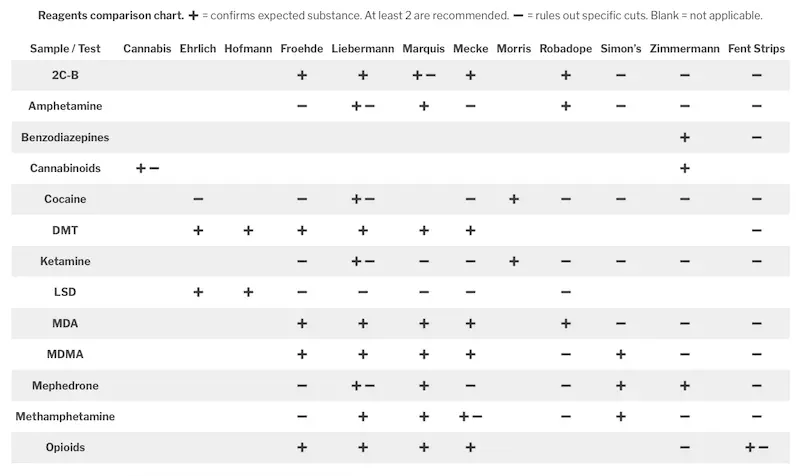
| SAMPLE | RECOMMENDED MDMA REAGENT TESTS |
| MDMA / MDA / METH/AMPHETAMINE / 2C-B |
|
Reagent tests indicate presence of a substance, therefore can either help confirm presence of the expected compound or help rule out certain cuts.
- Marquis – main test for most powders, secondary test for ketamine, mephedrone and psychedelics
- Mecke – main test for most powders, secondary test for cocaine, ketamine and mephedrone
- Simon – main test for secondary amines, e.g. MDMA, meth, mephedrone, methylone or PMMA
- Robadope – main test for primary amines, e.g. MDA, amphetamine or PMA
- Zimmermann / Beam – main test for cathinones and benzodiazepines in geneal, detects also CBD
- Single use MDMA test kit includes Marquis reagent
- Multi use MDMA reagent test kit includes reagents Marquis, Mecke, Simon’s, Robadope and Zimmermann
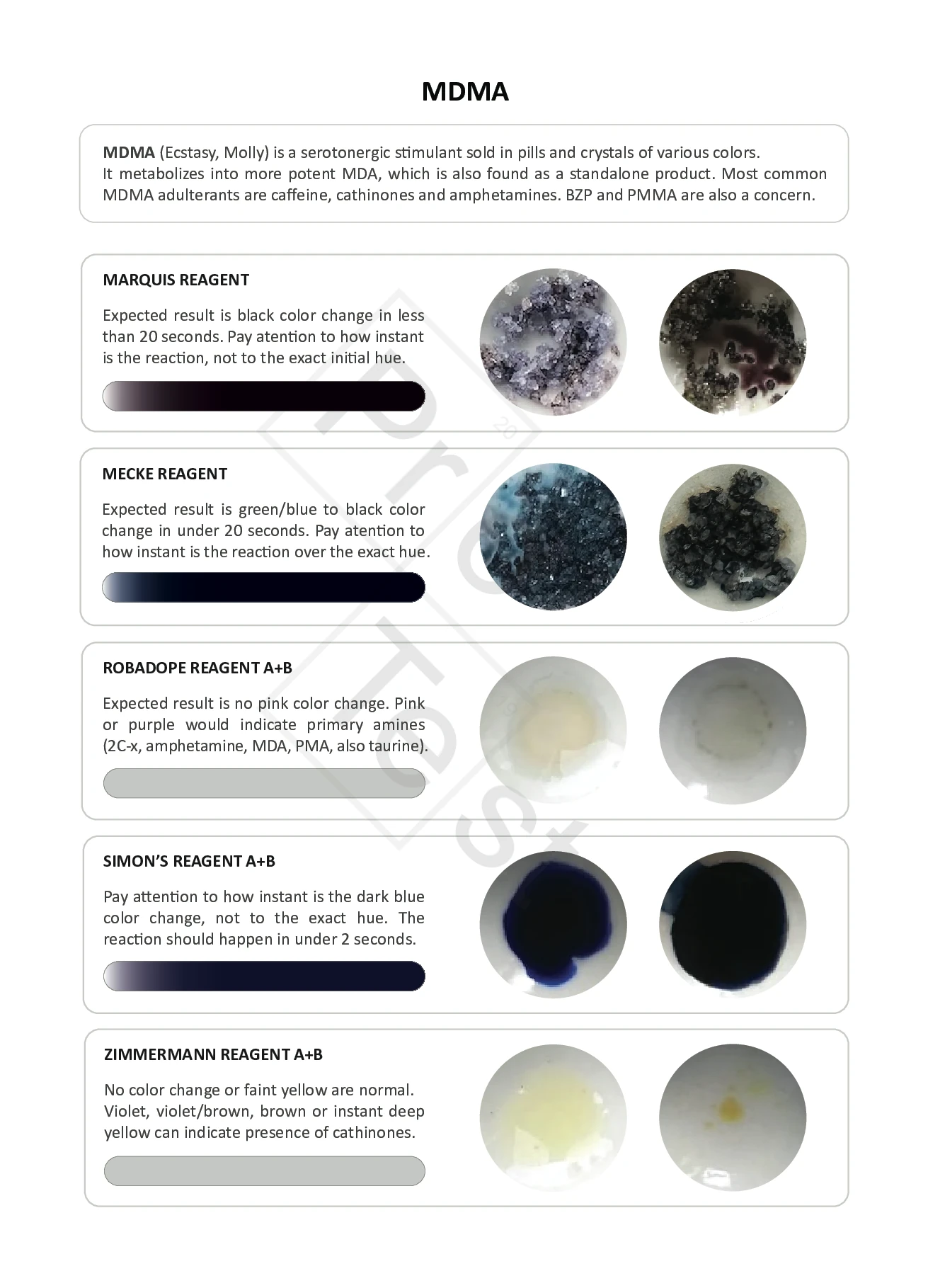
Marquis reagent is the main test for MDMA and produces an instant black color change with MDMA, MDA, but also MDEA and a few other compounds. Mecke reagent is the recommended follow up test.
Simon’s and Robadope are useful both to confirm MDMA or MDA as well as detect primary amines (2C-x, amphetamine, MDA, PMA) in MDMA, or secondary amines (meth, MDMA, PMMA, mephedrone derrivatives) in MDA. Zimmermann reagent helps rule out secondary and tertiary cathinones, mostly MMC and PVP analogs.
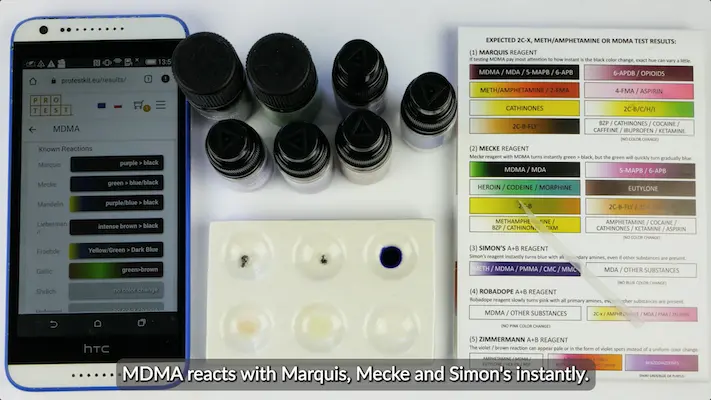
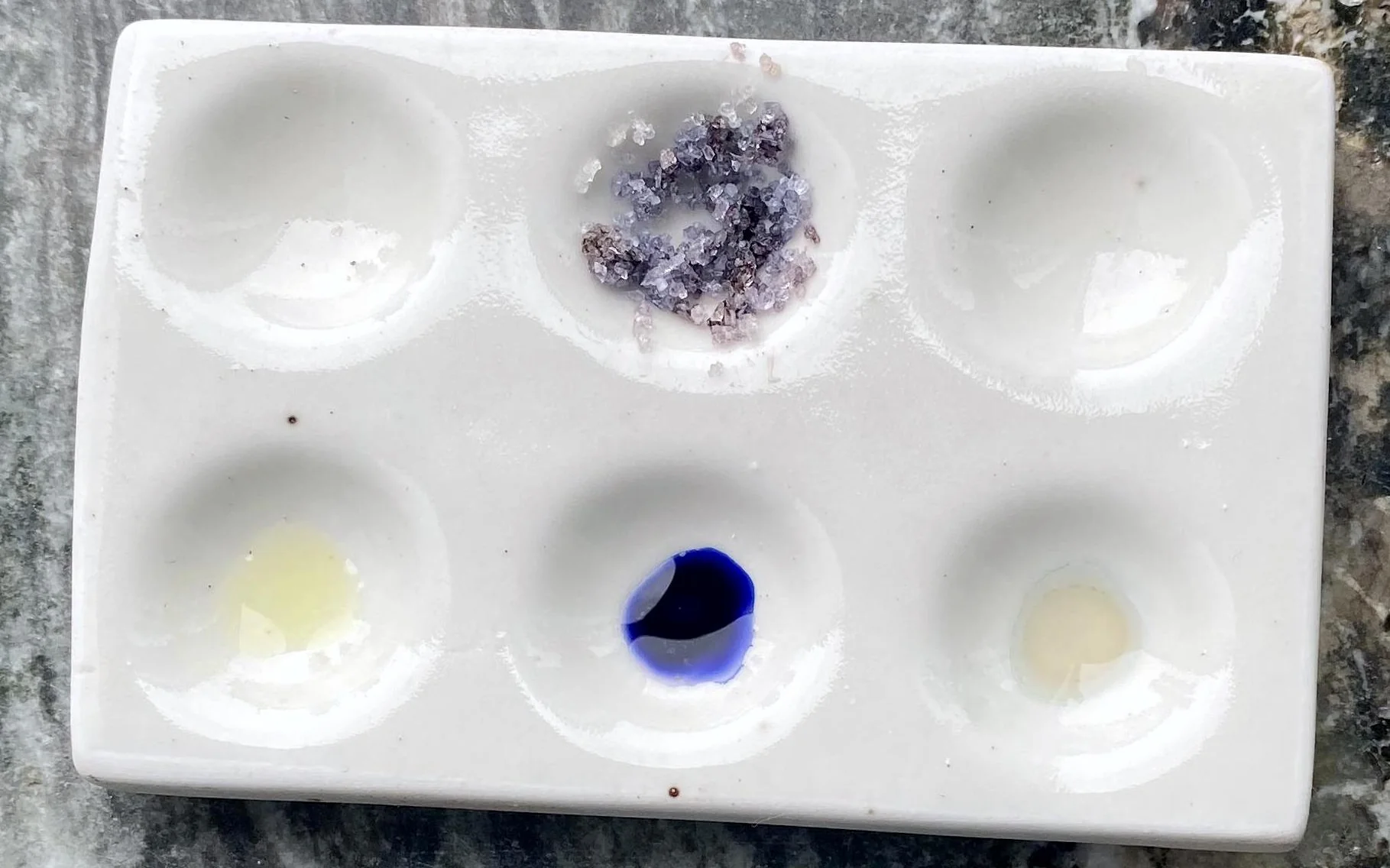
MDMA test kit results
MDMA vs MDA (or MDA vs MDMA)

STEP TWO How to test MDMA purity %?
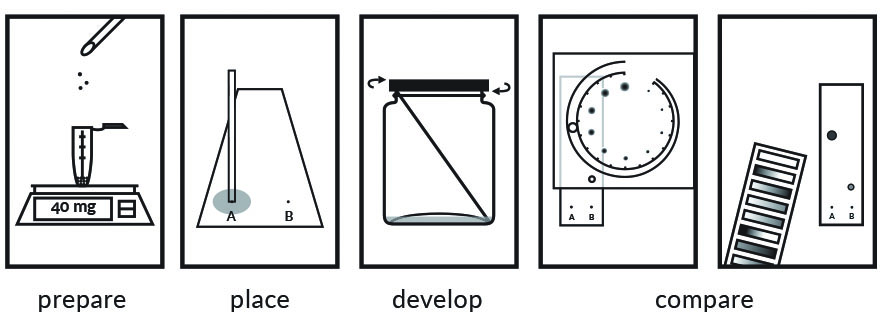
To discover all adulterants and estimate quantity pair reagent tests with a TLC (Thin Layer Chromatography) Purity Test Kit. TLC purity tests alone don’t identify substances and are best paired with at least 1-2 reagent tests. Thin Layer Chromatography is one of classic substance analysis methods. It works by separating different compounds depending on their solubility in chosen TLC testing liquid (eluent). To precisly estimate MDMA purity pair a reagent test kit with the MDMA Purity Test Kit.
How to test quality of MDMA?
Qualitative TLC:
TLC test works by separating substances present in a sample, each detected spot indicates a different substance.
- You can use an already confirmed sample for reference – if both compounds show up at the same height on the TLC “card” that indicates they can be the same substance.
- You can use any substance for reference after establishing their relation – if substance X shows up twice as high on the same testing “card” as substance Y, you can expect them to keep that ratio.
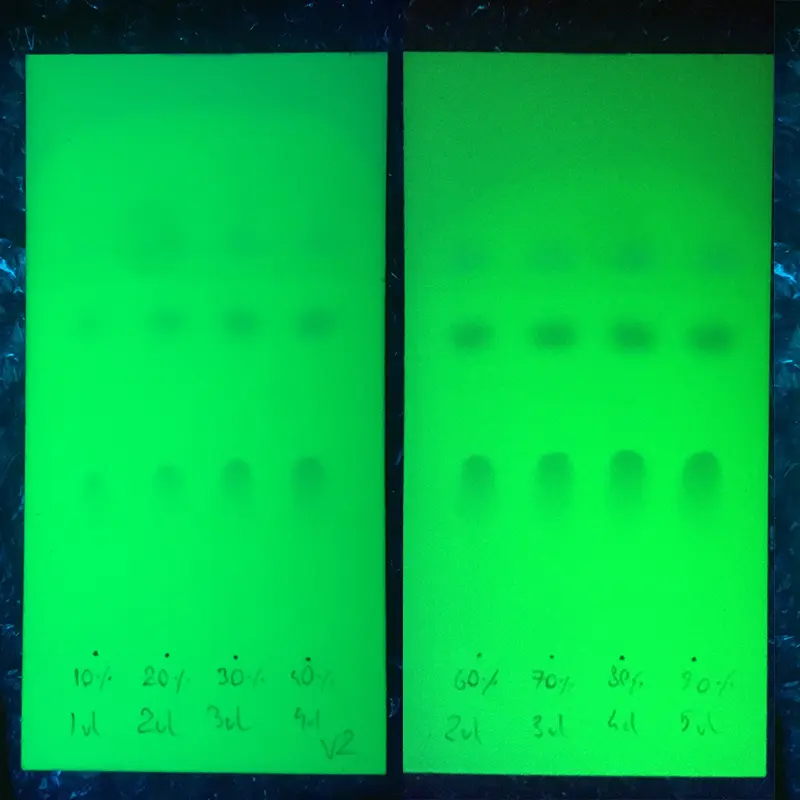
TLC Cocaine Purity Test quantity scale

TLC MDMA Purity Test quantity scale
How to test quality of MDMA?
Semi-quantitative TLC:
TLC helps estimate quantity (quantity). The bigger the size of the detected spot, the bigger the amount of measured substance. Note that different substances need different calibrated rulers and often different testing liquids (eluents).
- Use a calibrated quantity % scale to estimate result with +-10% accuracy
- One spot indicates a pure substance. If your sample fully dissolved in testing liquid and only one spot was detected on TLC then your substance is pure. Trace amounts of impurities might not be detected, do not rely on TLC for fentanyl testing – get also fentanyl test strips.
How to use TLC purity tests?

How to test MDMA for fentanyl?
Use fentanyl test strips (a fentanyl test kit)

METHOD 1
If testing a benzo/opioid pill, crush one in a plastic baggie and dump out the powder. Then add 10 drops of water into the baggie and mix well. Dip the test strip no higher than the thick line. Wait 15 seconds. Put the strip away and check in 5 minutes.
METHOD 2
Mix 100 mg of sample in 200 ml of water. Dip the test strip no higher than the thick line. Wait 15 seconds. Put the strip away and check in 5 minutes.
COMPARE RESULTS
1 line = fentanyl, 2 lines = no fentanyl. Faint lines also count. Ignore fentanyl tester results after 5 minutes.
To detect all ingredients and estimate their amount pair reagents with a TLC purity test kit.
No test result can tell you a substance is safe. No substance is 100% safe.This article is published for harm reduction purposes. It does not encourage the use of psychoactive substances and does not replace medical advice.
How to read the result
A positive result is a colour change resembling one shown in the instructions. It does NOT indicate quantity, purity or safety. Adulterants often do not react at all – try to detect them using different reagents. A negative result is a colour change that differs from the instructions: your sample is adulterated, discard it.
Harm reduction
There is no such thing as fully safe drug use, but harm reduction rules can help make psychoactive substances safer. Always do an “allergy test” – with a substance you do not know yet, start with 1/3 of a dose or less. Always use the smallest dose needed for the effect you want. Never share equipment, and do not use dirty objects such as banknotes (infection risk). Do not redose, at least not for 2-3 hours. Avoid mixing psychoactive substances.
What changed since this guide was written: fentanyl and nitazenes in stimulants
Contamination of stimulant supplies with synthetic opioids is no longer confined to heroin. Fentanyl and nitazenes have been found in samples sold as cocaine, amphetamine and cathinones, and neither is reliably detected by reagent tests.
- Check any new batch with fentanyl test strips and nitazene test strips, or with the combined Test Strips for Fentanyl, Nitazenes and Xylazine.
- Read How to detect fentanyl in CMC and MMC and How to detect nitazenes?
Carry naloxone and never use alone. An opioid overdose in someone who believed they had taken a stimulant is the scenario these strips exist to prevent.