


Precision scales and volumetric dosing
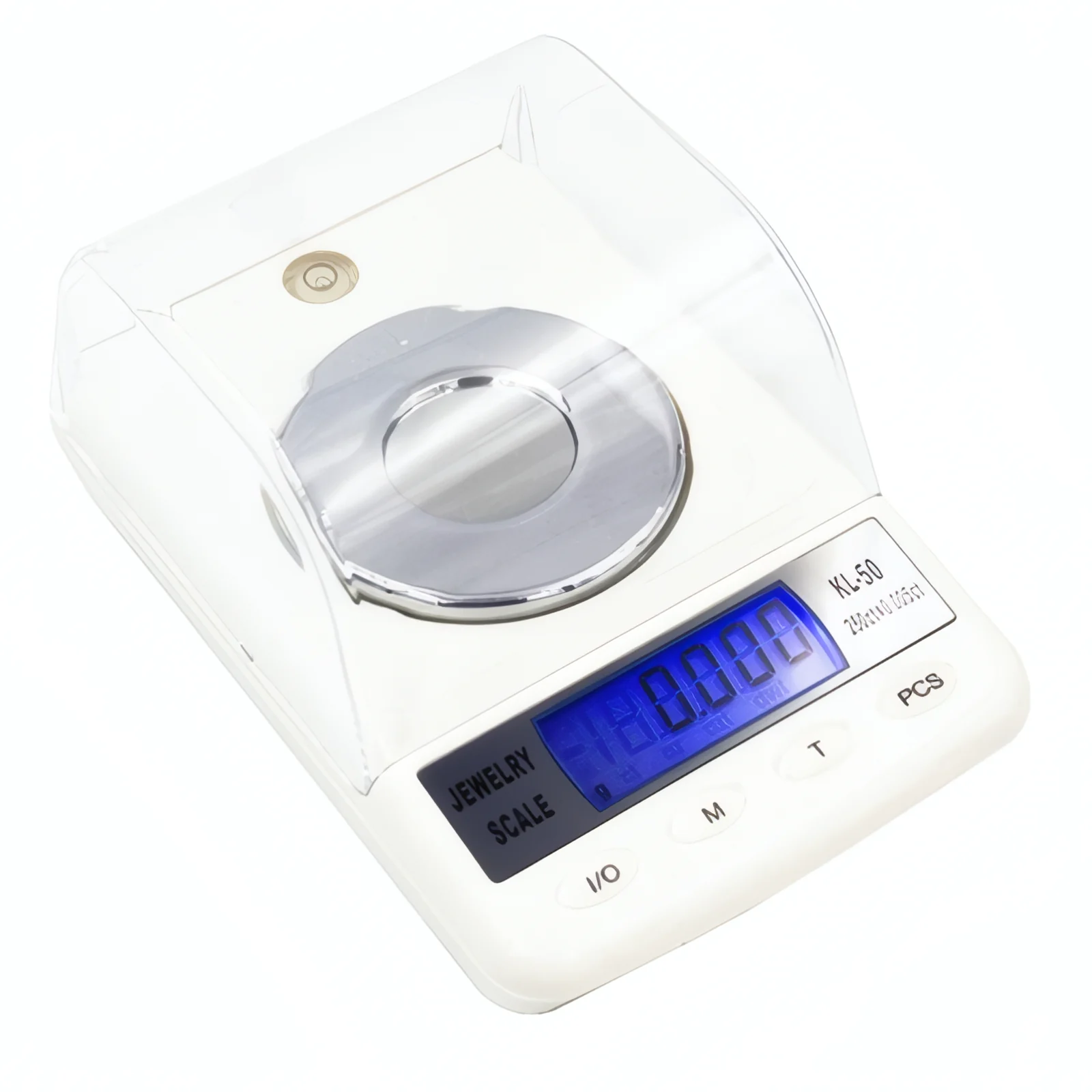
A pocket scale reading to 0.1 g cannot see the difference between a light dose and a heavy one of anything active in milligrams, because 0.1 g is 100 mg and the entire useful range of many compounds sits inside one of its steps. For those substances the scale is not an accessory to the test kit, it is the more important purchase, and we would say so even though we sell the reagents.
When 0.001 g is not enough either
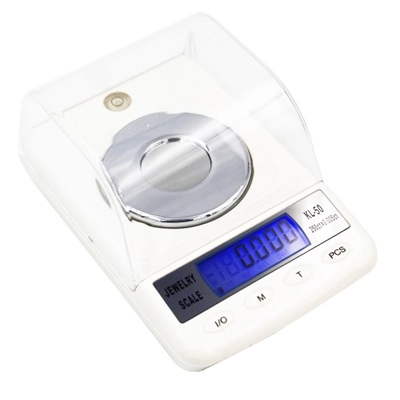
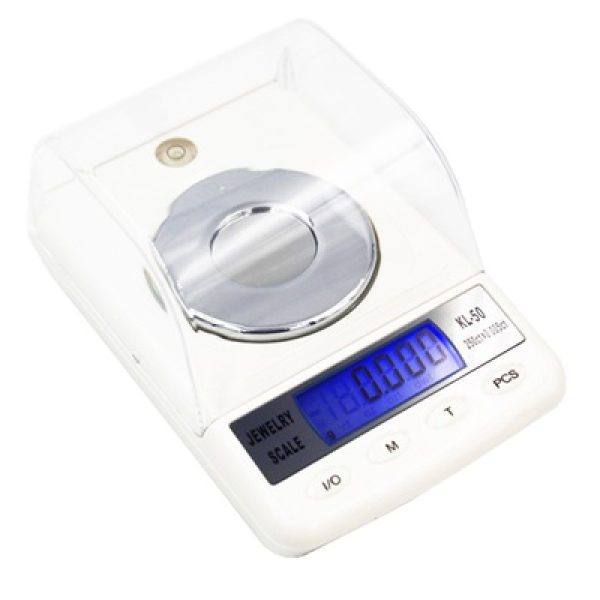
Even a milligram scale struggles below about 10 mg, because static, air movement and the weight of the paper you are weighing on all matter at that scale. Below 10 mg the answer is volumetric dosing: dissolve a weighed, larger amount into a measured volume of liquid, then measure the liquid. Dissolving 100 mg into 100 ml gives 1 mg per ml, and a syringe measures 0.1 ml far more reliably than any scale measures 0.1 mg.
Distilled water works for some compounds; ethanol or propylene glycol is used where solubility or stability requires it. Label the bottle, refrigerate it, and remember that solutions do not keep indefinitely.
The weighing still has to be right for the solution to be right, so volumetric dosing needs a milligram scale rather than replacing one.
Every test reads better from a known weight
A reagent result depends on how much sample sits in the well. Too much saturates it and everything goes dark, too little gives a reaction too faint to read, and both look like a failed test rather than a bad measurement. Weighing the sample makes one result comparable to the next and to the chart it is read against.
Test strips work the other way round. A strip reads a solution, so what decides the result is how much powder went into how much water, and both halves of that are measurements rather than guesses.
The same scale does the rest of the harm reduction job. Splitting a dose, keeping one dose the same as the last, and checking that what is in front of you matches what you meant to take are all weighing problems, and none of them is solved by a scale that reads to 0.1 g.
The scale also makes the purity test work
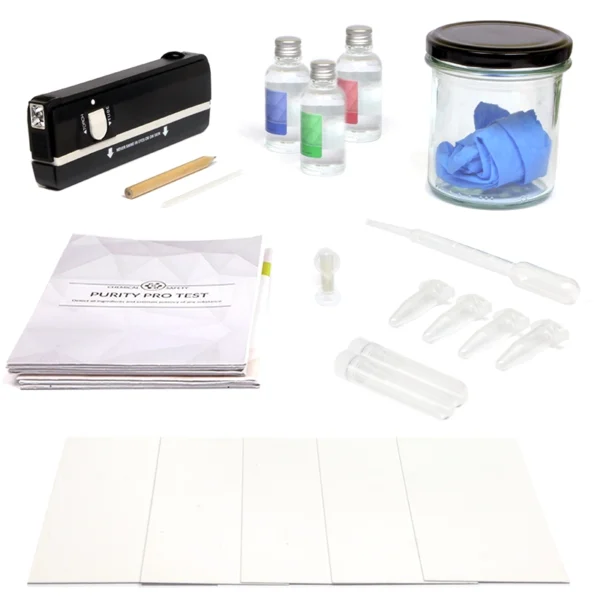
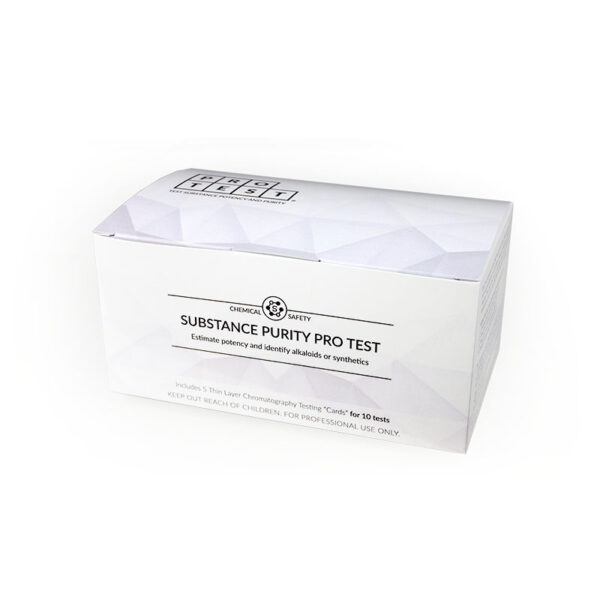
A TLC testing card estimates percentage by comparing your spot against a reference of known concentration, which only works if your sample is a known weight too. Eyeballed quantities produce spot intensities that mean nothing, so the scale is part of the purity method rather than a separate hobby.
Drug scales: precision weighing and volumetric dosing: common questions
Is a 0.01 g scale good enough?
For substances dosed in hundreds of milligrams, yes. For anything in single or double milligrams you want 0.001 g resolution, which is what the precision scale gives you.
What is volumetric dosing?
Dissolving a weighed amount into a measured volume so you can measure a small dose as a liquid rather than as a powder.
Does the solution keep?
Not indefinitely. Refrigerate, keep it dark, label it with the concentration and the date.
Why does a reagent article recommend a scale first?
Because when a compound is active in single milligrams, the dose does more harm than a misidentification does.
No test result can tell you a substance is safe. No substance is 100% safe.This article is published for harm reduction purposes. It does not encourage the use of psychoactive substances and does not replace medical advice.