


What is a TLC drug test?
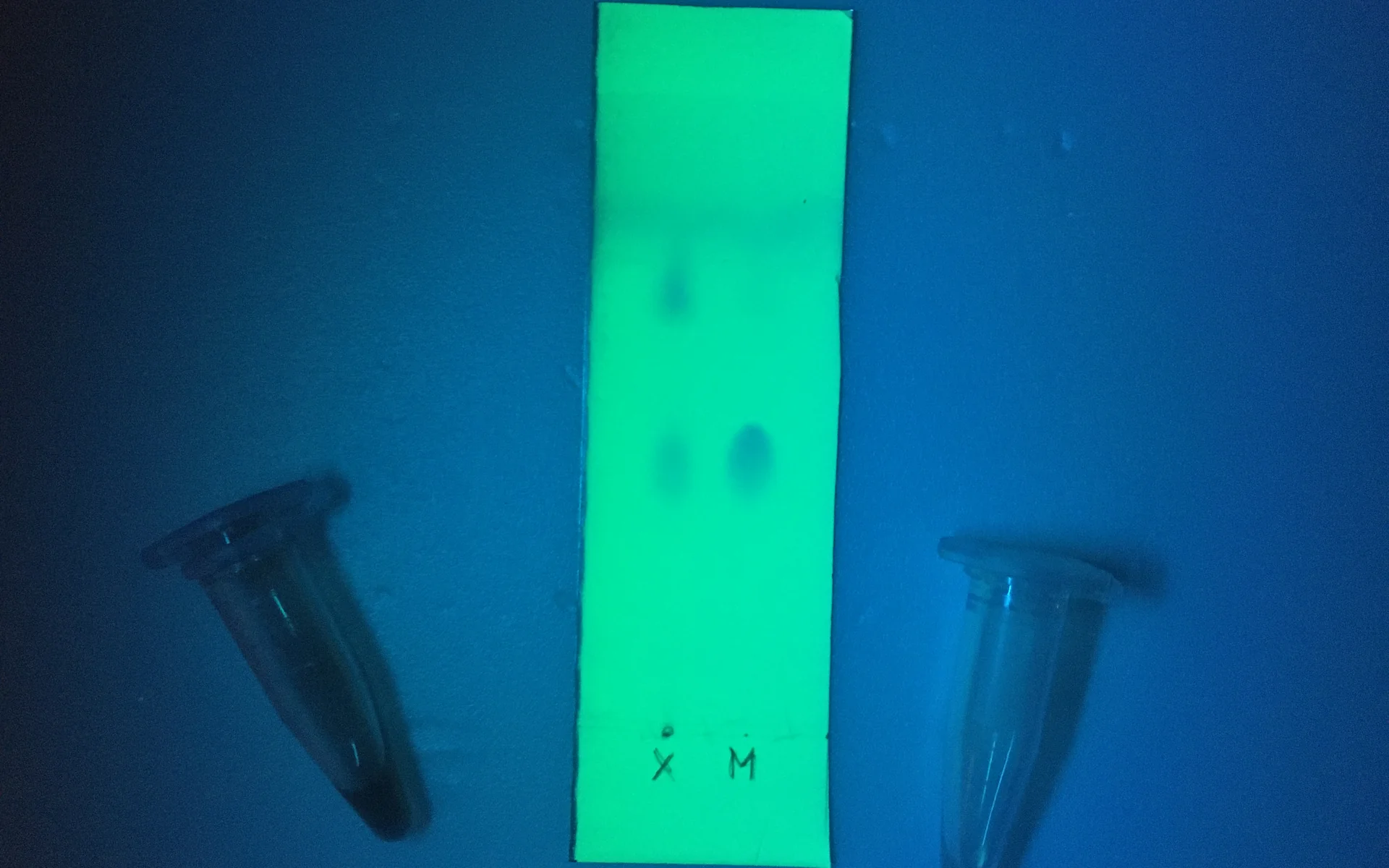
Thin layer chromatography separates your sample into its individual compounds and shows each one as a separate spot on a card. That is the difference from a reagent, and it is a large one: a reagent mixes with everything at once and gives you a single colour for the whole sample, while TLC pulls the sample apart first, so you see how many things are in it rather than only whether the one you expected is there.
How it works
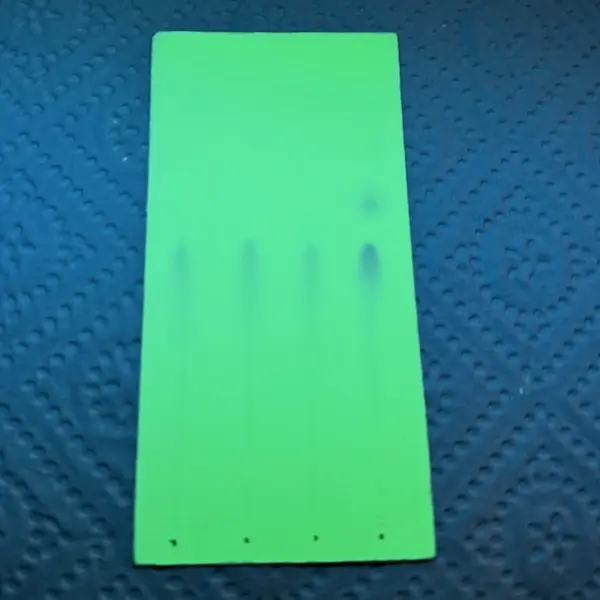
You dissolve a measured amount of sample and spot a trace of it onto a coated card, next to a reference standard of known concentration. The card stands in a shallow pool of solvent, which rises through the coating and carries each compound with it at a speed that depends on how strongly that compound sticks: heavier interactions move slowly, weaker ones ride further up, and after a few minutes each compound has stopped at its own height. Read the card under UV-C light and you have a column of spots, where position identifies each compound against the reference and spot intensity tells you roughly how much of it is there.
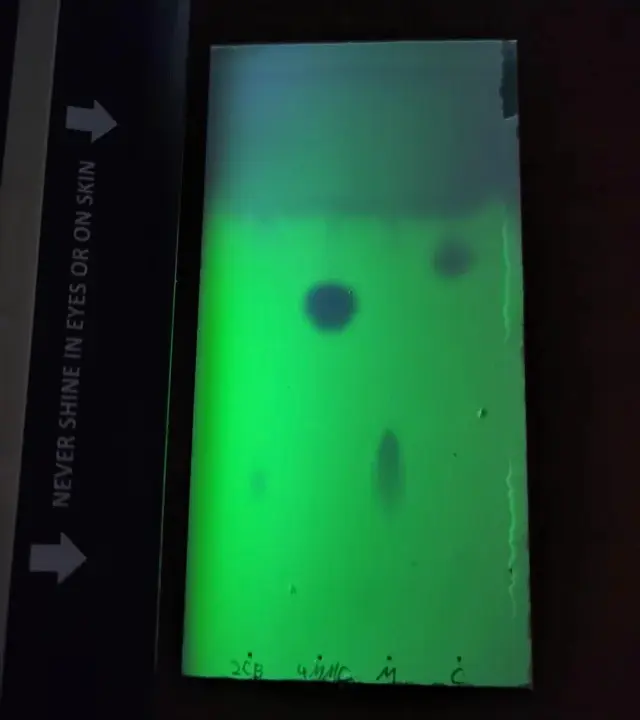
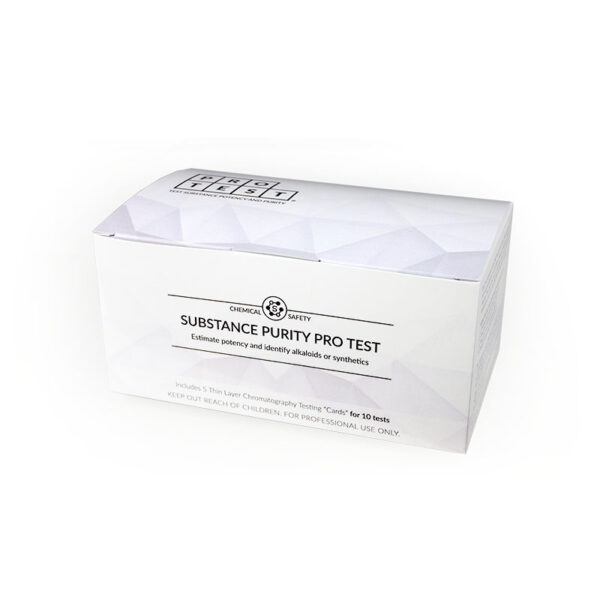
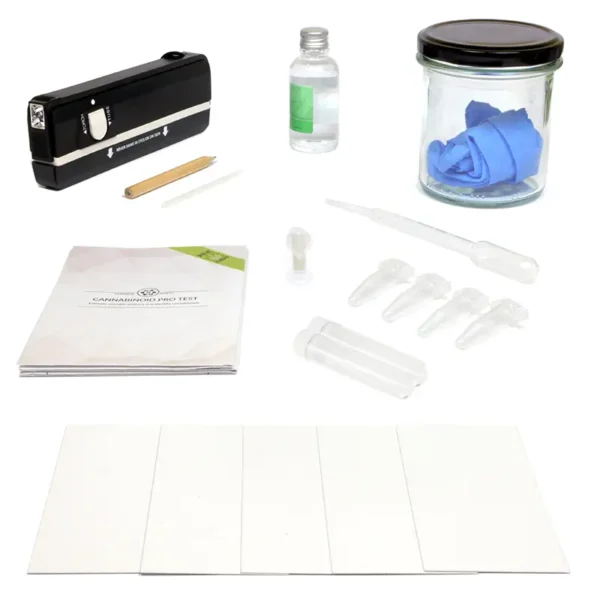
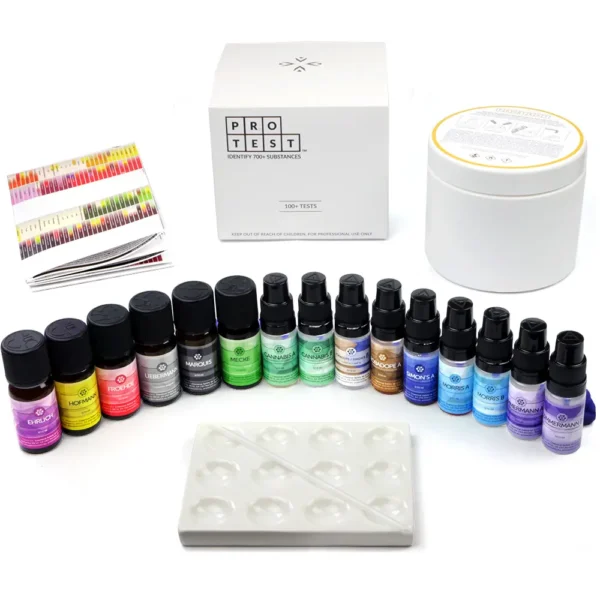
Everything that description needs is in one box: the coated cards, the solvent, the reference standards and the dye that makes the spots visible.
What a TLC testing card shows beyond a reagent
How many compounds are in the sample, since one spot means one thing and four spots mean four. Roughly how much of each, when read against a calibrated reference. That the sample is clean, which is the one people miss, because if no impurities appear and your sample dissolved fully then the result is consistent with a pure substance, and a reagent can never report an absence. And compounds a reagent is blind to, since sugars and most cutting agents produce no colour change but still move up the card.
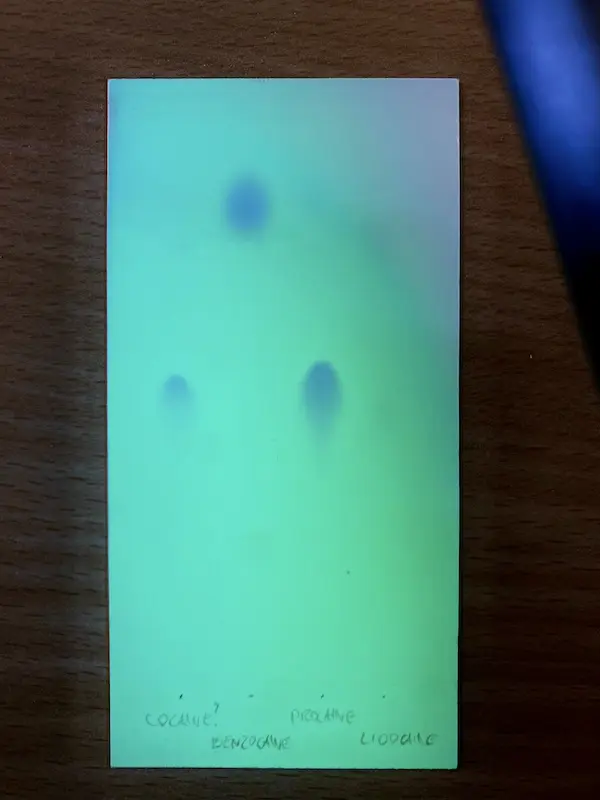
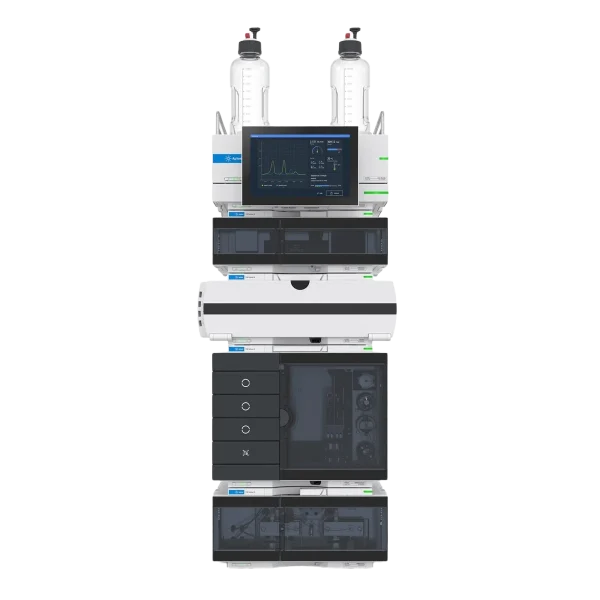
That is the gap a reagent leaves and a testing card fills. If you need a number rather than a comparison, a lab analysis is the step above it.
What is in the kit
| Kit | Covers |
|---|---|
| Full PRO Test Kit for Substance Purity | Amphetamine, methamphetamine, cannabinoids, cocaine, CMC, mephedrone, MDMA, ketamine and more |
| PRO Test Kit for Cannabinoid Quantity | THC and CBD in flower, hash and oil |
| PRO Test Kit for Ketamine Purity | Ketamine, MDMA, amphetamine, methamphetamine, cathinones and more, but not cannabinoids or cocaine |
| PRO Test Kit for Stimulant Purity | Stimulants |
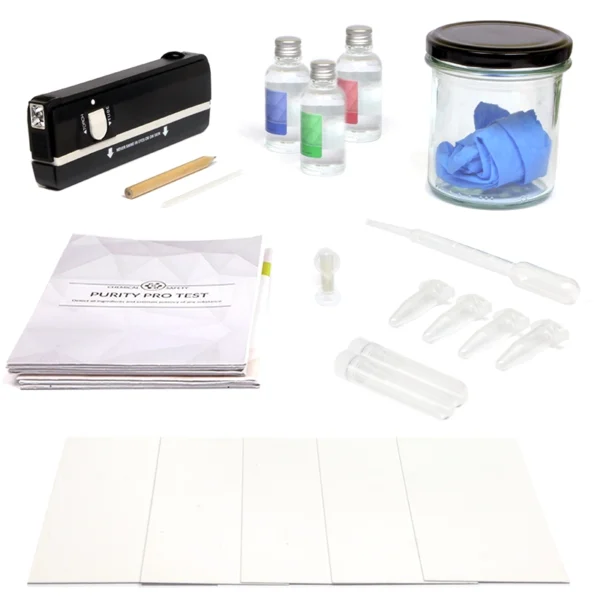
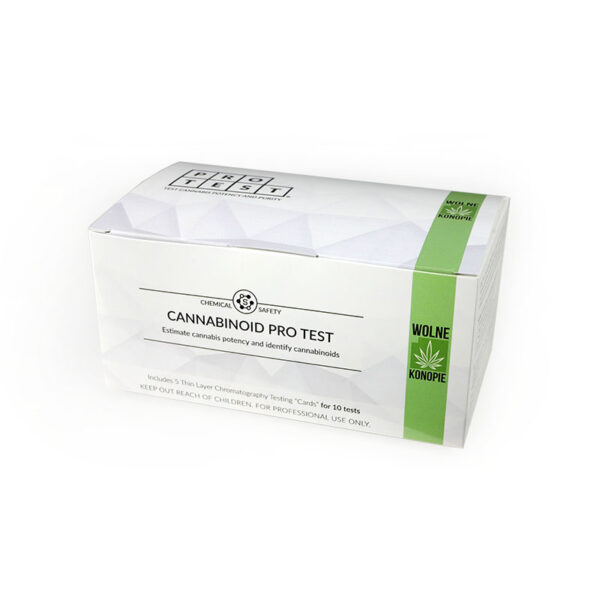
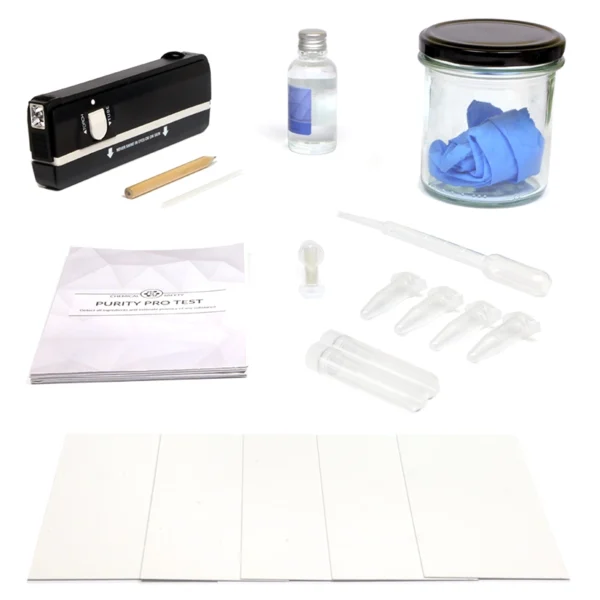
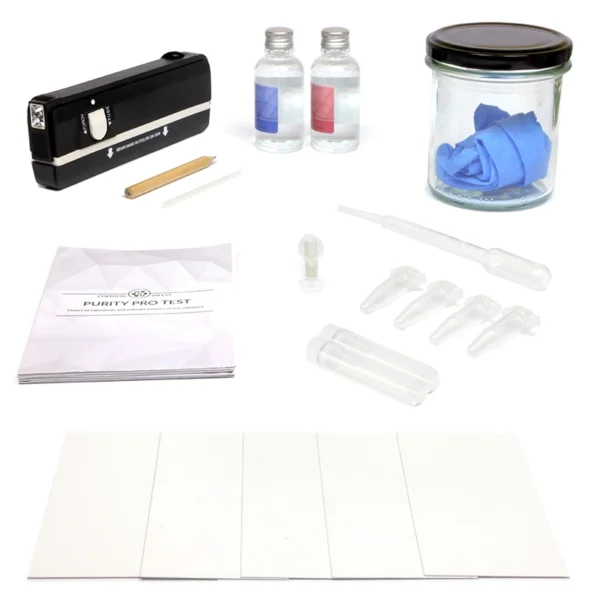
The full kit holds 5 testing cards, 6 vials, 20 glass tubes, 40 ml of testing liquids, a jar, a pipette, a UV-C flashlight and a printed percentage scale. One card with four glass tubes and 2 ml of liquid makes four tests, so a kit is twenty tests, and the cards are reusable until fully used. We had it independently calibrated by Nectar Spectra Labs in August 2026, and lab-verified percentage curves now exist for MDMA, ketamine, methamphetamine, cocaine and 4-MMC, which is what turns a spot intensity into a number you can act on.
What are the limitations of a TLC testing card?
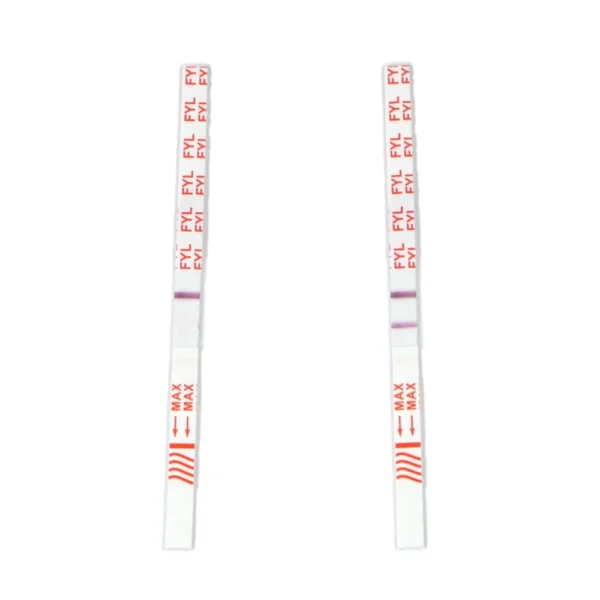
A TLC testing card estimates the number and amount of ingredients, while reagent tests identify. Pair them and you have the best purity testing setup. Note that fentanyl or nitazene strips are required separately, as their active doses sit far below what a card resolves.
Reagent first, then TLC
The testing order matters: run reagents first to establish what your sample probably is, which takes a minute and costs a few cents per test. If they indicate something other than what you were sold, there is no point in running a further purity test. If the reagents agree with the expectation, TLC then answers the two questions: what else is in there, and how much of it is the thing you wanted. Doing it the other way round means running a full purity kit to discover you have the wrong drug, and since the purity kit does not identify compounds on its own, running TLC alone leaves you counting spots you cannot name.
Presence, purity and quantity · Worked example on cocaine · Reagent test or urine test, which one do you need
TLC drug test: what it measures and how to read it: common questions
What does TLC stand for?
Thin layer chromatography. The thin layer is the coating on the card that the sample separates across.
How accurate is it?
It is semi-quantitative. Against a calibrated reference it puts a percentage within roughly 10 points on a 0 to 100% scale, so it separates a 30% sample from a 70% one. That is not laboratory accuracy and does not claim to be.
Can TLC detect fentanyl?
Not at the doses that matter, because active fentanyl concentrations sit below what a card resolves. Use fentanyl test strips, which detect at trace level.
Do I need a scale?
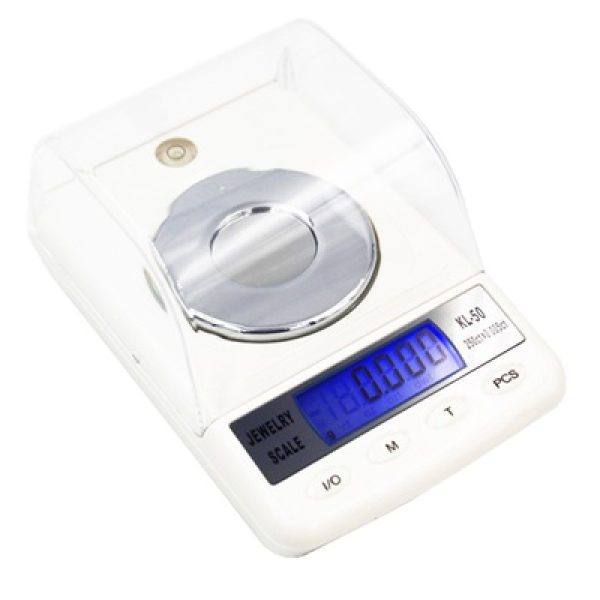
Yes. Percentage estimation compares your spot against a reference of known concentration, so your sample has to be a known weight too. 0.001 g resolution.
How many tests are in a kit?
Twenty. Five cards, and each card with four glass tubes and 2 ml of testing liquid gives four tests.
Reagent or TLC, which first?
Reagents. They answer identity, which is the first question and the cheaper one. Add TLC when you want composition and strength.
No test result can tell you a substance is safe. No substance is 100% safe.This article is published for harm reduction purposes. It does not encourage the use of psychoactive substances and does not replace medical advice.