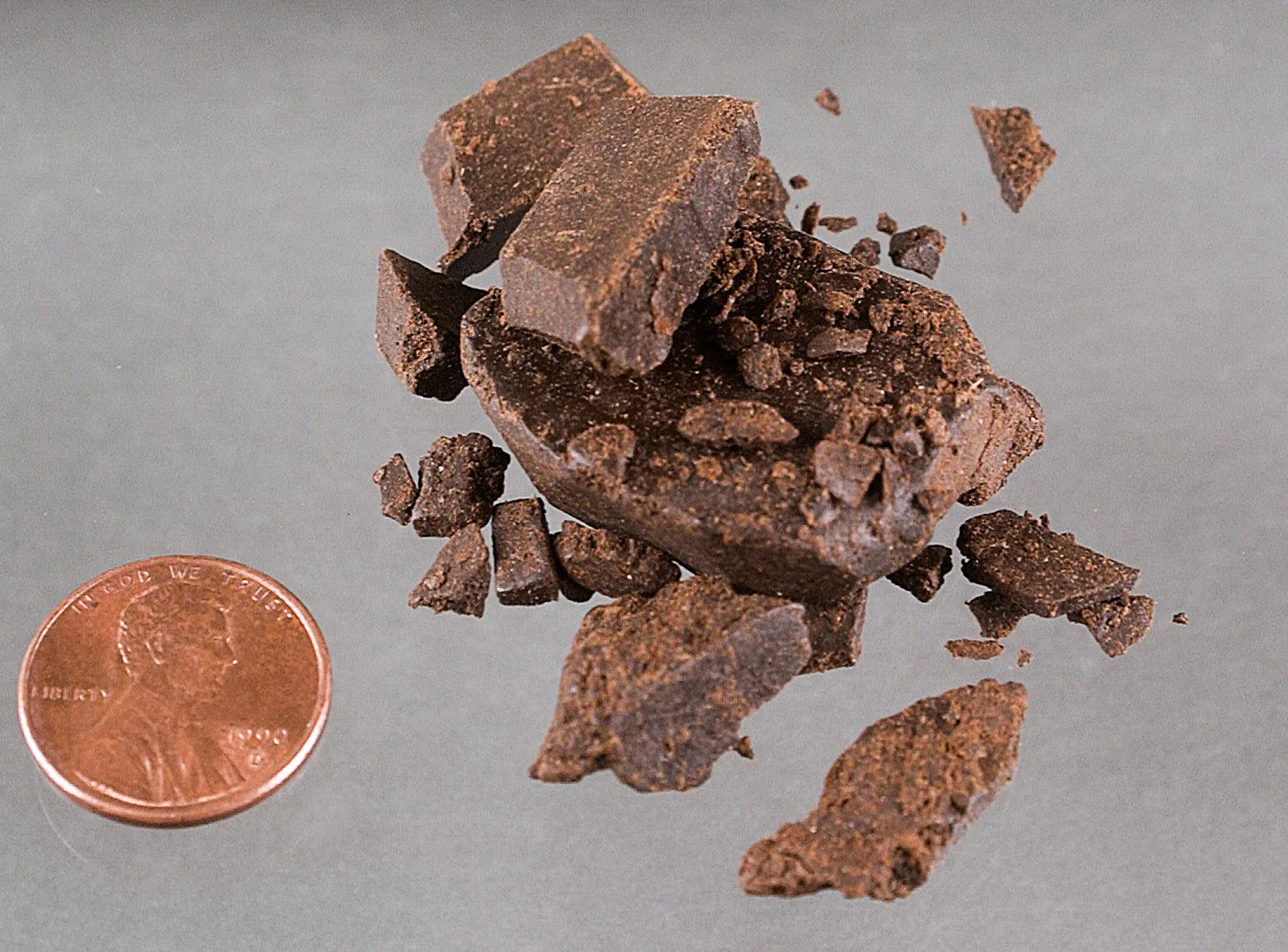
The new generation of fake hash circulating in Europe is not an inert piece of rubber anymore. The modern version starts as legal CBD isolate and/or resin, cheap, legal to produce and genuinely made of hemp, and that gets sprayed with a synthetic cannabinoid. The result is frequently far stronger than the hash it imitates, because of a compound with a much steeper dose curve, spread unevenly through the block. Somebody who smokes it might one day feel fine, and the next be completely overwhelmed, at the very least.
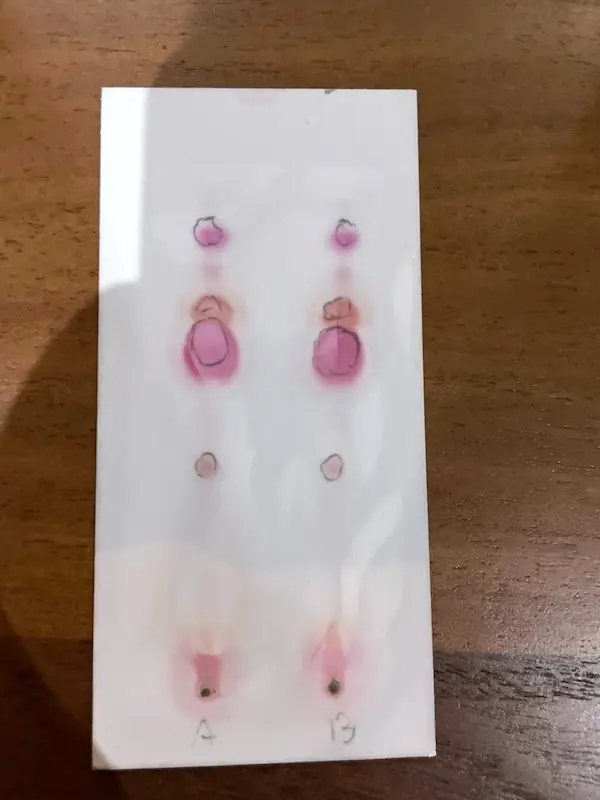
Two samples run side by side. Because each cannabinoid lands in its own place, the two profiles can be compared directly.
€94,49Original price was: €94,49.€85,01Current price is: €85,01.Add to cart
Why CBD material is the perfect base
Low-THC hemp is legal to grow across much of Europe, so CBD flower, CBD resin and CBD isolate are cheap, legal and produced at scale. As a carrier for something sprayed on, it beats every fake that came before it on every measure that matters to a seller. It looks right because it is real resin. It smells right because it is real cannabis. It behaves right under a flame, because it is real resin bubbling. And it contains genuine cannabinoids, so the obvious quick checks come back positive.
Compare that with the older fakes: henna, wax, plant matter and binder. Those had to imitate resin and mostly failed. A CBD block does not have to imitate anything. It only has to be missing the one thing nobody can see.
What the laboratories are finding
Across 9,396 published European lab results, 101 samples contained a synthetic cannabinoid, and 36 of those also carry a CBD or hemp figure in the same result. The profiles below are individual published samples, and the shape repeats.
Published lab results combining a CBD-dominant profile with a synthetic cannabinoid
CBD
THC
Synthetic found
84.8%
—
MDMB-PINACA
17.0%
1.1%
EDMB-PINACA
15.0%
0.5%
CUMYL-PINACA
14.1%
1.3%
5F-ADB
11.9%
0.6%
MDMB-4en-PINACA
9.0%
0.9%
CUMYL-PINACA
Middle column: THC at hemp levels, so the material was inert. Right column: what people actually smoked, mostly MDMB-4en-PINACA, MDMB-PINACA, 5F-ADB and MDMB-INACA.
Real hash is THC-dominant, which means that testing for CBD-dominant samples with the Cannabis (4-AP) reagent test is a solid answer to the problem.
Three checks do most of the work, and all three are worth keeping, because they still catch the crude fakes.
The flame test. Touch a flame to a corner for a second. Real resin bubbles, and the bubbles are oily, because you are melting cannabinoids and driving off terpenes. Plant matter and binder catch and burn like paper. Wax and paraffin melt and run without bubbling at all.
The finger test. Warm a piece between finger and thumb. Resin softens and turns tacky within seconds. Clay, henna and ochre stay chalky and crumble instead.
Smell. Warmed resin releases terpenes, and that is what the nose is checking for. A block built from inert material and scented afterwards goes thin and chemical once it warms up.
All three pass on a sprayed CBD block. They ask one question, is this cannabis resin, and for CBD resin the answer is honestly yes. It bubbles, it softens, it smells right, because it is exactly what it appears to be. What is wrong with it was sprayed on afterwards and weighs almost nothing.
A general reagent. Marquis and its relatives answer whether a cannabinoid is present at all. A sprayed block contains cannabinoids in quantity, so they come back looking normal on the one sample where that misleads.
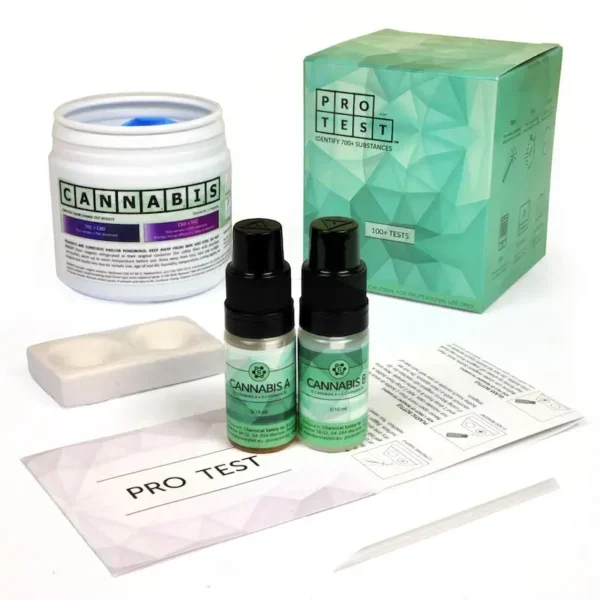
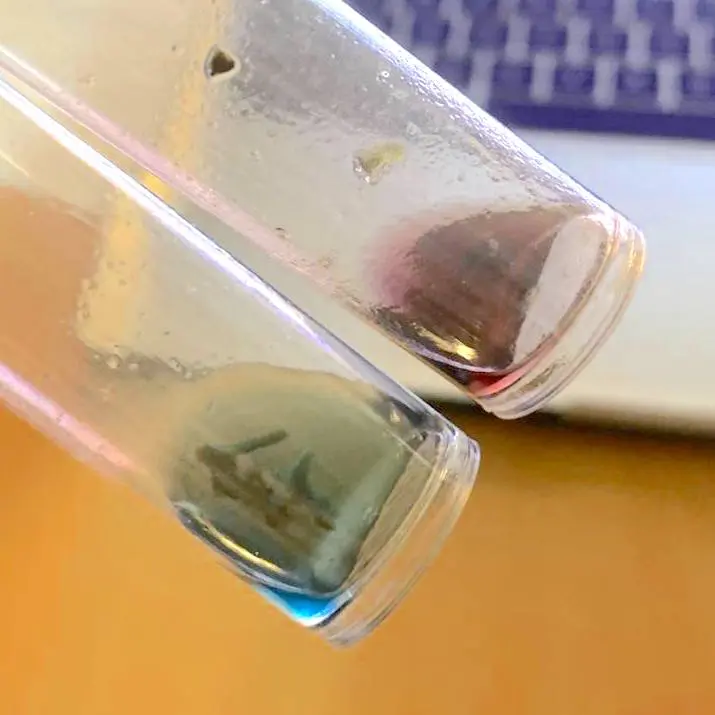
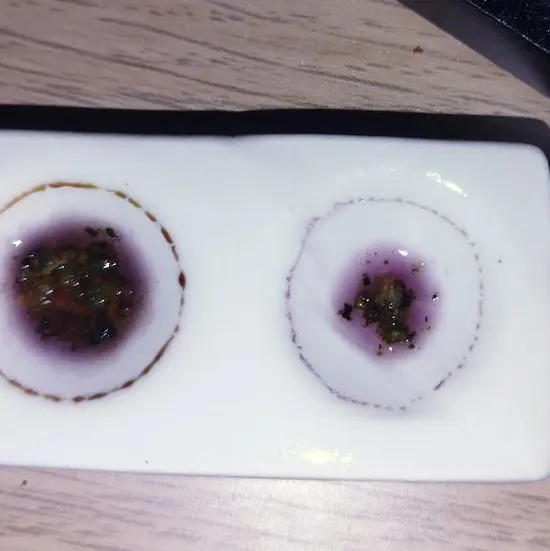
The Cannabis (4-AP) reagent asks a better question. It is a two-part test, adopted by Swiss forensics and now the standard for rapid flower testing, and it separates CBD from THC instead of reporting "cannabinoid". The colour is the answer: purple where CBD dominates, blue where THC does.
The same reagent on two samples. Purple means CBD dominates the sample, blue-green means THC does.Two samples sold as cannabis, both reading purple. CBD-dominant material, whatever it was sold as.
The tell, and the one method that shows it
The tell is a mismatch between the profile and the effect. Our own kit instructions put it plainly: the most reliable way to detect a synthetic cannabinoid is to check whether a sample you expect to be psychoactive contains only a trace of THC.
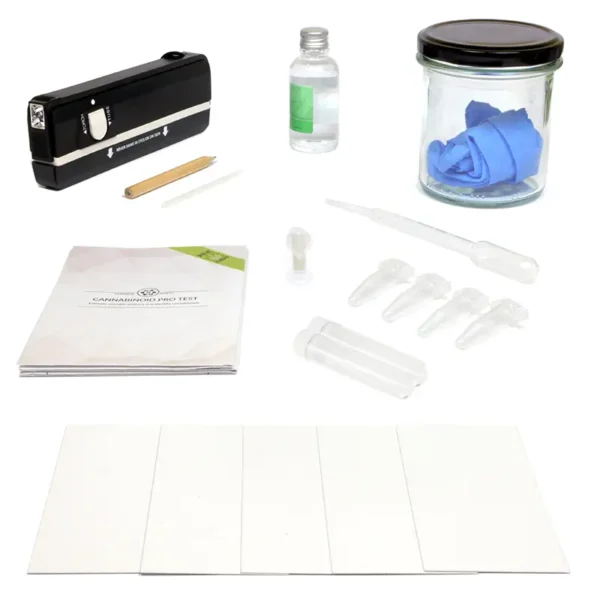
The reagent answers that at the yes-or-no level. A testing card answers it in detail: it pulls the sample apart and gives each cannabinoid its own spot, so a sprayed CBD block shows a heavy CBD band, a thin or absent THC band, and nothing else that would account for how strongly it hit. Real hash shows the opposite: THC dominant, with CBD, CBN and the minor cannabinoids around it. You are not looking for the synthetic itself, which does not show up as a cannabinoid at all. You are looking for the hole where the THC should be.
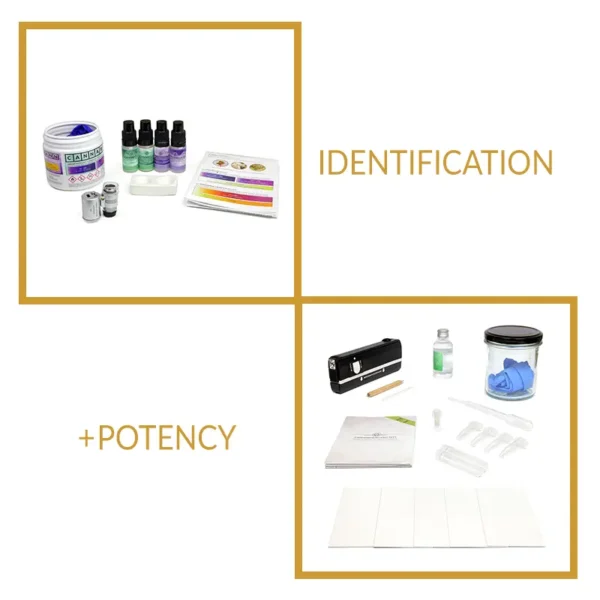
For the quick CBD-or-THC question on one block, the first link is the cheap answer and usually the only one you need. The second and third put a number on the profile, which is what settles an expensive block rather than a suspicious one.
What to do with a block that does not add up
A strong effect from a sample whose card shows almost no THC is the result that should stop you, and it deserves better than a shrug. Synthetic cannabinoids have a far steeper dose curve than THC, they are sprayed on unevenly so two pieces off the same lump are not the same dose, and they produce effects cannabis does not: severe agitation, vomiting, seizures, cardiac events. They appear in European poisoning reports where plant cannabis does not.
It is not the common case, and saying so is context rather than reassurance. If a block gives you that mismatch, the useful response is to stop using that block rather than to smoke less of it, because the uneven spray means a smaller piece is not reliably a smaller dose. We cover the detection in more depth in how to detect synthetic cannabinoids, and what is currently circulating in which synthetic cannabinoids are on the market.
The older fakes, briefly
They have not gone away, and they are the easy half of the problem. Ground plant matter with a binder burns like paper and leaves grey ash. Henna, clay or ochre give the right brown but stay chalky and never get tacky at body heat. Wax or paraffin melts smooth and fast without bubbling. Low-grade resin stretched with any of the above behaves partly correctly, which is what makes it work. The flame and finger checks sort all of these, at no cost, and they remain worth doing first.
Fake hash is made from sprayed CBD products: common questions
If it got me high, was it real hash?
Not necessarily, and this is the assumption the sprayed blocks rely on. A strong effect confirms something active was present. It does not confirm that the active thing was THC.
Will a reagent catch sprayed CBD hash?
The CANNABIS reagent will, because it tells CBD from THC rather than just reporting that a cannabinoid is there. A block sold as hash that reads CBD-dominant is already the answer. A general reagent like Marquis will not, since it reacts to the CBD that is genuinely present and looks normal.
Does the card detect the synthetic itself?
It is not what you read. Synthetic cannabinoids are chemically unrelated to THC and do not behave like cannabinoids on the card. What the card gives you is the cannabinoid profile, and a psychoactive sample with almost no THC in it is the finding that matters.
Is CBD hash itself dangerous?
No. Legal CBD resin is a normal product, sold openly, and there is nothing wrong with it. The issue is its use as a carrier, precisely because it is real cannabis and passes every check that is not a separation.
No test result can tell you a substance is safe. No substance is 100% safe.This article is published for harm reduction purposes. It does not encourage the use of psychoactive substances and does not replace medical advice.