


How to use the Froehde reagent
The Froehde reagent is commonly used in drug analysis to identify the presence of certain substances. It is a mixture of molybdophosphoric acid and concentrated sulfuric acid. When applied to a sample, it produces various color reactions that can help distinguish between different compounds. The test is particularly useful in detecting substances such as opiates, amphetamines, and various other alkaloids. The Froehde reagent test has been a crucial tool in forensic and harm reduction contexts, aiding in the identification of unknown substances and promoting safer drug use practices.
Froehde reagent colour reactions
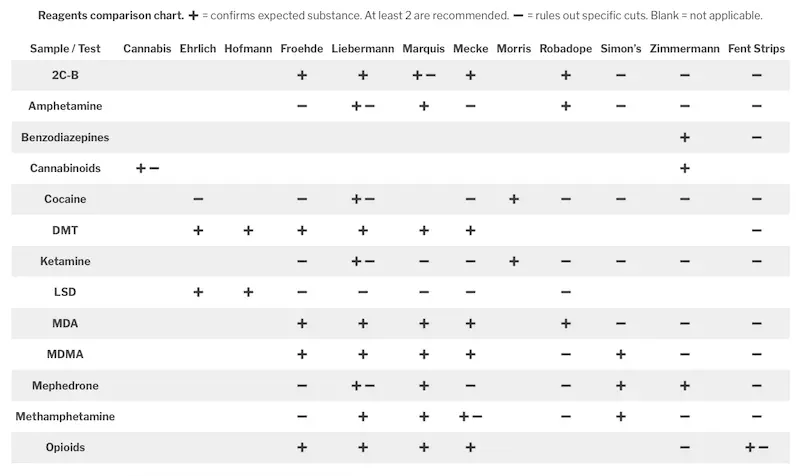
Expected colour changes for the Froehde reagent, from the PRO Test reagent chart.
| Substance | Expected reaction |
|---|---|
| 2C-B | Yellow → green |
| DMT | No colour change |
| LSD | No instant reaction |
| Ketamine | No colour change |
| Amphetamine | Clear or red |
| Methamphetamine | Clear or red |
| Mephedrone | No colour change |
| MDA | Instant black |
| MDMA | Instant black |
| Cocaine | No colour change |
| Oxycodone | Yellow |
Reagents indicate presence, not purity or quantity. A reaction that differs from the expected colour is a reason to test further, not proof of a particular substance.
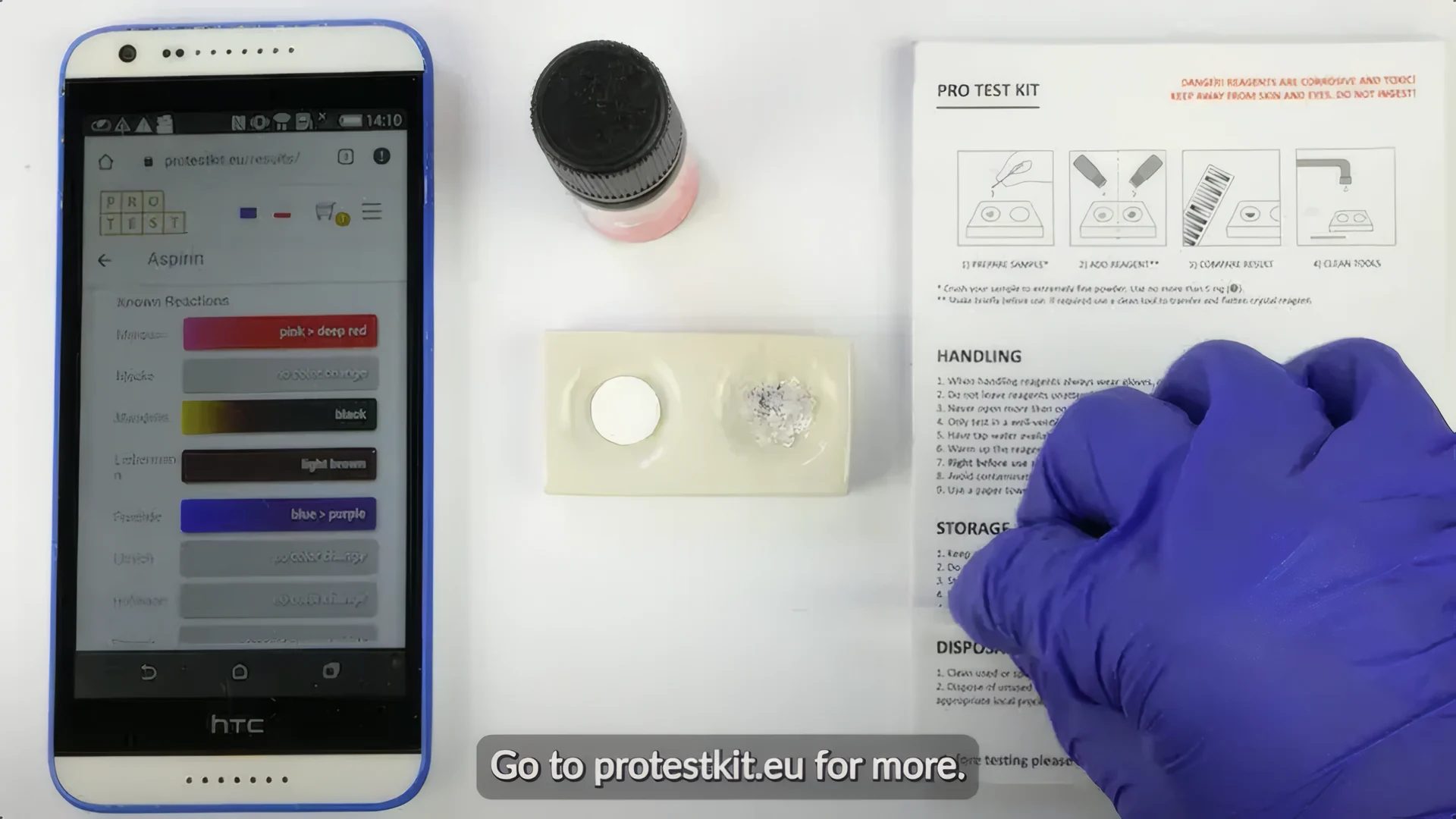
Froehde reagent is a common drug testing kit for crystals, powders or pills. Froehde test is best for 2C-x, DMT, MDMA, opioids and more.
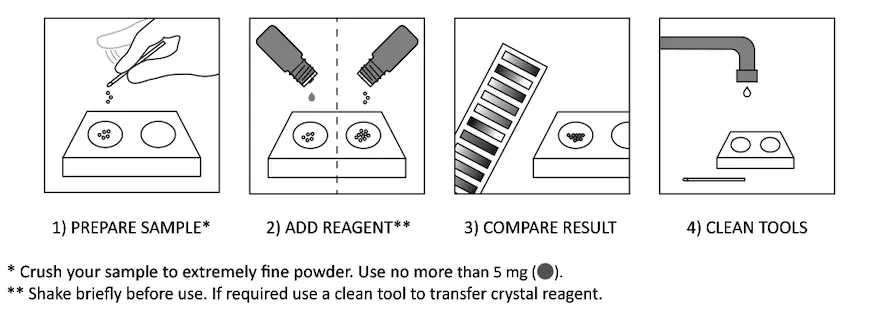
How to test?
Questions?


Still searching for the best test kit?
Click here to see our full offer, or here for single-use kits, or here for all multi-use kits including TLC purity testing kits.
A positive or negative Froehde testing kit result does not indicate if a substance is safe. No substance is 100% safe.
No test result can tell you a substance is safe. No substance is 100% safe.This article is published for harm reduction purposes. It does not encourage the use of psychoactive substances and does not replace medical advice.