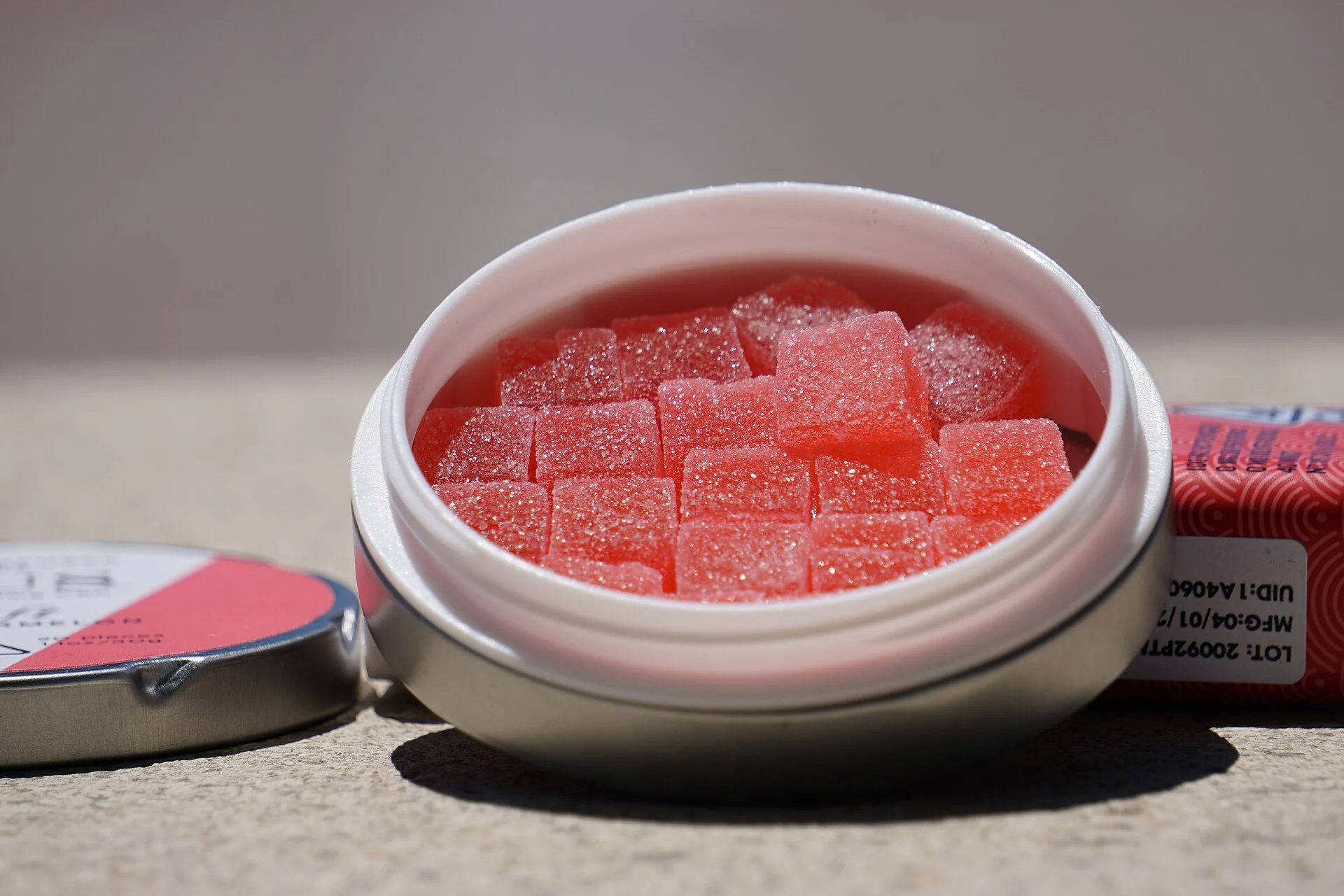
The number printed on an edible describes the batch the maker intended, not the sweet in your hand, and those two things come apart more often with edibles than with almost any other format. A pressed pill is at least one object made in one operation. A tray of gummies is a liquid mix poured into moulds, and if the active ingredient was not evenly distributed through that liquid, every gummy in the tray carries a different dose while looking identical. This is about that gap, and what you can actually do about it.
If your question is what the gummy is made of rather than how strong it is, that is a separate article: what drug gummies and gel tabs are made of covers gelatine, agar and reading a reagent through the dye.
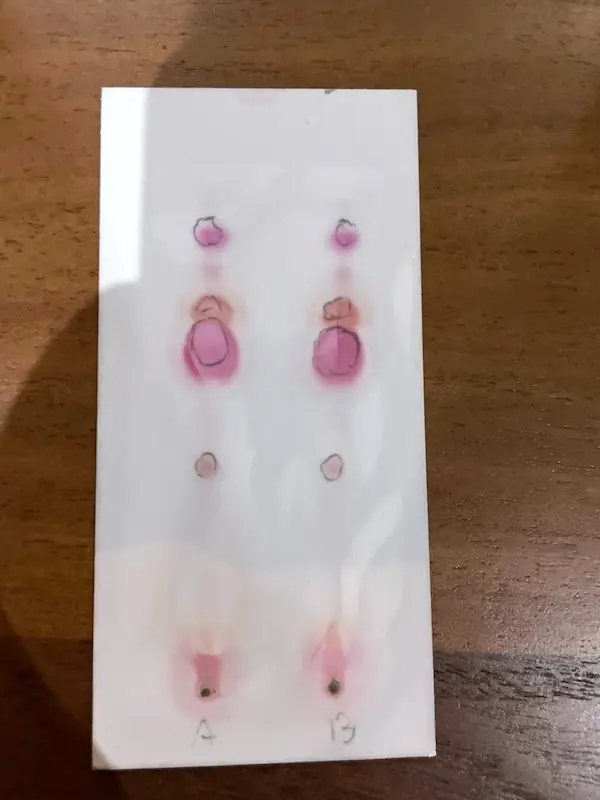
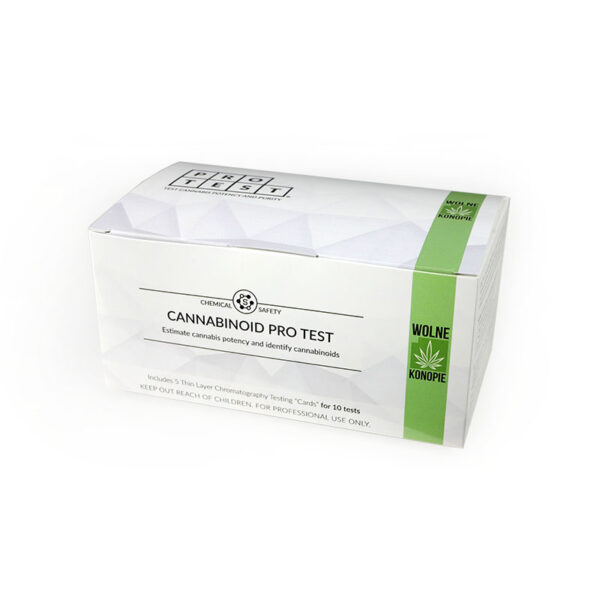
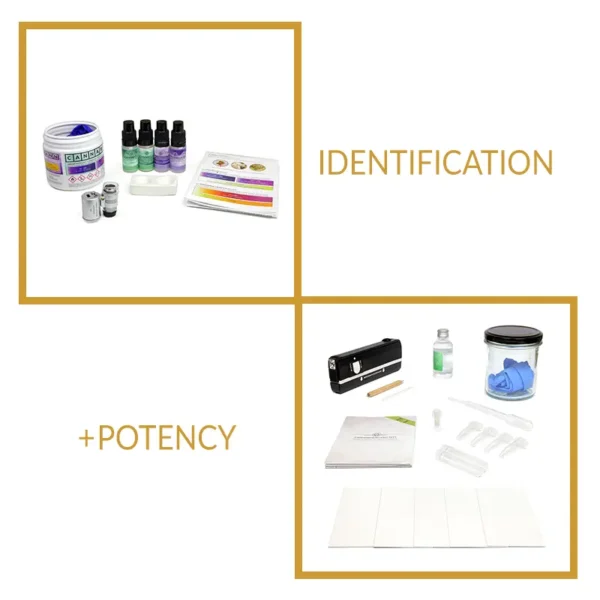
Cannabinoids separated on a testing card. The same reading works on the material that goes into an edible, before it is mixed.
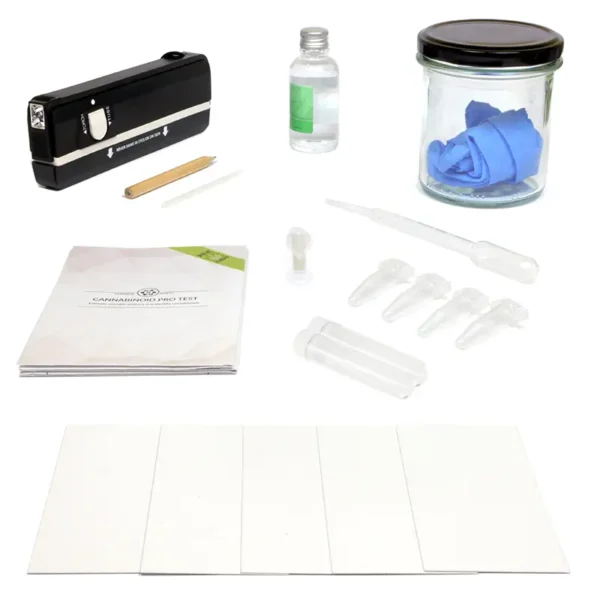
€94,49Original price was: €94,49.€85,01Current price is: €85,01.Add to cart
Why one tray gives many doses
Cannabis extract does not dissolve in water, it disperses in fat. Making an edible means getting an oily active evenly through a sugary, gelling mix, keeping it even while the mix is poured, and keeping it even while it sets. Every one of those steps is a chance for the active to drift: to settle, to float, to concentrate at the edge of the tray or at the bottom of the mould.
A commercial producer solves this with emulsifiers, controlled temperature and batch testing. A small or informal producer often solves it by stirring. The result is that a homemade or unregulated tray labelled ten milligrams each can genuinely contain sweets ranging from a fraction of that to several times it, with no visual difference between them.
Why the dose error hurts more here
Eaten cannabis behaves differently from smoked cannabis in two ways that combine badly. Onset is slow, commonly one to two hours, so the feedback that tells you whether you took enough arrives long after the decision. And the liver converts THC into a metabolite that is more potent and longer lasting than what you get from inhaling, so the same milligrams hit harder and stay longer.
Put those together and the ordinary failure is not a strong gummy, it is a second gummy. Someone takes one, feels nothing at forty minutes, takes another, and then both arrive together. That pattern, not one strong sweet but a second one taken too early, is the common route to an edible going badly wrong. It is frightening rather than dangerous in the way an opioid overdose is dangerous, but it puts people in emergency departments, and it affects children far more severely when a sweet is mistaken for a sweet.
The practical fix is the boring one and it costs nothing: wait two hours before deciding anything, and treat an unlabelled edible as an unknown dose rather than a small one.
What testing can and cannot reach
Being straight about this: an assembled gummy is a hard sample. The sugar, the gelling agent and the colouring are all in the way, and a home method reads what is in the mix as a whole rather than resolving a precise milligram figure for one sweet. Nothing on this page changes that.
What is very much reachable is the material before it becomes a gummy. If you are making edibles, the oil or extract going into the tray is an ordinary sample: a testing card separates it into its cannabinoids and puts a rough percentage on the THC, and from a known percentage and a known weight the maths for a tray is arithmetic rather than guesswork. That is the single highest-value test in this whole article, and it happens before the mix.
The table below is what each route reaches.
What each method reaches for an edible
Question
Best route
Reaches it?
What is in the extract before mixing
Reagent, then testing card
Yes
Roughly how strong that extract is
Testing card, read in the app
Yes, within about ten points
Milligrams in one finished gummy
Laboratory analysis
Not at home
Whether a bought edible contains cannabis at all
Reagent on a scraping
Usually
For presence on one sample, the first link below. For the percentage on the extract before it goes into a tray, the second and third. And where a finished product genuinely has to be quantified, that is a laboratory analysis rather than any home method.
How many milligrams is that gummy really: common questions
Can I test one gummy and get milligrams?
Not at home, and we would rather say it than sell the idea. Test the extract before it goes in, where a percentage is reachable, or send a finished product to a laboratory.
The packet says 10 mg. Can I trust it?
From a regulated producer with batch testing, broadly yes. From an unregulated one, the number describes an intention, and the even distribution it assumes is the part that fails.
I took one an hour ago and feel nothing.
Wait. One to two hours is normal onset, and the second gummy taken at the forty-minute mark is the single most common way this goes wrong.
No test result can tell you a substance is safe. No substance is 100% safe.This article is published for harm reduction purposes. It does not encourage the use of psychoactive substances and does not replace medical advice.