What the colour of THC oil tells you, and what it does not
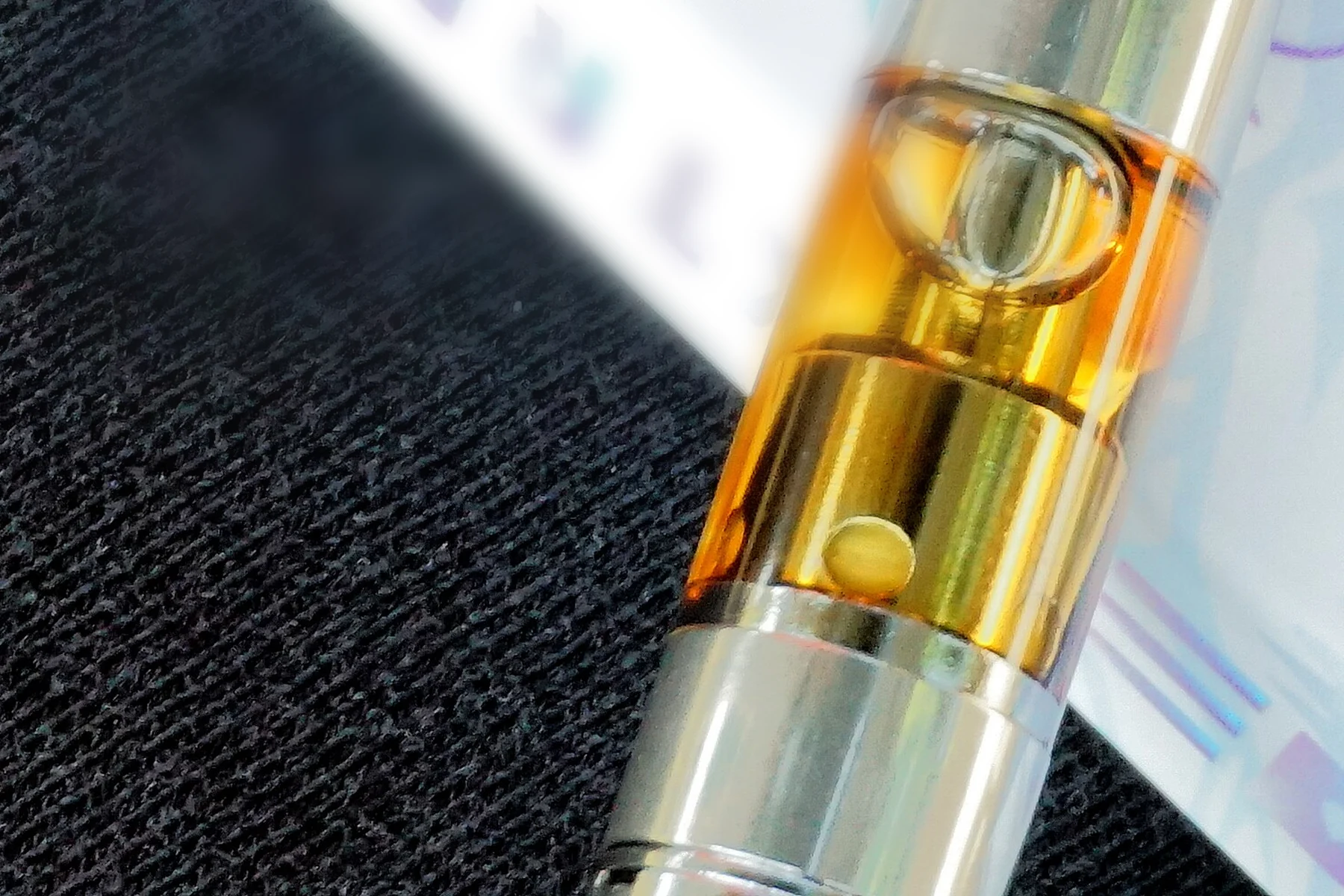
The colour of THC oil tells you about oxidation and filtering, and almost nothing about strength or what has been added to it. That is worth stating first because colour charts for carts and oils circulate constantly, usually as a gradient from pale gold on the left to dark amber on the right with a verdict printed under each shade. The gradient is real. The verdicts are not, and the parts of a cart that actually matter are colourless.
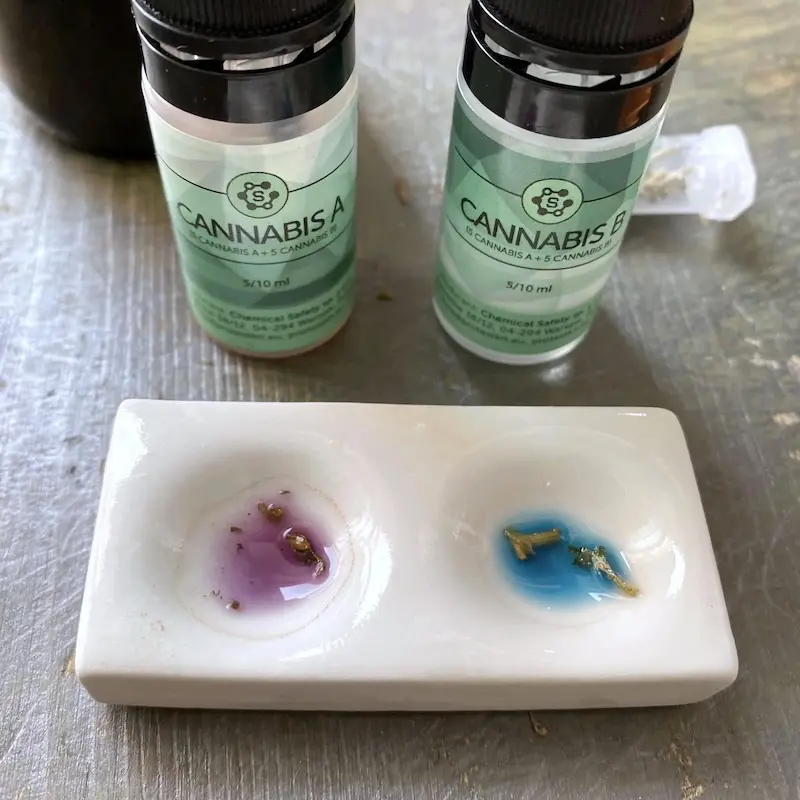
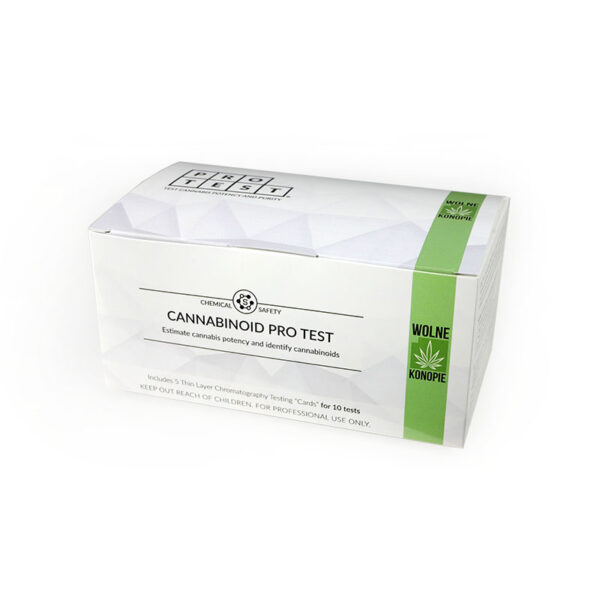
The CANNABIS reagent reads purple when CBD dominates and blue when THC does. That is a question the shade of an oil cannot settle.
€94,49Original price was: €94,49.€85,01Current price is: €85,01.Add to cart
Where the colour actually comes from
Three things drive the shade, and none of them is quantity. Extraction method comes first: distillate is stripped of plant material and starts pale, while a less filtered extract carries chlorophyll and waxes and starts darker. Age and heat come second, because cannabinoids oxidise and oxidised oil darkens; a cart left in a warm car darkens without becoming weaker in any way you would notice. Added terpenes come third, since reintroduced terpenes are often faintly coloured and change the shade on their own.
So a dark cart may be an unfiltered extract, an old one, or one with terpenes added back. Those are three different stories and the colour is identical in all three.
What the chart gets backwards
The circulating charts usually imply that pale means clean and dark means cut. Both halves fail. Pale is what a heavily processed distillate looks like, and distillate is the easiest starting material to dilute precisely because it is already stripped and consistent. Dark, meanwhile, is the normal appearance of a full-spectrum extract that has had nothing done to it at all.
The table below is the same point laid out per claim.
What each colour claim implies, and what it actually indicates
The claim
What the shade really tracks
Verdict
Pale gold means pure
Heavy filtering or distillation
Says nothing about additives
Dark amber means cut
Plant material, age or heat
Often just an unfiltered or older extract
Clear means strongest
Processing, not concentration
Quantity is not visible at all
Cloudy means contaminated
Cold, or terpene separation
Frequently reverses when warmed
The additives that have no colour
The cutting agents used in oils and carts are chosen partly because they disappear into the product. MCT oil, propylene glycol, vegetable glycerine and terpene blends are all effectively colourless at the proportions used, so a cart cut heavily with any of them can sit anywhere on that gradient you like.
Vitamin E acetate is the reason this matters rather than a curiosity. It was added as a thickener because it made diluted oil look and move like concentrate, and inhaling it was linked to a wave of severe lung injury in 2019 that put thousands of people in hospital. It was invisible in the cart. the most consequential cart additive of the last decade was one that no colour chart would ever have caught, and that thickness and viscosity were exactly what it was chosen to fake.
What does work on an oil
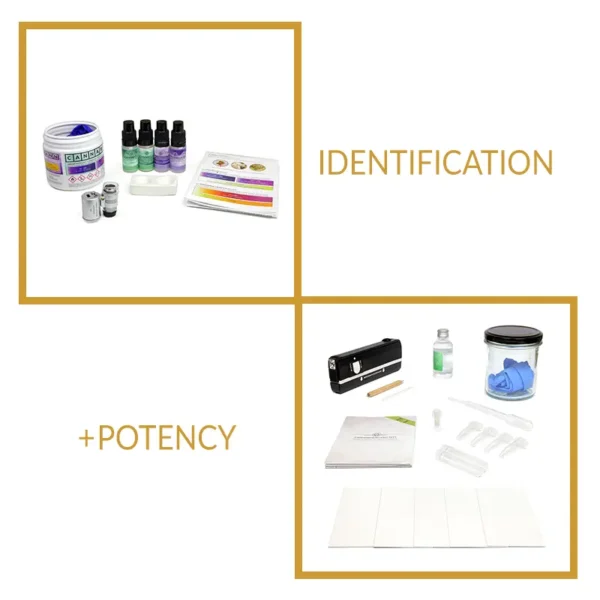
A reagent applied to a small amount answers whether cannabinoids are present, which separates an oil that contains what it claims from one that is largely carrier. That is a genuine question for anything bought loose or refilled.
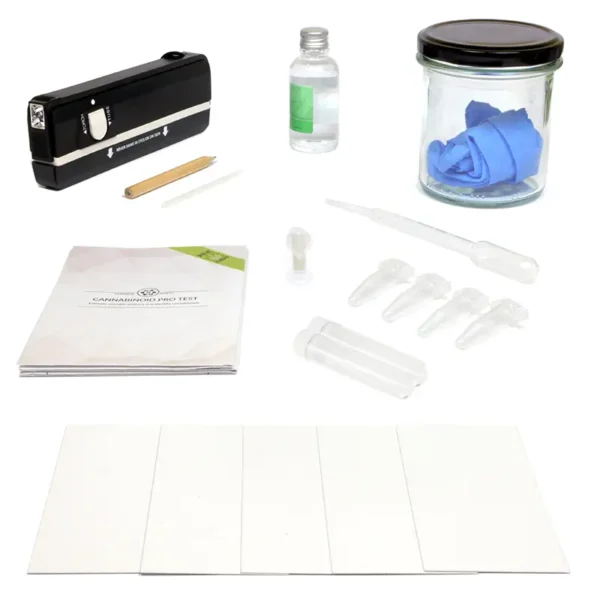
A testing card answers the proportion question. Oil needs diluting before it goes on the card, and then it separates the same way any other sample does: THC, CBD, CBN and the minor cannabinoids each as their own spot, with a rough percentage read in the DrugsPRO app. For a cart, the useful reading is often not the THC number but how much else is there, because a heavily diluted oil shows thin cannabinoid spots regardless of its colour.
For presence on a single oil, the first link below. For the proportion, the second, and the third if you want identification alongside the quantity.
Neither method covers vitamin E acetate, pesticides or residual solvents, and we would rather name that than let it be assumed. For an oil you intend to keep using, those belong to a laboratory.
What the colour of THC oil tells you, and what it does not: common questions
My cart went darker in the drawer. Is it bad now?
Almost certainly just oxidation. It is the normal change with time and warmth, and it is not in itself a sign that anything was added.
Is there a colour that does mean something?
A sudden change in one cart, or separation into visible layers that does not resolve when warmed, is worth a second look. Shade on its own, compared against someone else’s chart, is not.
Does the bubble travel speed test work?
It measures viscosity, and viscosity was precisely what vitamin E acetate was added to imitate. Treat it as telling you about thickness and nothing else.
Can I put oil straight onto a testing card?
Dilute it first. Neat oil overloads the card and gives you a smear rather than separated spots.
No test result can tell you a substance is safe. No substance is 100% safe.This article is published for harm reduction purposes. It does not encourage the use of psychoactive substances and does not replace medical advice.