


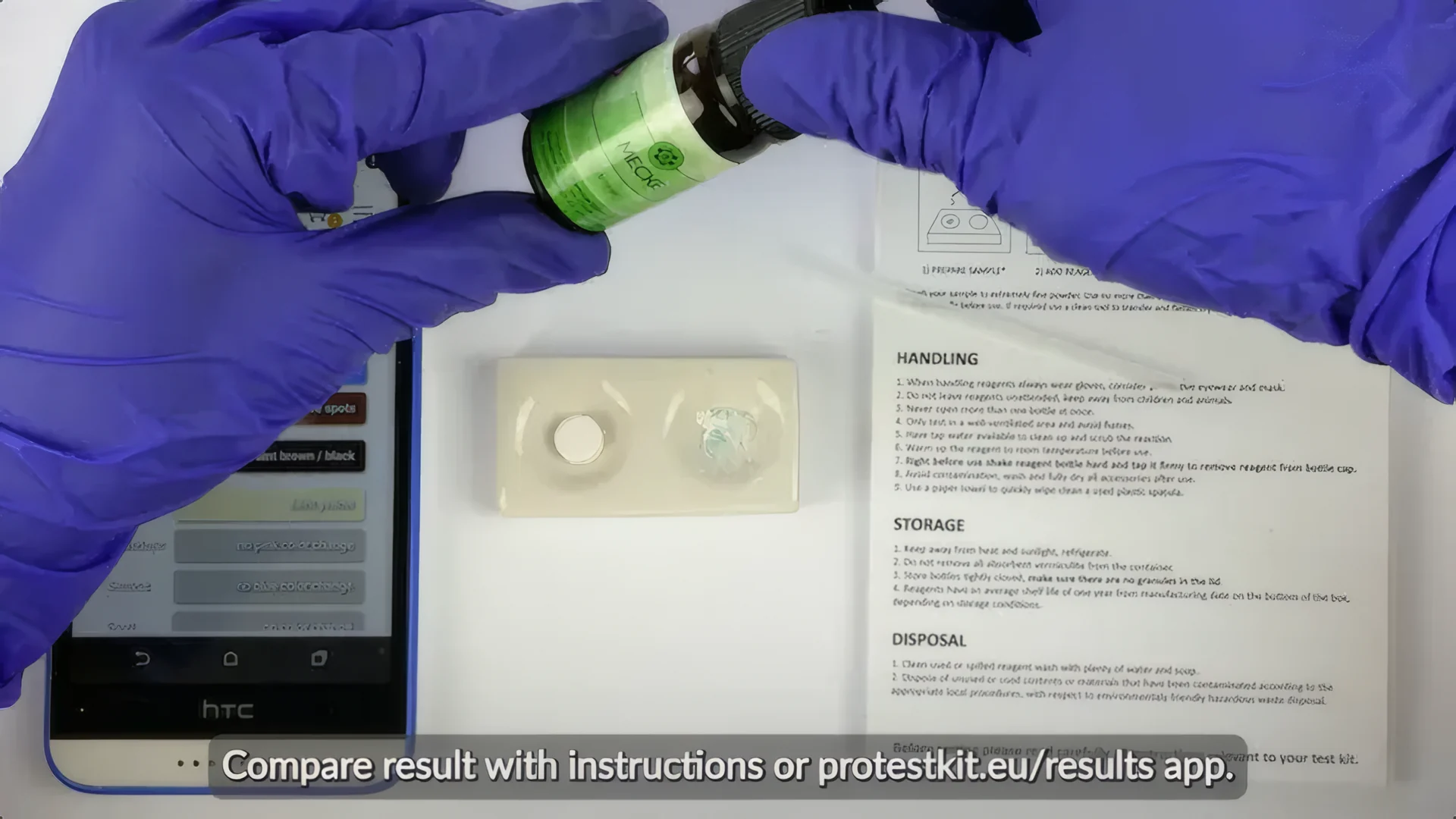
How to use the Mecke reagent
The Mecke reagent test is a chemical reagent used in the field of drug analysis. It is primarily employed to identify specific substances, particularly alkaloids and other compounds. This test is known for its capability to detect various substances, including opioids and other drugs. Invented by Austrian chemist Alois Mecke, the reagent gained prominence for its ability to distinguish between different substances based on the color changes that occur upon reaction. As a result, it has become a crucial tool in the arsenal of forensic and harm reduction services, aiding in the identification and analysis of illicit substances.
Mecke reagent colour reactions
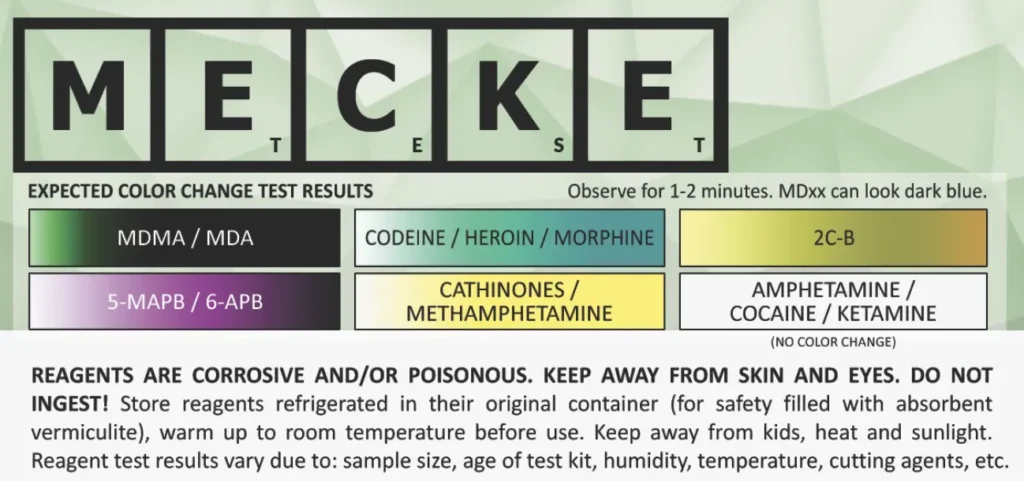
Expected colour changes for the Mecke reagent, from the PRO Test reagent chart.
| Substance | Expected reaction |
|---|---|
| 2C-B | Yellow → olive |
| DMT | Brown / green |
| LSD | No instant reaction |
| Ketamine | No colour change |
| Amphetamine | No colour change |
| Methamphetamine | Yellow |
| Mephedrone | No colour change |
| MDA | Instant green → black |
| MDMA | Instant green → black |
| Cocaine | No colour change |
| Oxycodone | Faint yellow |
Reagents indicate presence, not purity or quantity. A reaction that differs from the expected colour is a reason to test further, not proof of a particular substance.
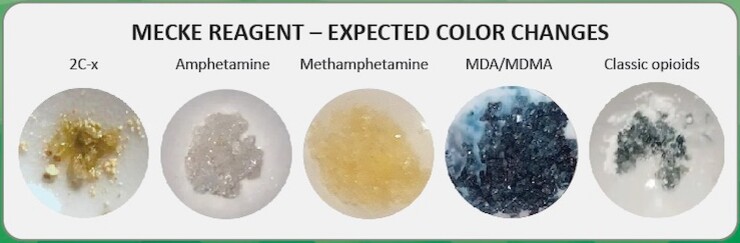
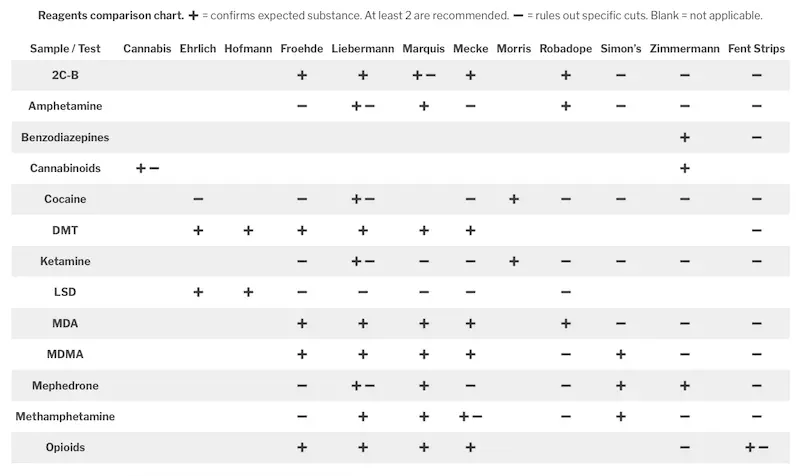
Mecke reagent is a common drug testing kit for crystals, powders or pills. Mecke test is best for 2C-B, cocaine, DMT, MDMA, meth/amphetamine, opioids and more.
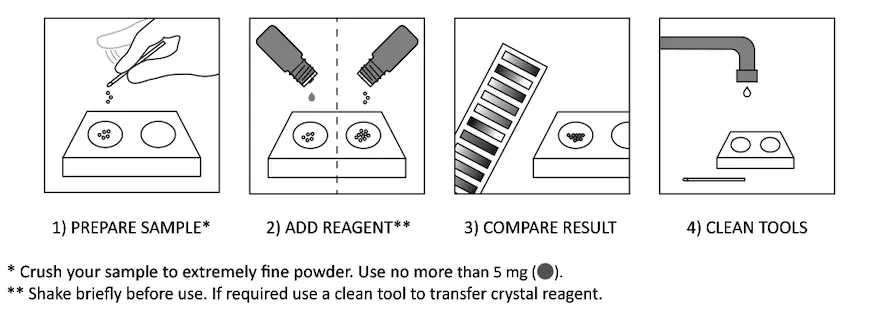
How to test?

Still searching for the best test kit?
Click here to see our full offer, or here for single-use kits, or here for all multi-use kits including TLC purity testing kits.
A positive or negative Mecke testing kit result does not indicate if a substance is safe. No substance is 100% safe.
No test result can tell you a substance is safe. No substance is 100% safe.This article is published for harm reduction purposes. It does not encourage the use of psychoactive substances and does not replace medical advice.