Testing cocaine purity requires three steps in the following order: confirm it is cocaine, rule out the cuts, then measure the strength. Skipping to the third is likely to produce a false positive result, which we explain in detail further down.
Of the samples European drug checking services have published, 523 carry a laboratory purity figure.
The table below gives the purity figures.
Cocaine purity in published European samples
Purity
Half came in above
86%
Average
77.7%
Over 80%
339 samples
Under 50%
70 samples
Range
1% to 100%
The common idea of cocaine, mostly chalk and filler with low purity, is in many places no longer the reality. It can be a dangerous problem: if you learned your dose on 40% material and the market moved to 86%, the same line is now more than twice the drug, so a high middle figure is a dosing hazard rather than good news. None of that is visible in the powder without testing.
What laboratories found alongside How to test cocaine purity
337 of 767 samples, 44%, contained something besides cocaine. These are detections, so a sample carrying both procaine and levamisole counts twice.
The table below counts what came back alongside the cocaine, by number of detections.
What labs detected alongside cocaine, by number of detections
Detected alongside cocaine
Detections
Procaine
95
Caffeine
74
Levamisole
61
Phenacetin
45
Benzoylecgonine
44
Norcocaine
28
Ketamine
21
Paracetamol
20
Tetramisole
17
Lidocaine
14
Tropacocaine
13
Grouped by sample, three families matter for different reasons. Local anaesthetics turn up in 108 samples and are there to reproduce the numbing people use as a purity test, which is exactly why the numbing test is worthless. Levamisole and tetramisole appear in 78, and levamisole is a veterinary dewormer that causes agranulocytosis, a collapse in white blood cell count, in a small proportion of regular users. Coca alkaloids appear in 71 and are not adulterants at all, since they come from the plant and the processing, but they cause false positives with Marquis and Liebermann.
Then a small tail that is not small in consequence: 11 samples contained heroin, 6-MAM or acetylcodeine, and nobody at that party is expecting an opioid.
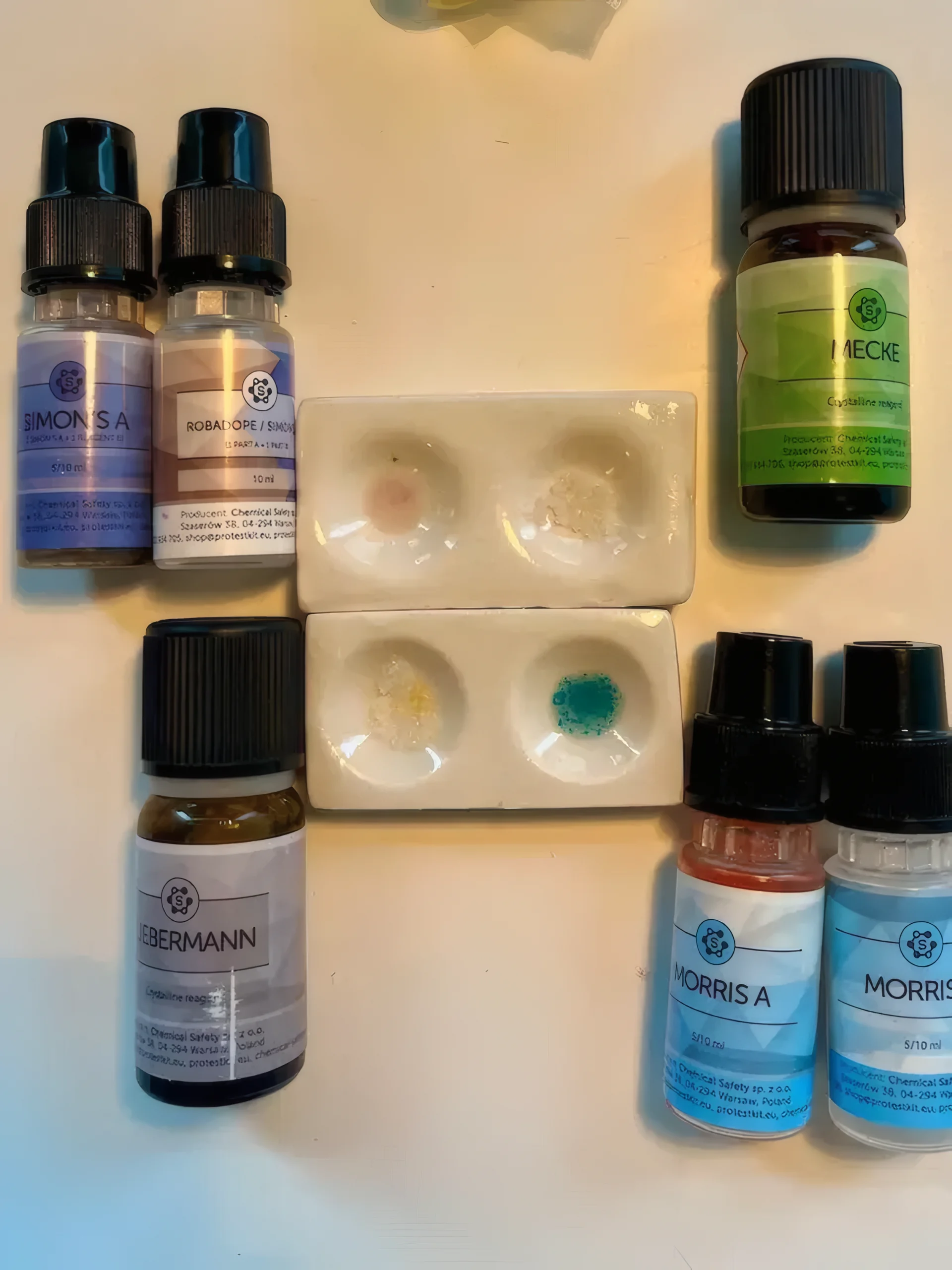
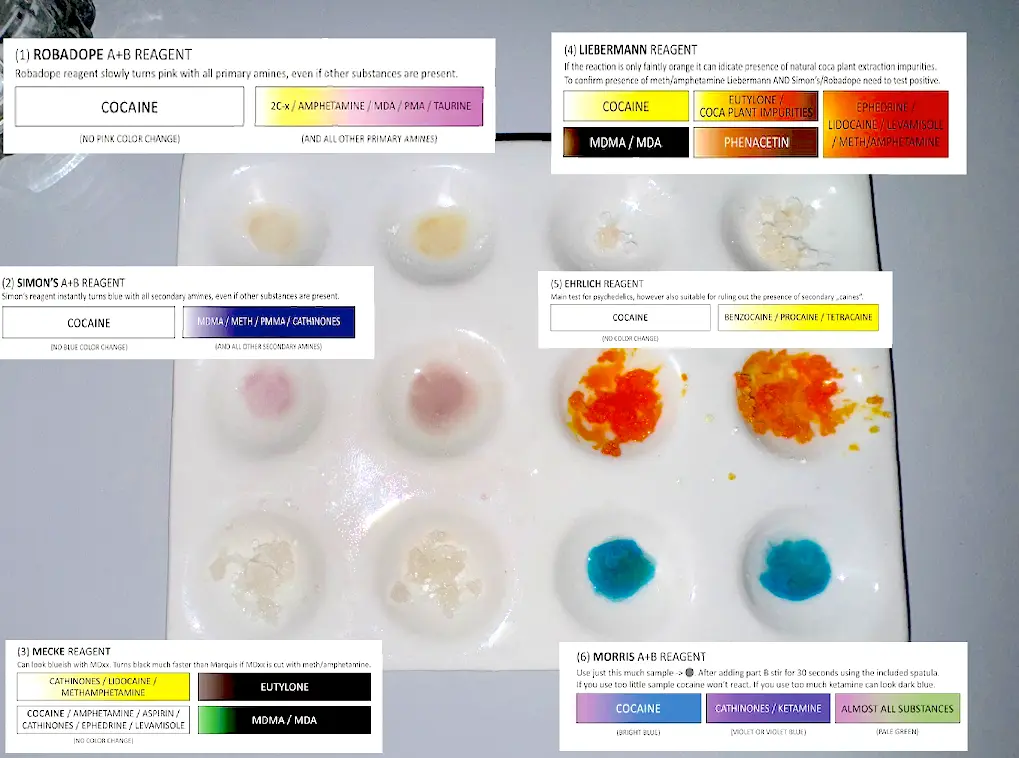
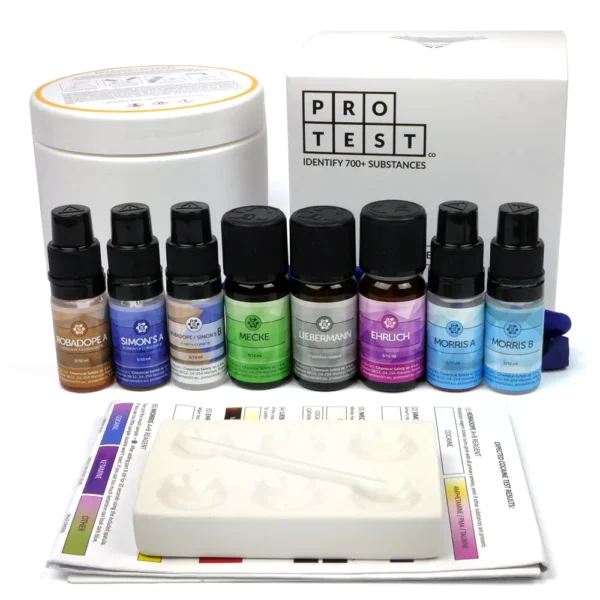
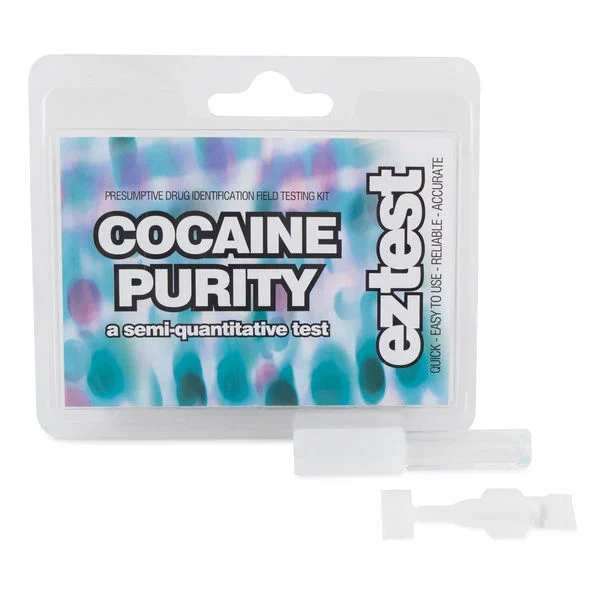
Six reagents, each ruling out a different family. Morris confirms the presence of cocaine. Liebermann excludes phenacetin, ephedrine, lidocaine, levamisole, methamphetamine, cathinones and coca alkaloids. Mecke excludes lidocaine, cathinones and various stimulants. Simon's excludes MDMA, methamphetamine, PMMA, cathinones and partly levamisole. Robadope excludes 2C-x, amphetamine, MDA, PMA and taurine. Ehrlich excludes benzocaine, procaine and tetracaine. Two readings are worth memorising: Marquis should not react at all with pure cocaine, and Liebermann should stay yellow. An orange Liebermann narrows the field without naming a compound, because levamisole, phenacetin, amphetamine, ephedrine, the cathinones and the coca alkaloids all produce it.
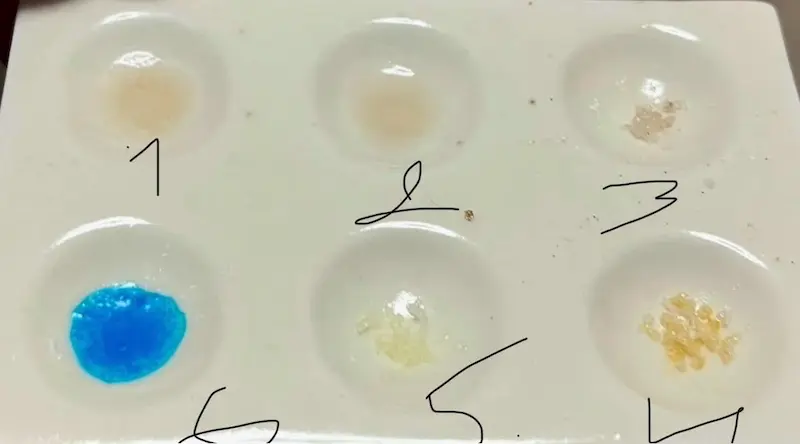
Cocaine on the six reagents. Morris turns blue and Liebermann stays yellow, which is the clean reading.The same six reagents on a dirty sample. Liebermann has gone orange, which indicates coca plant impurities.
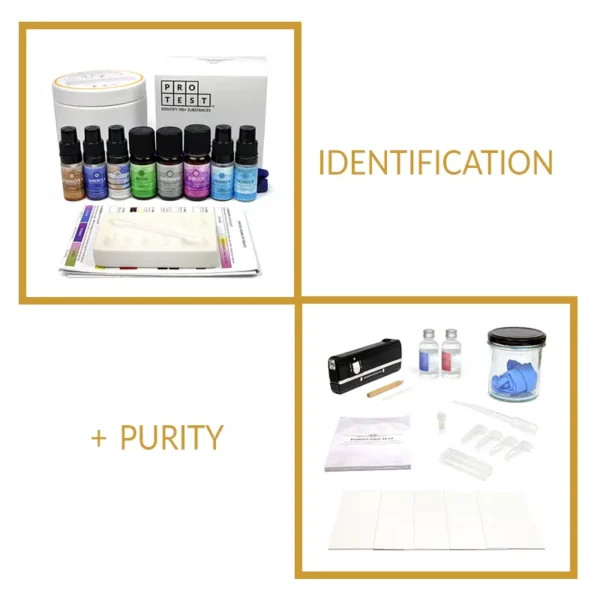
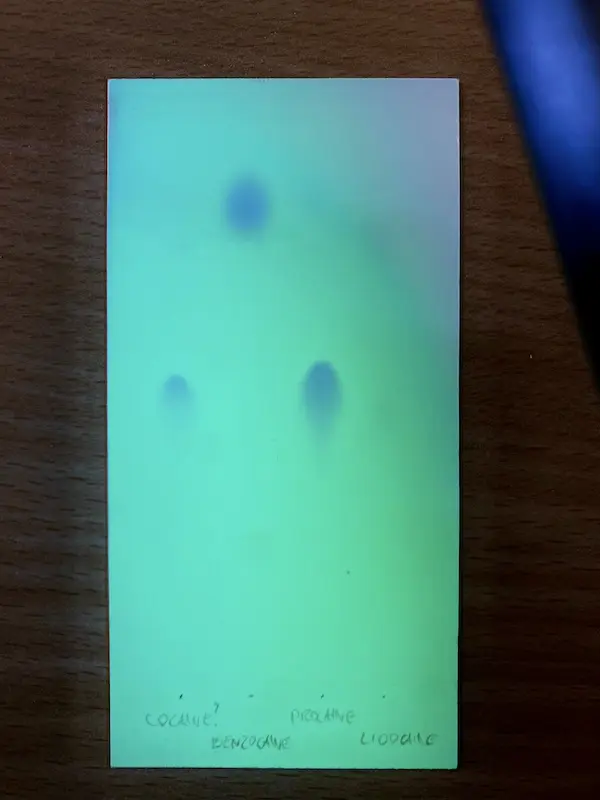
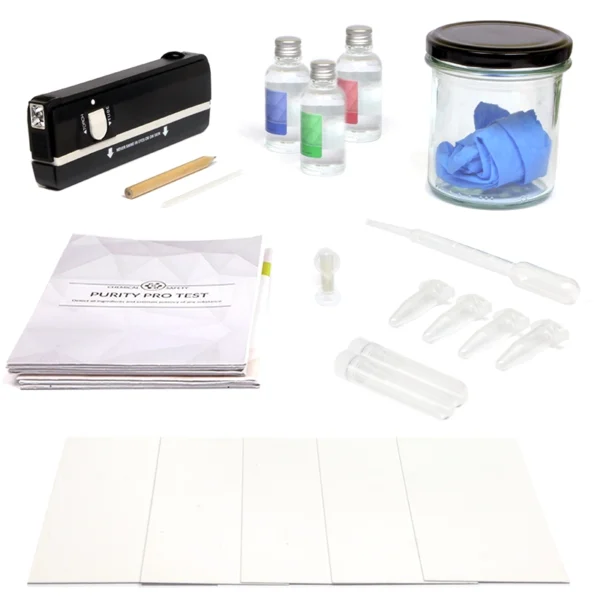
Identification reagents indicate presence and cannot count. A TLC purity test separates the sample and shows every compound in it as a separate spot, including the ones no reagent reacts with, and against a calibrated reference it estimates how much of each. Cocaine is one of the five compounds with a lab-verified percentage curve. If nothing but cocaine appears and the sample dissolved fully, that result is consistent with a pure sample, which is the only way to get an absence result at home. The testing card measures and the reagent kit names, so the two are designed to be used together.
Cocaine beside benzocaine, procaine and lidocaine, each stopping at its own height. Local anaesthetics were in 108 of the 767 samples.
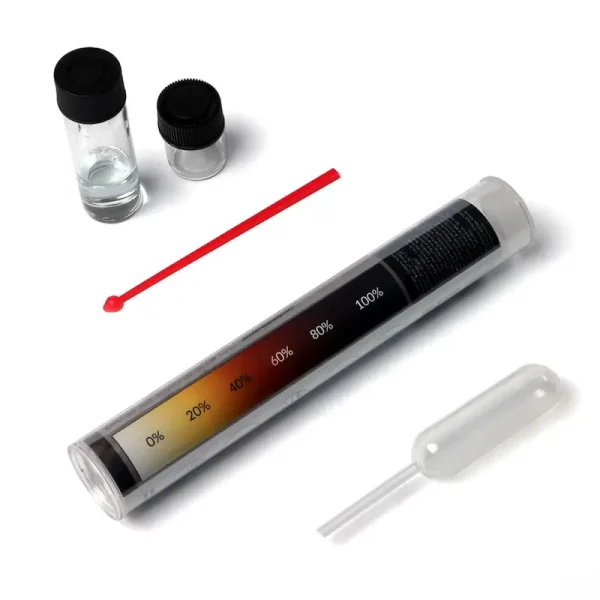
A quantity test estimates concentration in a sample where cocaine has already been identified, which is why step 1 comes first. Give a quantity reagent a sample full of procaine and it will produce a colour quite happily, and you will read a number that describes the wrong compound.
A purity test asks what fraction of the powder is cocaine. A quantity test asks how much cocaine is in the line you are about to do. Related, but 90% purity in a 200 mg line and 90% purity in a 60 mg line are the same purity and very different evenings. If you only ever run one of the two, we would run the purity test, because it also catches the levamisole.
No. Local anaesthetics were found in 108 of 767 samples, and procaine, lidocaine, benzocaine and tetracaine all numb. Numbing tells you an anaesthetic is present and nothing else. A reagent tells you whether cocaine is there at all, and a testing card shows the anaesthetic as its own spot beside it.
What is the average purity of cocaine in Europe?
Across 523 lab-tested samples, half came in above 86%, and the average was 78%. Those are samples a lab had already confirmed were cocaine, so the figure is a reason to run a quantity test rather than assume a familiar dose, not a reason to skip the reagents that establish what you have.
Is levamisole common?
61 detections in 767 samples, plus 17 of tetramisole. No reagent identifies it directly; Liebermann and Simon's help exclude it, and TLC shows it as a spot.
Can a reagent tell me the percentage?
Partly. Identification reagents show presence rather than amount, but a dedicated quantity reagent gives a semi-quantitative estimate once the sample has been confirmed as cocaine. It is less precise than a testing card read against a calibrated reference, and a laboratory is more precise again.
Which test if I only buy one?
The cocaine test kit. Identification is the question that invalidates every other answer, and it is the cheapest to answer.
Why did Marquis react when I have good cocaine?
Marquis should not react with pure cocaine. A pink or peach change suggests secondary coca alkaloids, which also turn Liebermann orange.
No test result can tell you a substance is safe. No substance is 100% safe.This article is published for harm reduction purposes. It does not encourage the use of psychoactive substances and does not replace medical advice.