


How to use the Liebermann reagent
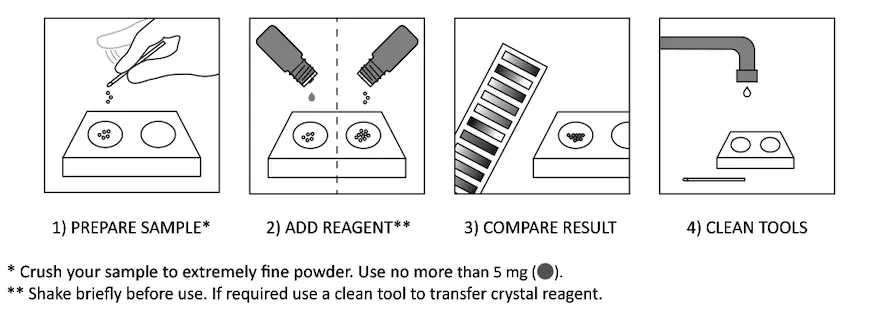
The Liebermann reagent, named in honor of the Hungarian chemist Leo Liebermann (1852-1926), serves as a rapid spot-test for the preliminary detection of alkaloids and other compounds. Its composition typically involves a blend of concentrated sulfuric acid and potassium nitrite, where the recommended ratio is 1 gram of potassium nitrite for every 10 milliliters of sulfuric acid. Alternatively, sodium nitrite can be used as a substitute. This reagent finds application in the identification of substances such as cocaine, morphine, PMA, and PMMA. To conduct the test, a small sample of the material is scraped off, and a drop of the initially transparent and colorless reagent is added. The results are then interpreted based on the observed color of the resulting mixture and the duration it takes for the color change to manifest.
Liebermann reagent colour reactions
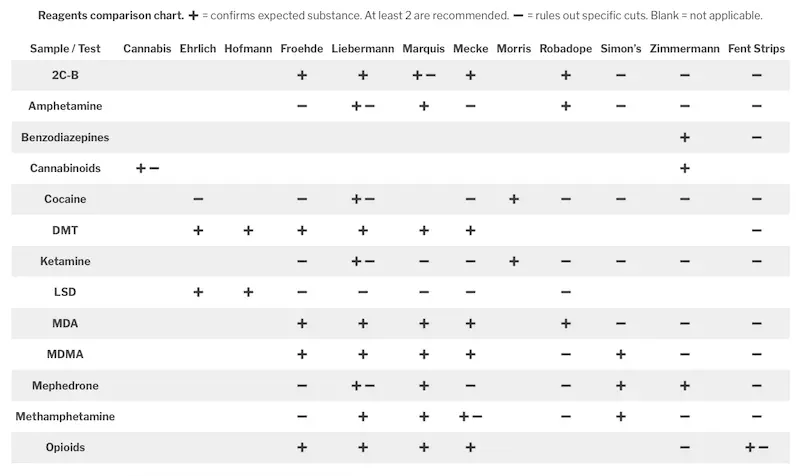
Expected colour changes for the Liebermann reagent, from the PRO Test reagent chart.
| Substance | Expected reaction |
|---|---|
| 2C-B | Yellow → black |
| DMT | Brown → black |
| LSD | No instant reaction |
| Ketamine | Light yellow |
| Amphetamine | Orange → red |
| Methamphetamine | Orange-reddish |
| Mephedrone | Yellow / orange |
| MDA | Instant black |
| MDMA | Instant black |
| Cocaine | Yellow / orange |
| Oxycodone | Brown spots |
Reagents indicate presence, not purity or quantity. A reaction that differs from the expected colour is a reason to test further, not proof of a particular substance.
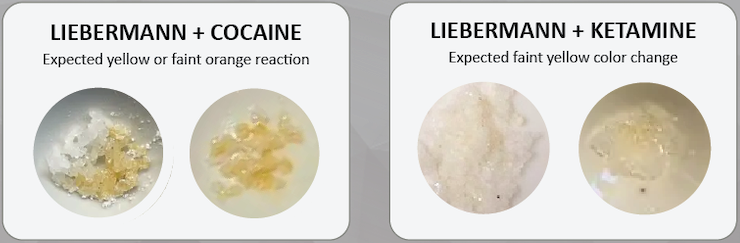
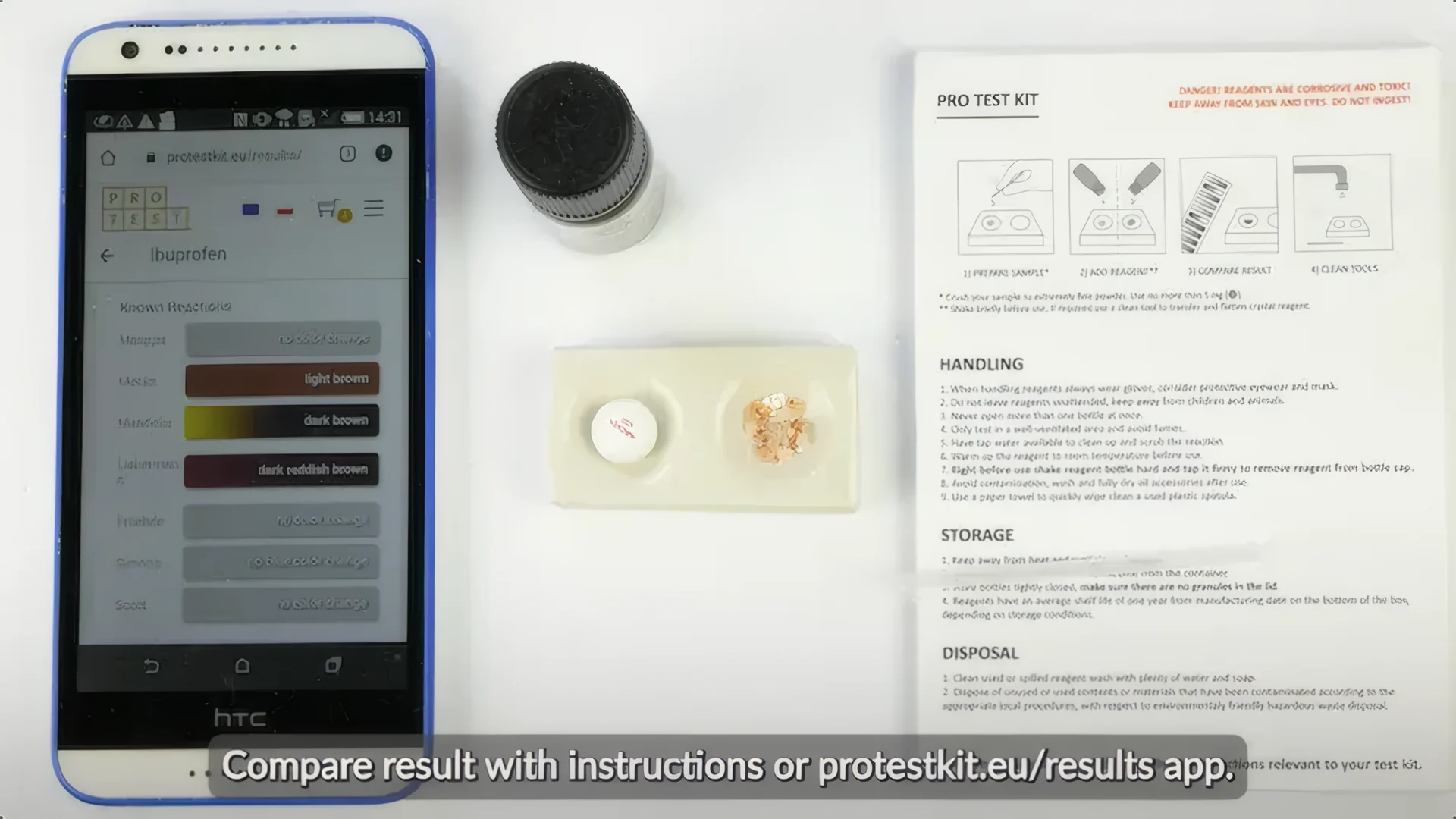
Liebermann reagent is a common drug testing kit for crystals, powders or pills. Liebermann test is best for 2C-B, cocaine, DMT, ketamine, MDMA, meth/amphetamine, mephedrone, opioids and more.
How to test?
Questions?


Still searching for the best test kit?
Click here to see our full offer, or here for single-use kits, or here for all multi-use kits including TLC purity testing kits.
A positive or negative Liebermann testing kit result does not indicate if a substance is safe. No substance is 100% safe.
No test result can tell you a substance is safe. No substance is 100% safe.This article is published for harm reduction purposes. It does not encourage the use of psychoactive substances and does not replace medical advice.