Caffeine, creatine, lactose: how do you spot a filler?
This article is provided for informational and harm reduction purposes. It does not encourage the use of psychoactive substances and does not replace medical advice.
Three ways, each answering a different question. A solvent sorts the sample by what dissolves. A reagent tells you what the active compound is. A TLC testing card separates the sample and shows roughly how much of each part is there. No single solvent catches everything, because the fillers fall into two groups that behave in opposite directions.
The fillers people ask about and the fillers laboratories report are not the same list. The table below counts how often each turns up across 9,319 published European lab results.
How often each filler appears in 9,319 published European lab results
Filler
Samples
Most often alongside
Caffeine
840
amphetamine, MDMA, heroin
Paracetamol
229
heroin, cocaine
Phenacetin
67
cocaine
Levamisole
64
cocaine
Creatine
14
4-MMC, cocaine, ketamine
Lactose
6
MDMA
Taurine
2
ketamine
Bicarbonate
1
—
MSG
0
—
MSG is the one to notice: it comes up in almost every conversation about ketamine cuts and appears zero times. Caffeine turns up in 840 samples, more than everything else in that table combined. Those counts describe samples other people submitted, though. A filler that is rare across Europe can still be the whole of your bag.
The rule is simpler than it sounds: acetone picks up plain molecules and ignores salts and sugars. Caffeine and paracetamol are plain molecules, so acetone takes them. Cocaine hydrochloride is a salt, so it stays put, and that is the entire reason the wash works. The catch is in the same sentence. Levamisole is normally cut in as a hydrochloride too, and levamisole hydrochloride is insoluble in acetone, so it stays exactly where it is. The cut people most want out of their cocaine is the one an acetone wash does not remove.
The bulking agents behave the same way for a different reason. Lactose and the other sugars, MSG, creatine, taurine and baking soda are insoluble in acetone and in alcohol, so they sit in the powder afterwards looking like product. Water dissolves them, but water dissolves the drug too. The table below gives each one.
How each filler behaves in water and in acetone, against the drug salts
Substance
In water
In acetone
What a solvent shows
Caffeine
dissolves
dissolves
separates from the drug
Paracetamol
slightly
dissolves
separates from the drug
Levamisole (as hydrochloride)
dissolves
stays solid
nothing, stays with the drug
Lactose and other sugars
dissolves
stays solid
nothing, stays with the drug
MSG
dissolves readily
stays solid
nothing, stays with the drug
Creatine
poorly, about 1.3 g per 100 ml
stays solid
nothing, stays with the drug
Taurine
dissolves
stays solid
nothing, stays with the drug
Baking soda
dissolves
stays solid
nothing, stays with the drug
Cocaine, amphetamine, MDMA salts
dissolves
barely
this is what stays behind
How an acetone wash tek quietly takes your product
All of that assumes dry acetone, and hardware-shop acetone is not dry. Technical grades carry a few percent water, pharmacy isopropanol is commonly 70%, and water dissolves everything in that table, drug included. Drying it at home can work, and people do it successfully. The problem is that you get no feedback: dried and undried acetone look, smell and pour identically, so the one variable deciding whether you remove caffeine or remove product is the one you cannot see.
The technique has a name and a lineage. The acetone wash tek was written up by Le Junk on Bluelight, and the megathread that followed is still the reference people work from, deservedly. It rests on exactly the chemistry above, and a wash done properly lifts out caffeine and paracetamol at no cost to the product. Everything below is a departure from that tek, not an argument against it.
What goes wrong depends on the form you are holding, because a salt and a freebase behave in opposite directions in acetone.
Ways an acetone wash tek removes product, by the form of the sample
What was done
With a salt (cocaine HCl, amphetamine sulfate)
With a freebase (crack, freebase oil)
Pure dry acetone, the tek as written
works as intended: caffeine and paracetamol leave, product stays. Levamisole and sugars do not
the product dissolves and is poured away. The tek does not apply to this form
Shop acetone or 70% isopropanol used straight
the water fraction dissolves the salt and it leaves with the wash
water barely touches it, but the acetone already has it in solution
Several washes, generous volume
slightly soluble is not insoluble, and a few percent per rinse compounds
nothing left to lose after the first one
Acetone warmed to speed it up
solubility rises with temperature, so more product goes with it
already fully dissolved, temperature changes nothing
The cut was sugar, MSG or creatine
nothing is removed. Those are insoluble in acetone and still in the powder
the reverse of the intention: the cut stays and the drug goes
Wash liquid discarded without checking
whatever dissolved is gone unexamined
the whole sample is in that liquid
The tek assumes a salt. On a freebase every row runs backwards, and the fifth is the one to sit with: you pour off the drug, keep the filler, and end up with a powder more cut than you started with that looks like it was cleaned.
Yield cannot tell you which happened. Losing 40% because the sample was 40% caffeine and losing 40% because your product dissolved look identical, a smaller pile of better-looking powder.
Testing what you threw away can. Let the discarded wash evaporate on a plate and put a reagent on the residue. Caffeine gives essentially no colour with Marquis, so a residue that produces a real reaction is telling you product went down the drain with it. That is the check almost nobody runs.
A word on acid/base extraction, since it comes up whenever washes do. A wash asks one question: does it dissolve? An A/B asks a second one: can it change form? Cocaine is a base, so an acid turns it into a water-loving salt and a base turns it back into an oil-loving freebase. Flip it one way and it moves into water, flip it back and it moves into solvent, and anything that cannot make that trip is left behind. That is how an A/B reaches the sugars, MSG and creatine that acetone cannot touch, because none of them can flip.
Two things it does not do. Levamisole is a base as well, so it flips at the same time and follows the cocaine through every step, which is why no home procedure separates those two. And it gives you two moments where the wrong pH leaves your product in the layer you are about to pour away, instead of one. It is still not a test: it tells you nothing about what you have or how much of it there is.
What reagents show, and what the filler adds
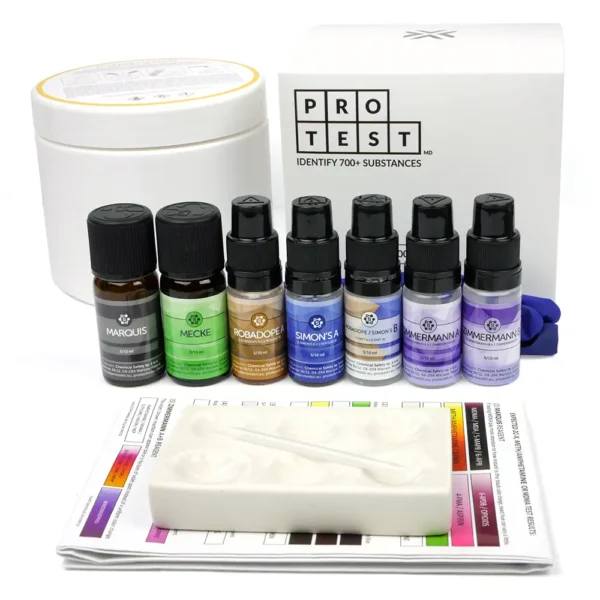
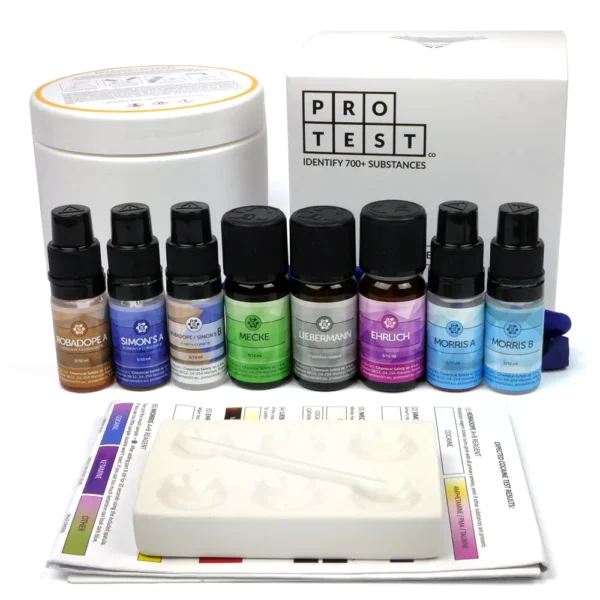
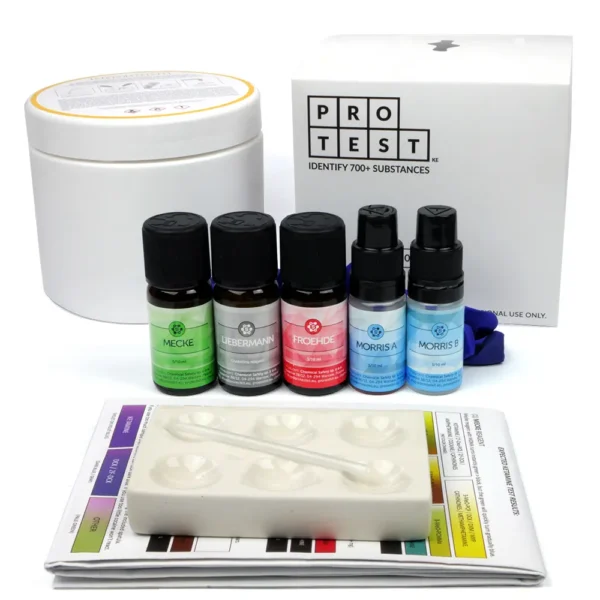
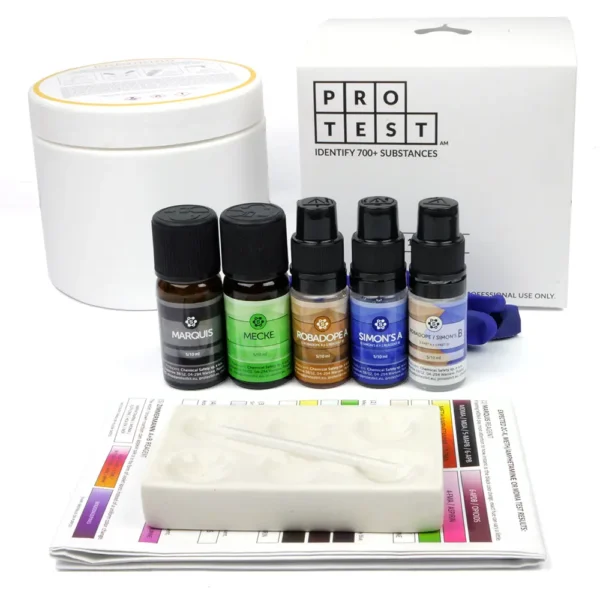
Reagents answer a different question: what the active compound is. Marquis, Mecke, Simon's, Robadope and Morris are built to identify the drug and stay blank on most fillers. Tested alone, caffeine and lactose leave Marquis almost colourless.
Two fillers change what you see, . Read the next result carefully, because you read the right thing. Sugars caramelise in the sulfuric acid Marquis is made of, so a heavily sugar-cut sample turns brown with no Marquis reaction having happened. And baking soda fizzes on contact with the acid, which is not a colour result but is a clear tell that carbonate is there. Read the reaction where the reagent meets the sample, not at a brown edge.
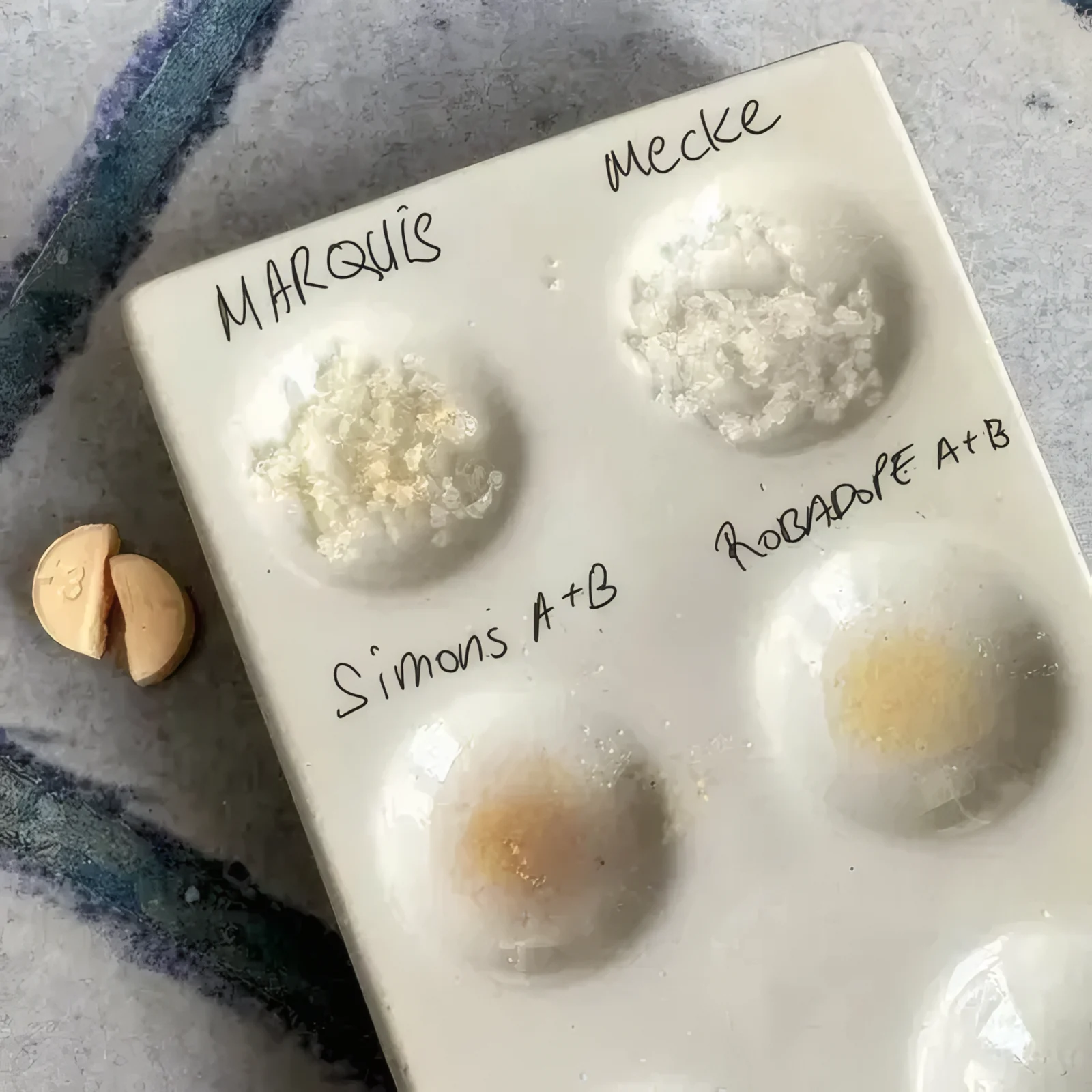
Caffeine with Marquis, Mecke, Simon's and Robadope. The most common cut in Europe, and almost nothing to see.
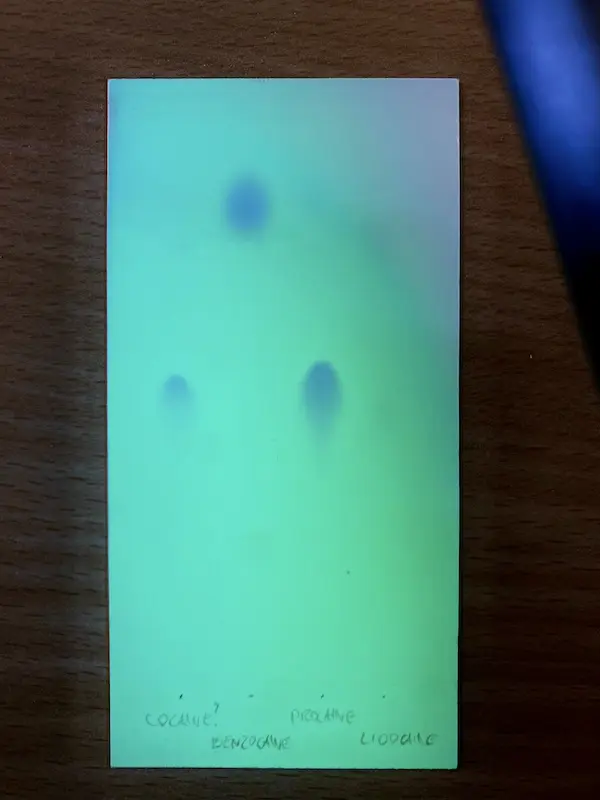
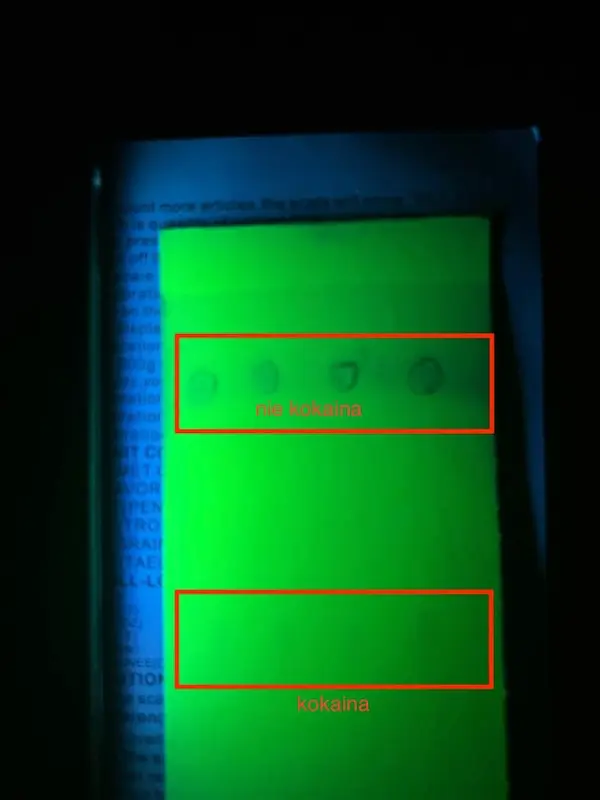
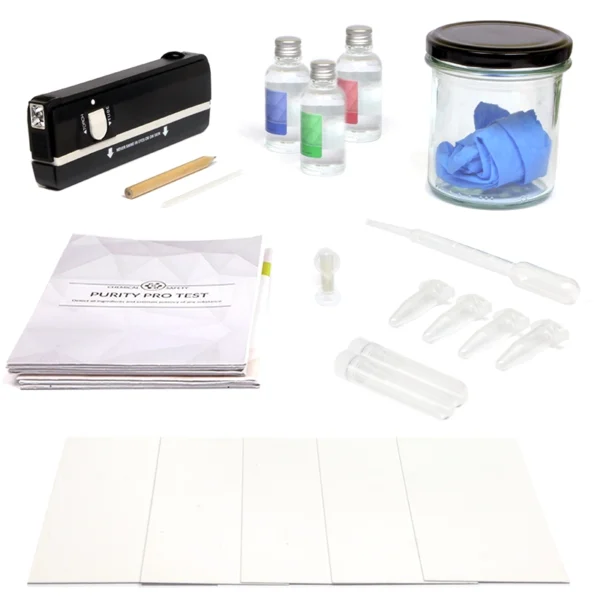
A TLC testing card separates the sample and shows each component as its own spot, with a rough sense of how much of each. A wash sorts the powder into two piles and leaves you guessing what was in each; a card shows the sugars, the caffeine and the drug at once, and answers the proportion question. Knowing a sample is cut is different from knowing it is a quarter drug.
Cocaine beside benzocaine, procaine and lidocaine, each as its own spot.Cocaine and caffeine on one card. A wash cannot show you this.
Caffeine, creatine and lactose: how to spot a filler: common questions
Does an acetone wash remove levamisole?
No. Levamisole hydrochloride is insoluble in acetone, so it stays with the product. The wash removes caffeine and paracetamol, not the cut most people are worried about.
Will Morris show baking soda?
Not as a colour. Morris reads ketamine and cathinones. Carbonate gives itself away by fizzing against an acidic reagent, which you see with Marquis.
Is MSG really used to cut ketamine?
It is talked about constantly and does not appear once in 9,319 published European lab results.
Does dissolving the powder make it purer?
No, and that is not what any of this is for. These methods tell you what is in a sample. None makes it safe, and none gives you a dose.
No test result can tell you a substance is safe. No substance is 100% safe.This article is published for harm reduction purposes. It does not encourage the use of psychoactive substances and does not replace medical advice.