
What does 2C-B look like?
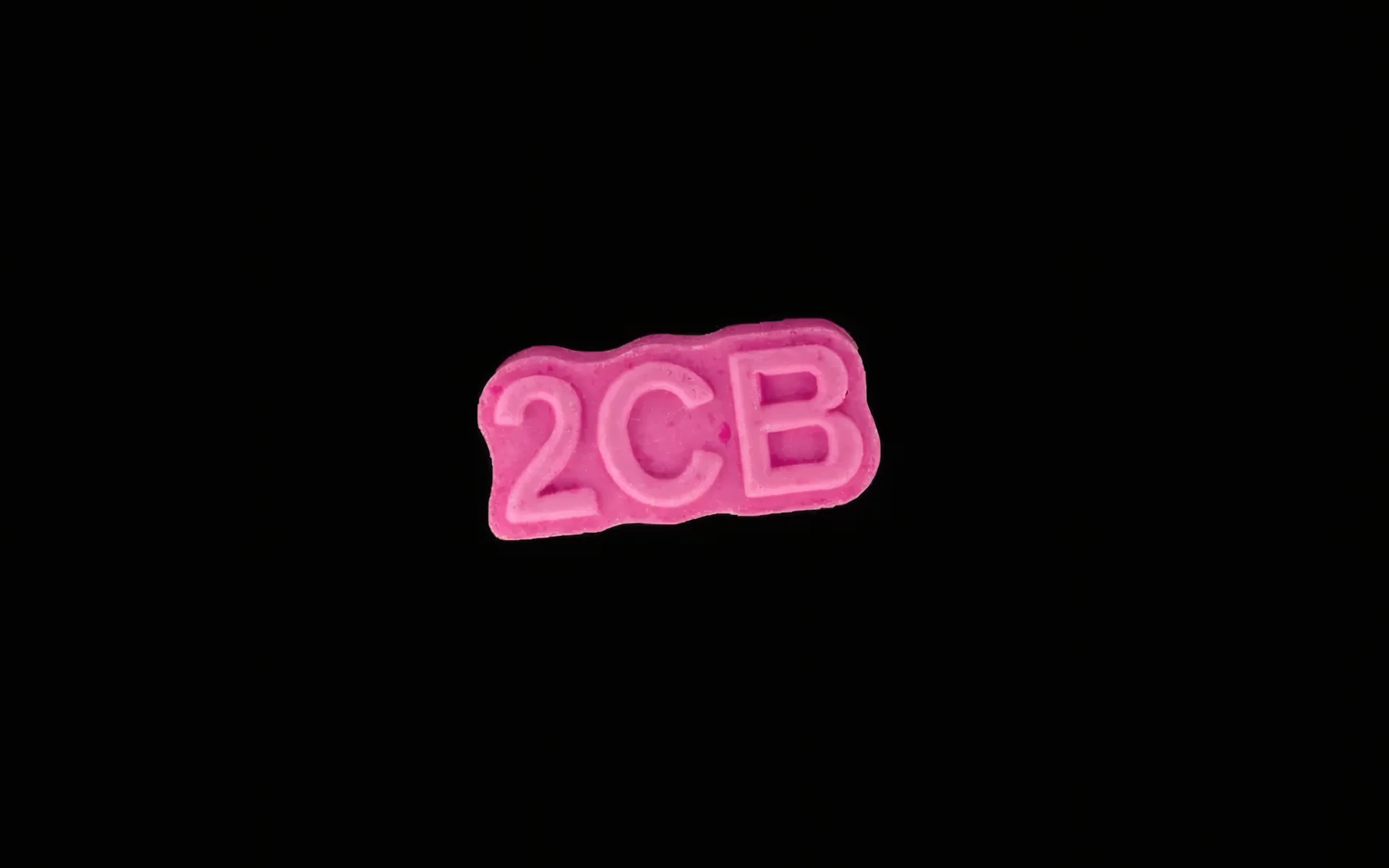
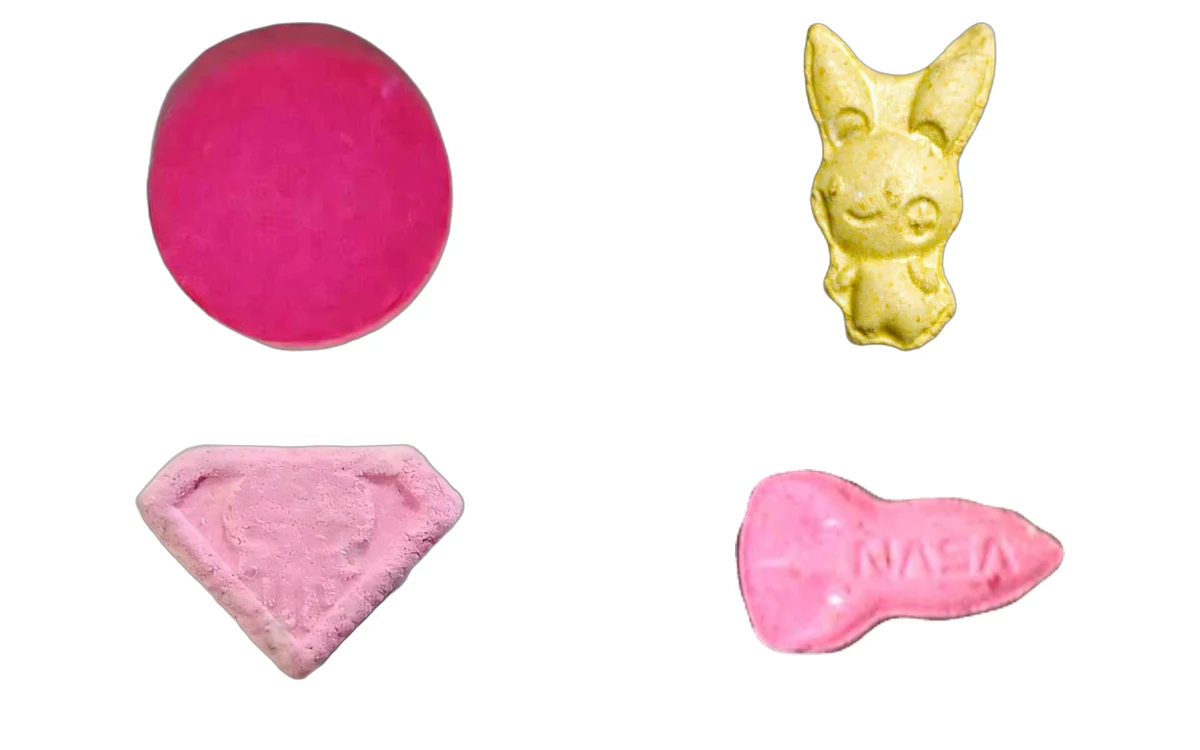
2C-B is best known for being pink, which is the least reliable thing about it. It appears as small pressed pills, as powder that runs from white through pink to beige, and less often as crystal. The colour is a branding choice and has been copied by everything sold under the same name.

Forms of 2C-B
The table below lists the shapes 2C-B turns up in and what each one actually indicates, which is usually something about processing rather than about quality.
| Form | Looks like | Tells you |
|---|---|---|
| Small pill | Often tiny, sometimes with a logo | Small size fits a milligram dose, which is a weak hint |
| Powder | White to pink or beige | Colour is dye or synthesis, not identity |
| Crystal | Small, off-white | Less common, says nothing extra |
The colour of 2C-B
2C-B hydrobromide is white. Every pink sample is pink because someone added colour, which is exactly why the colour transferred so easily to everything else sold under the name.
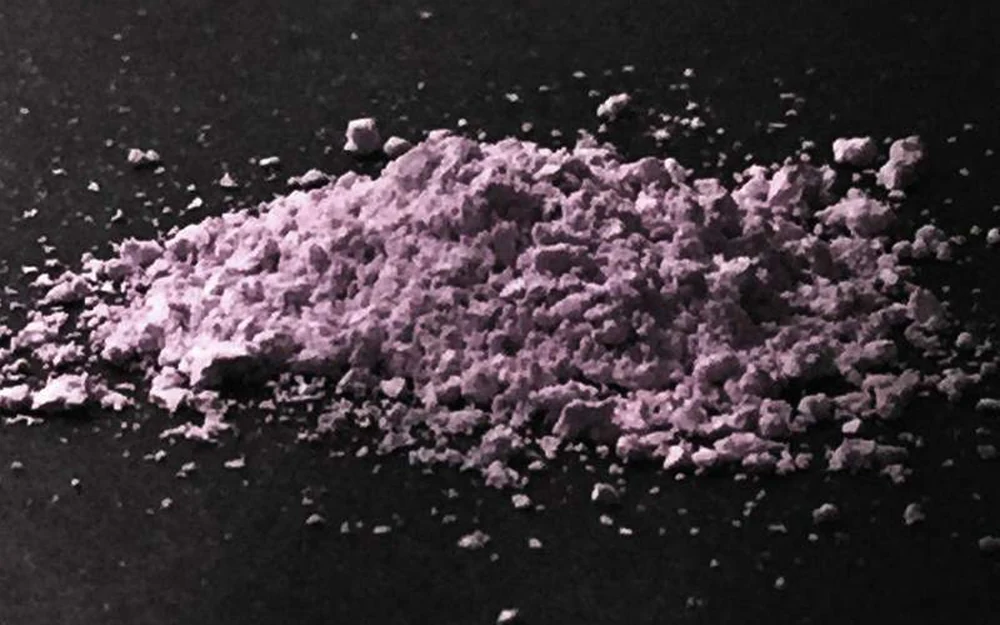
Pink became the signature and is now the problem. Dye is cheap, and pink powder sold as 2C-B has repeatedly turned out to be a cathinone, ketamine, or a mixture. This is the same naming confusion behind tusi, which is usually pink powder containing no 2C-B whatsoever.
The texture and shine of 2C-B
There is little to read. Pills are small and often crudely pressed. Powder is fine and unremarkable. 2C-B is bitter, which people use as a check, and bitterness is shared by most of what replaces it.
Substances that can look like 2C-B
Cathinones, ketamine mixtures and sometimes nothing identifiable are sold as 2C-B, particularly in pink powder form. Because the dose is in milligrams, a substitute that needs a different amount is dangerous at the same volume.
What 2C-B appearance can tell you
The size of a genuine 2C-B pill is a real, if weak, signal. A substance active at 10 to 25 milligrams does not need a large pill, so a big pill sold as 2C-B is worth questioning. That is a prompt to test, not a conclusion.
Why appearance cannot identify 2C-B
Nothing above identifies a substance. Appearance cannot tell you which molecule you have, it cannot tell you how much of it is there, and it cannot see the cuts, because the things added to 2C-B are chosen partly for looking like it. Two samples that look identical can be different substances at different strengths.
That is not a reason to give up on knowing. It is the reason chemistry exists, and the steps are quick. A reagent answers what the substance is. A testing card separates the sample and shows what else is in there along with a rough percentage. A laboratory analysis gives you an exact figure when the answer has to be exact.
For identity and cuts on your own sample, the first link below. The second puts a number on it. The third is the full laboratory analysis for when an estimate is not enough.
2C-B harm reduction guide · Which test do you need? · What a testing card does
What does 2C-B look like: common questions
Is pink powder always 2C-B?
No. Pink is dye. Pink powder sold under this name has repeatedly been cathinones or ketamine mixtures.
Is tusi the same as 2C-B?
Usually not. Tusi is pink powder named after the sound of 2C-B and it commonly contains none.
Does bitterness confirm it?
No. Most of the substitutes are bitter too.
Why are the pills so small?
Because the active dose is small. That is consistent with 2C-B but does not identify it.
Photo: saferparty.ch, cropped
No test result can tell you a substance is safe. No substance is 100% safe.This article is published for harm reduction purposes. It does not encourage the use of psychoactive substances and does not replace medical advice.