
What does DMT look like?
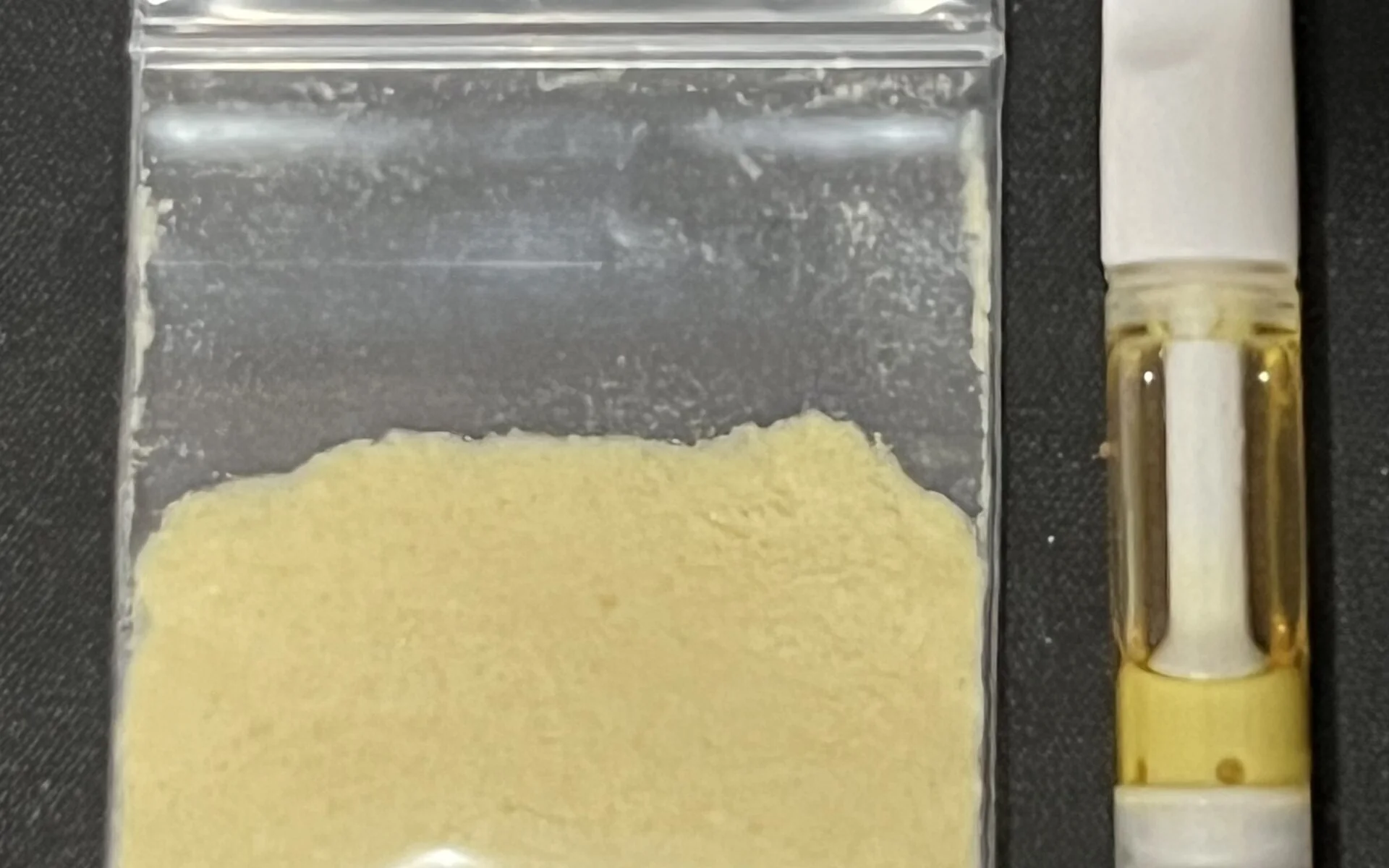
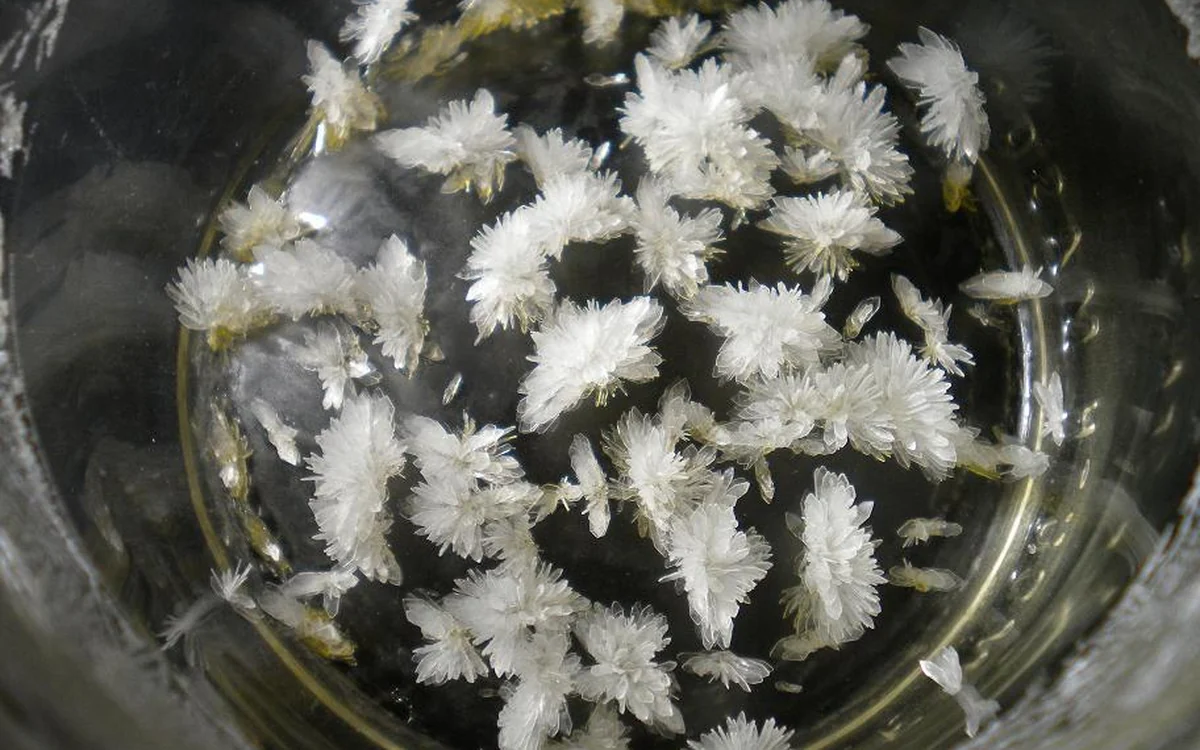
DMT is one of the few substances here where colour genuinely carries information, though not the information people assume. It ranges from white or pale yellow crystal through to a waxy orange or brown, and that range mostly reflects how it was extracted and what it was extracted from.

Forms of DMT
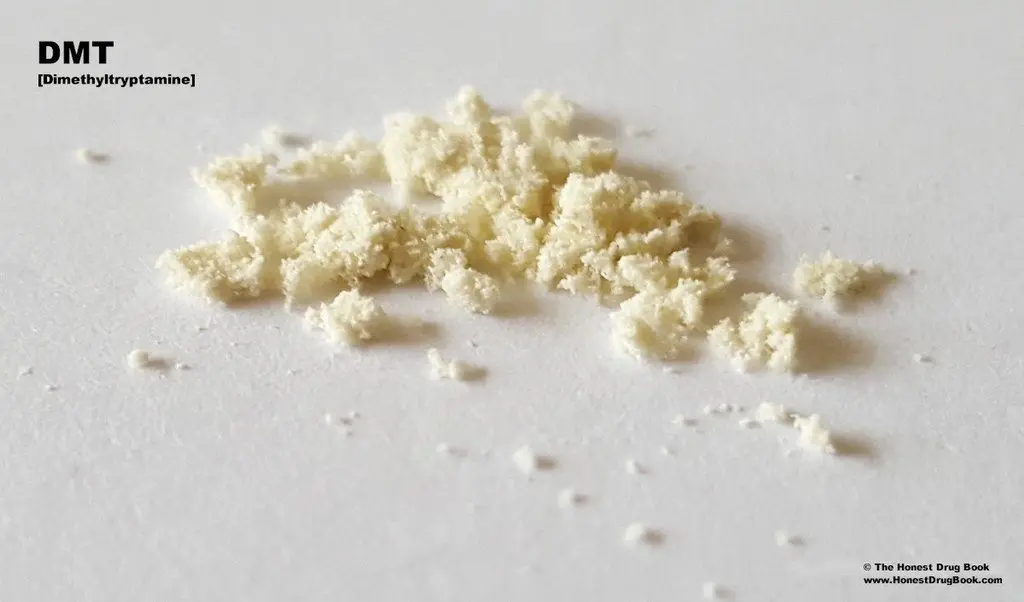
The table below lists the shapes DMT turns up in and what each one actually indicates, which is usually something about processing rather than about quality.
| Form | Looks like | Tells you |
|---|---|---|
| Crystal | White to pale yellow, sometimes needle-like | Cleaner extraction, usually purer |
| Waxy solid | Orange to brown, soft, sticky | Plant fats and oils carried through |
| Powder | Off-white to yellow | Ground crystal or scraped wax |
The colour of DMT
DMT runs from white and clear through yellow to orange and red, and this is the one article in the series where colour genuinely tracks process.
DMT is pulled out of plant material, most often mimosa root bark, and the solvent that carries the DMT carries plant pigments, fats and waxes with it. Those are strongly coloured, so the more of them that come through, the more orange the result. They are also soft. Heavily coloured DMT comes out waxy or gummy, while cleaner material is hard and breaks into shards.
Recrystallisation takes those fats back out. So white and clear mean the material was cleaned more thoroughly, and orange and red mean the extraction stopped earlier. DMT also oxidises on standing, so an old stash darkens on its own without anything having been added to it.
That is a real signal about process, and it is still not a dose and not an identification.
The texture and shine of DMT
Clean DMT is brittle and crystalline and smells strongly, often described as like new shoes or burnt plastic. Waxy material smears rather than shatters. The smell is one of the more distinctive in this series, though it is a familiarity check rather than a test.
Substances that can look like DMT
5-MeO-DMT is the one that matters, because it is a different compound at a very different dose and can look similar. Substitution is less common than with pills, but the consequence of getting it wrong is large.
What DMT appearance can tell you
Colour and texture really do track extraction quality here, which is more than most substances in this series offer. What they cannot do is separate DMT from 5-MeO-DMT, which is the distinction that matters most.
Why appearance cannot identify DMT
Nothing above identifies a substance. Appearance cannot tell you which molecule you have, it cannot tell you how much of it is there, and it cannot see the cuts, because the things added to DMT are chosen partly for looking like it. Two samples that look identical can be different substances at different strengths.
That is not a reason to give up on knowing. It is the reason chemistry exists, and the steps are quick. A reagent answers what the substance is. A testing card separates the sample and shows what else is in there along with a rough percentage. A laboratory analysis gives you an exact figure when the answer has to be exact.
For identity and cuts on your own sample, the first link below. The second puts a number on it. The third is the full laboratory analysis for when an estimate is not enough.
DMT harm reduction guide · Which test do you need? · What a testing card does
What does DMT look like: common questions
Is white DMT stronger than orange?
White usually means a cleaner extraction with fewer plant fats. It is about purity by weight, not about potency per molecule.
Why is mine waxy?
Plant fats came through the extraction. It is common and does not mean it is fake.
Does the smell identify it?
It is distinctive and familiar to people who know it, but it is not a test and it will not separate DMT from 5-MeO-DMT.
Can appearance tell DMT from 5-MeO-DMT?
No, and that is the important one, because the doses are not interchangeable.
Photo: WikiLinuz, CC BY-SA 4.0 via Wikimedia Commons, cropped
No test result can tell you a substance is safe. No substance is 100% safe.This article is published for harm reduction purposes. It does not encourage the use of psychoactive substances and does not replace medical advice.