
What does cannabis look like?
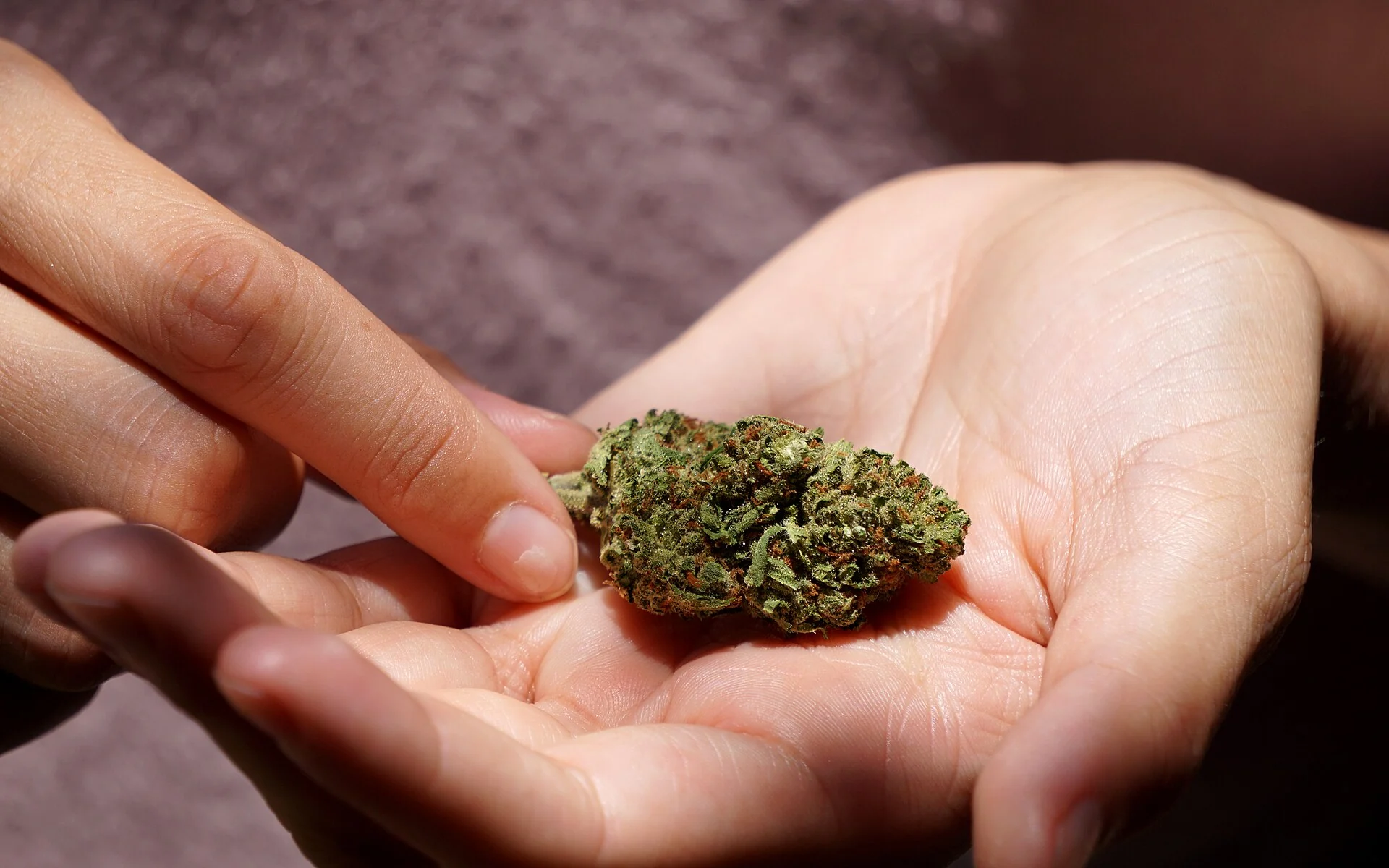
Cannabis is the substance people feel most confident judging by eye, and the confidence is partly earned. You can genuinely see resin, trim quality and mould. What you cannot see is how much THC is there, whether it is THC at all, or whether anything was sprayed onto it.

Forms of cannabis
The table below lists the shapes cannabis turns up in and what each one actually indicates, which is usually something about processing rather than about quality.
| Form | Looks like | Tells you |
|---|---|---|
| Flower | Dense or airy buds, orange hairs, frosted surface | Trim and cure quality, not potency |
| Hash | Pressed brown to black resin block | Can be sieved resin or almost anything |
| Oil or cart | Thin amber to dark liquid | Colour tracks filtering and age, not strength |
| Edible | Any food form | Appearance tells you nothing at all |
The colour of cannabis
Cannabis is the one substance here whose colour comes from the plant rather than from a laboratory, so there is more of it to read and it still says nothing about strength.
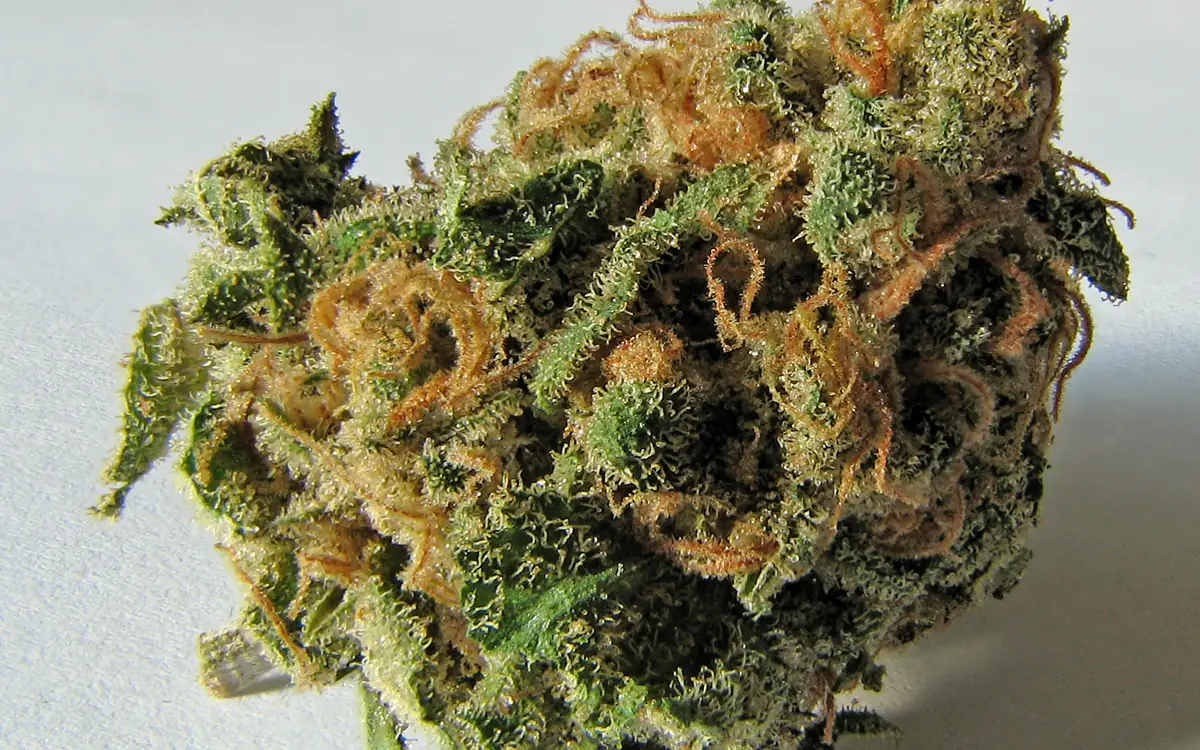
Green is chlorophyll, the same pigment that makes every other leaf green. Orange and red hairs are pistils, and they darken as the flower matures, so they track ripeness rather than potency. The white frost is trichomes, the resin glands that actually hold the cannabinoids. Of everything on this list that is the only part tied to strength, and growers read it through a loupe rather than from across the room.
Purple comes from anthocyanins, the same family of pigments that colours red cabbage and blueberries. Some genetics express them strongly and cold nights bring them out further, so purple is a fact about the strain and the weather. It has been sold as a potency marker for years and it has never been one.
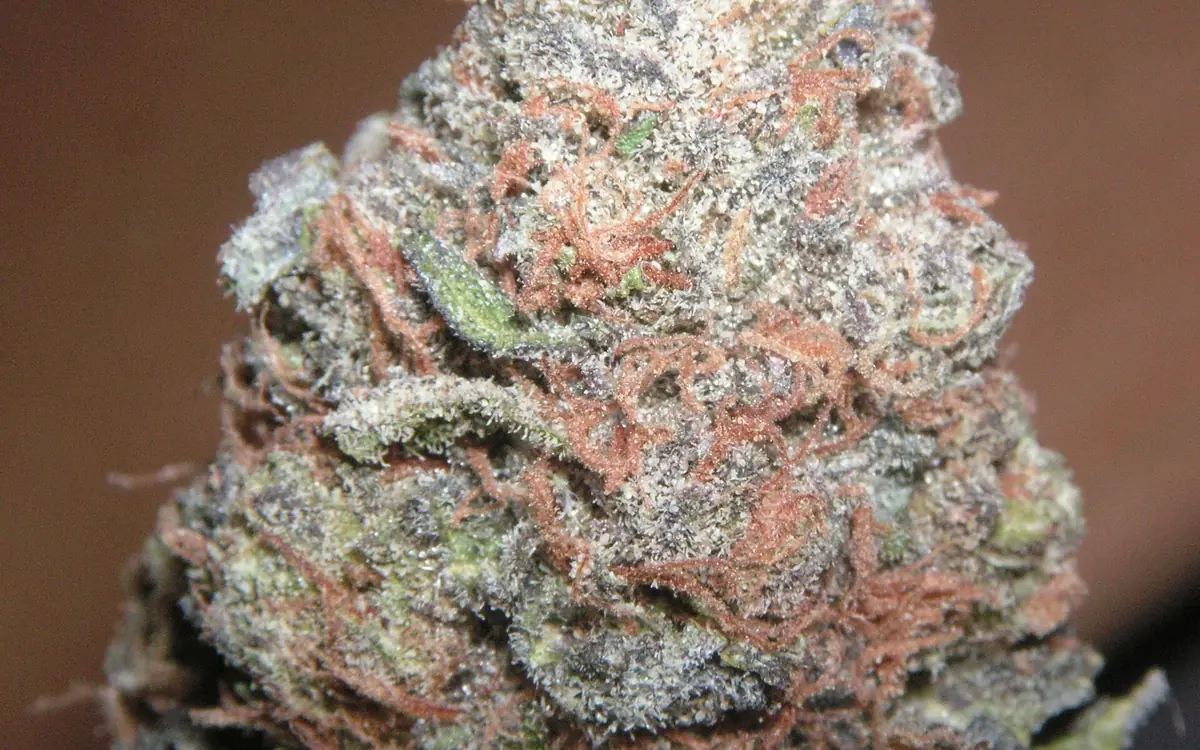
Brown in flower is time. Chlorophyll breaks down while material is dried, cured and then left sitting, so brown points at age and storage rather than at a different plant. In oil, colour tracks oxidation and filtering rather than potency, which is covered separately in our THC oil colour chart.
The texture and shine of cannabis
The frost on good flower is trichomes, which hold the cannabinoids, so a visibly resinous bud is a real signal that resin is present. It is not a measure of how much THC is in that resin, and CBD flower is just as frosty. White fuzz that is powdery rather than crystalline is mould, and that is worth spotting.
Substances that can look like cannabis
The serious one is legal CBD flower or resin sprayed with a synthetic cannabinoid, which looks completely normal because it is real cannabis material. It is covered in depth in our article on fake hash. Appearance cannot detect it, and neither can smell.
What cannabis appearance can tell you
Cannabis rewards looking more than anything else here. Mould, seeds, excessive stem and poor trim are all visible and all worth acting on. The limit is that every one of those is about handling, not about cannabinoid content.
Why appearance cannot identify cannabis
Nothing above identifies a substance. Appearance cannot tell you which molecule you have, it cannot tell you how much of it is there, and it cannot see the cuts, because the things added to cannabis are chosen partly for looking like it. Two samples that look identical can be different substances at different strengths.
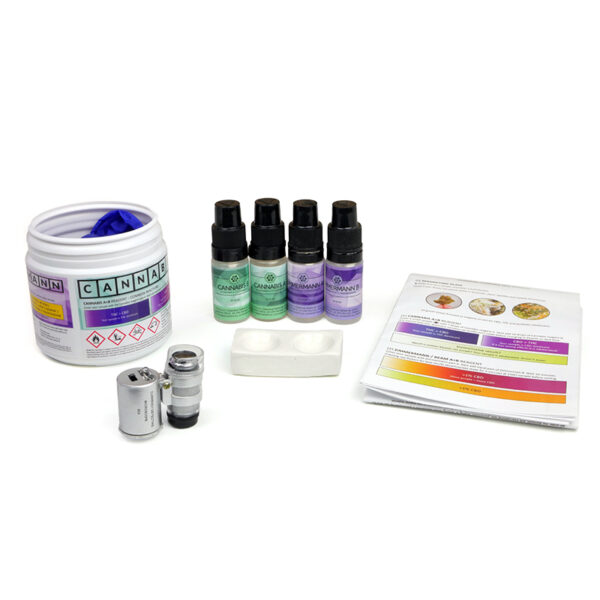
That is not a reason to give up on knowing. It is the reason chemistry exists, and the steps are quick. A reagent answers what the substance is. A testing card separates the sample and shows what else is in there along with a rough percentage. A laboratory analysis gives you an exact figure when the answer has to be exact.
For identity and cuts on your own sample, the first link below. The second puts a number on it. The third is the full laboratory analysis for when an estimate is not enough.
Cannabis harm reduction guide · Which test do you need? · What a testing card does
What does cannabis look like: common questions
Do more trichomes mean more THC?
They mean more resin. CBD flower is equally frosty, so it is a resin signal rather than a THC measurement.
Does purple mean stronger?
No. It comes from genetics and cold temperatures.
Can I see sprayed synthetics?
No. The base is usually real CBD flower or resin, so it looks entirely normal.
What about white fuzz?
If it is powdery rather than crystalline it is likely mould, and that is a genuine reason not to smoke it.
Photo: elsaolofsson, CC BY 2.0 via Wikimedia Commons, cropped
No test result can tell you a substance is safe. No substance is 100% safe.This article is published for harm reduction purposes. It does not encourage the use of psychoactive substances and does not replace medical advice.