
What does 3-MMC look like?
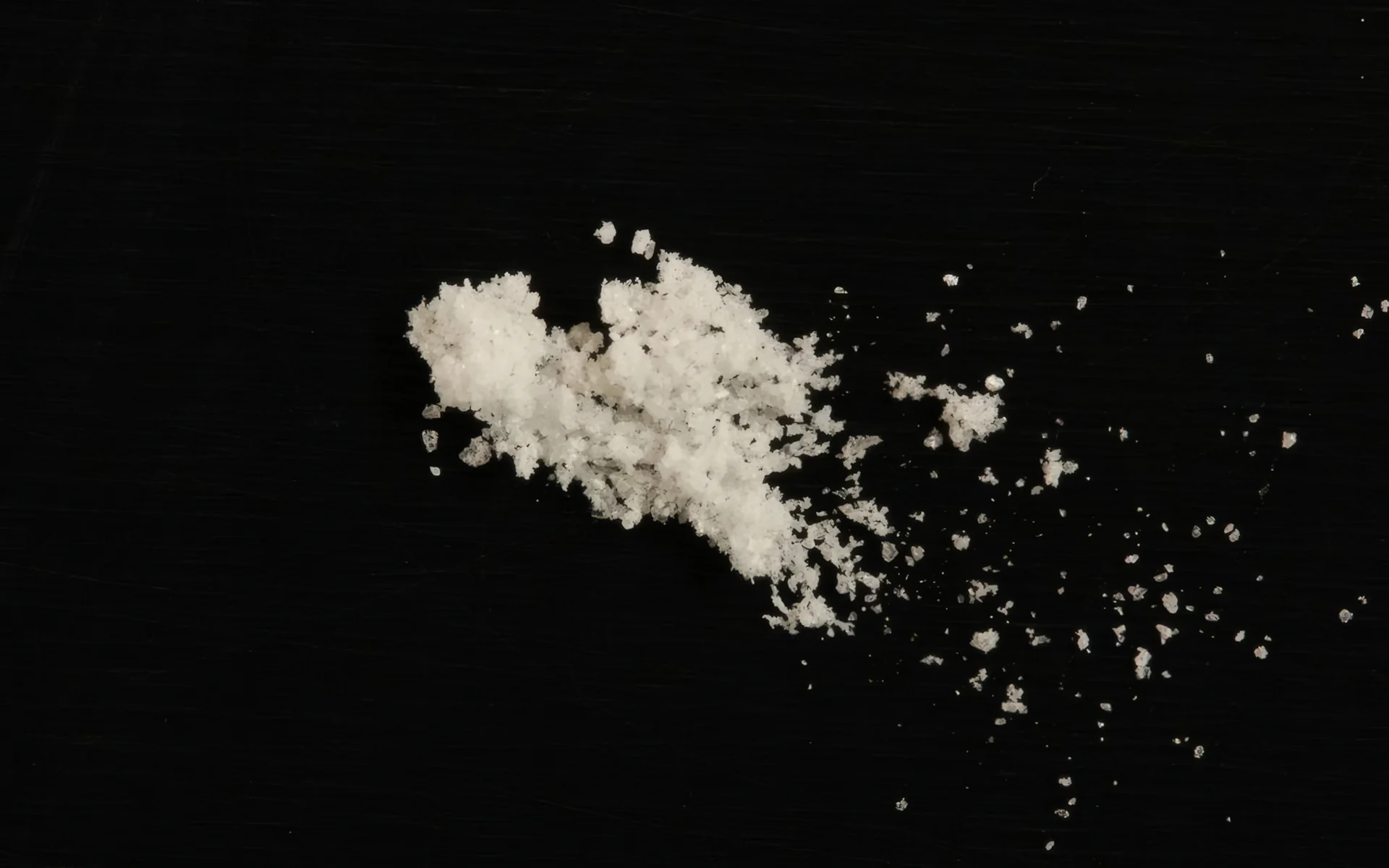
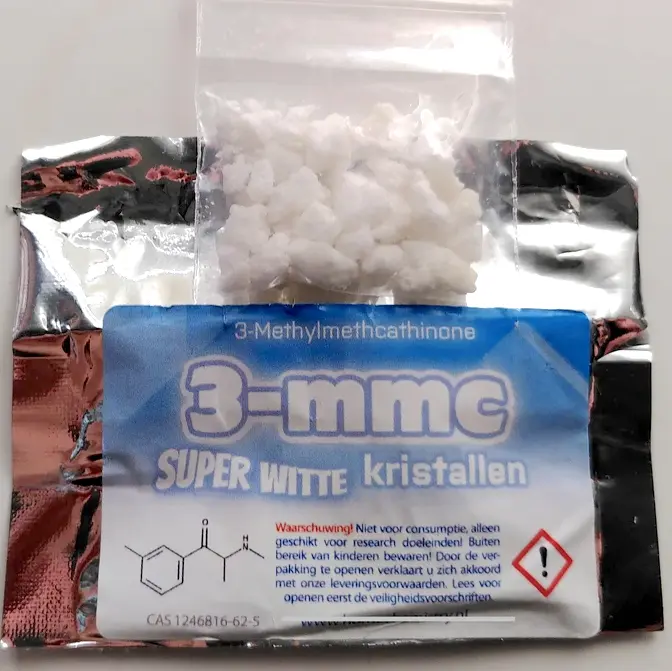
3-MMC and its relatives arrive as shiny crystal or as fine powder, usually white, sometimes with a yellow tint. The practical problem is not that it looks like nothing else. It is that the whole cathinone family looks the same as itself, and the family keeps changing as each member is banned.
Forms of 3-MMC
The table below lists the shapes 3-MMC turns up in and what each one actually indicates, which is usually something about processing rather than about quality.
| Form | Looks like | Tells you |
|---|---|---|
| Crystal | Shiny, irregular, white to off-white | Recrystallised, nothing about which cathinone |
| Fine powder | White, slightly clumping, hygroscopic | Ground crystal, absorbs moisture |
| Damp clumps | Caked together | Moisture, which also adds weight |
The colour of 3-MMC
White is normal and a yellow tint usually points at synthesis residue rather than a different substance. Because these compounds are hygroscopic they pull water from the air, so material that was dry can cake in the bag without anything having changed chemically.
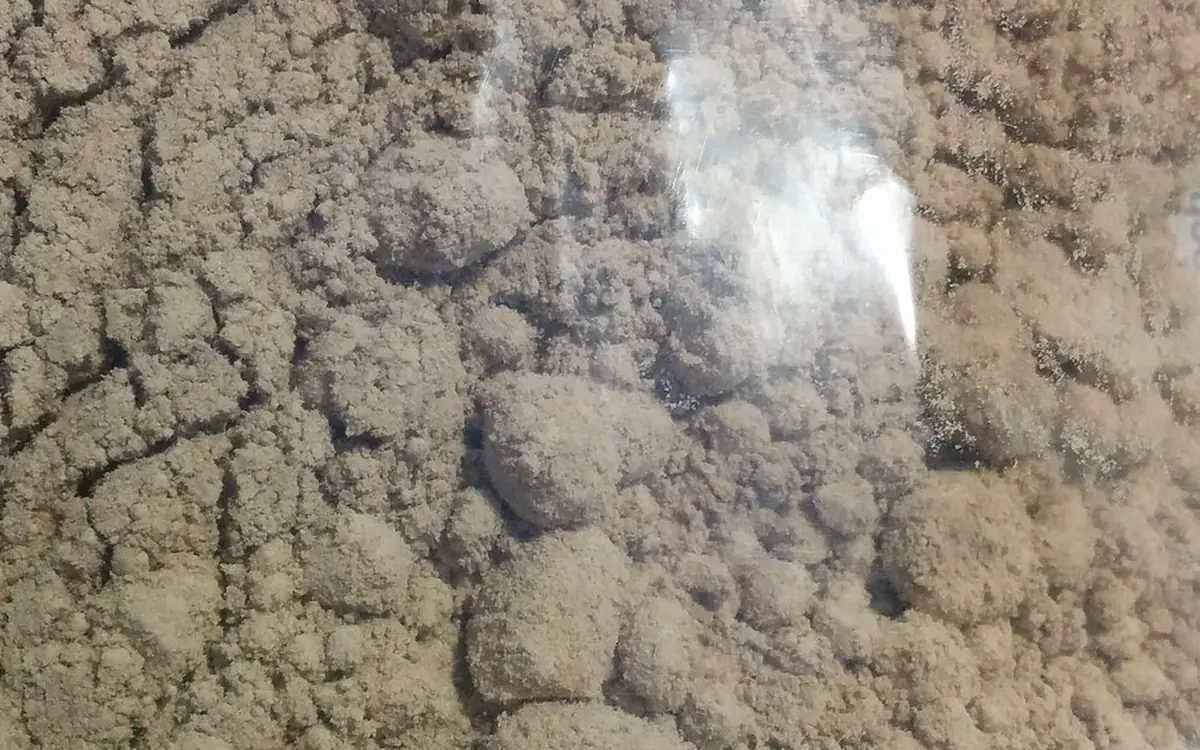
Colour here comes from how the material was made, not from what it is. Cathinones are built through a bromoketone intermediate, and that intermediate and its breakdown products are yellow through to brown. A khaki or tan powder was washed less than a white one. It was not made from a different molecule, and the colour will not tell you which member of the family you are holding.
The texture and shine of 3-MMC
The crystal is shiny and irregular and grinds easily. It clumps because it draws in moisture, because damp material weighs more. There is nothing in the texture that separates one cathinone from another.
Substances that can look like 3-MMC
This is the core issue. 3-MMC, 4-MMC, 3-CMC, 2-MMC and newer arrivals are visually identical, sold interchangeably, and often mislabelled without anyone intending to deceive, because the seller does not know either. They are not equivalent doses.
What 3-MMC appearance can tell you
Clumping tells you about moisture and therefore about weight. That is essentially the whole list. Which cathinone you are holding is invisible, and it is the only question that matters here.
Why appearance cannot identify 3-MMC
Nothing above identifies a substance. Appearance cannot tell you which molecule you have, it cannot tell you how much of it is there, and it cannot see the cuts, because the things added to 3-MMC are chosen partly for looking like it. Two samples that look identical can be different substances at different strengths.
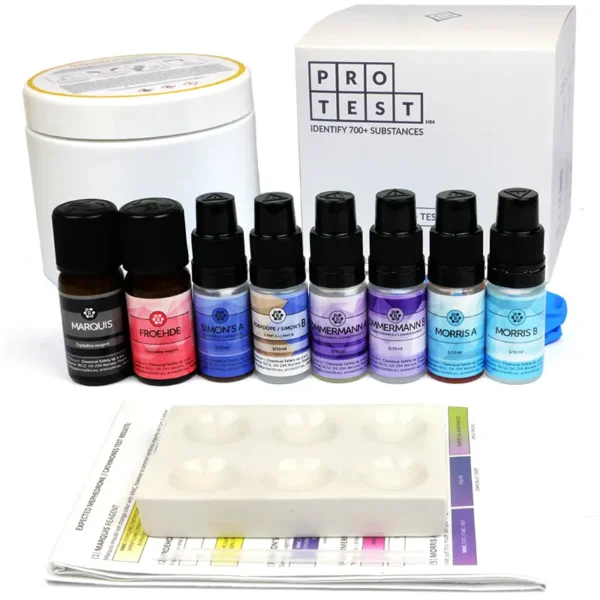
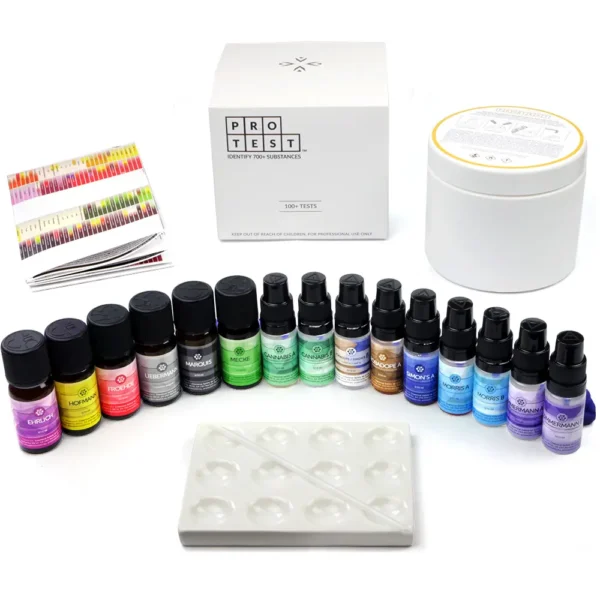
That is not a reason to give up on knowing. It is the reason chemistry exists, and the steps are quick. A reagent answers what the substance is. A testing card separates the sample and shows what else is in there along with a rough percentage. A laboratory analysis gives you an exact figure when the answer has to be exact.
For identity and cuts on your own sample, the first link below. The second puts a number on it. The third is the full laboratory analysis for when an estimate is not enough.
3-MMC harm reduction guide · Which test do you need? · What a testing card does
What does 3-MMC look like: common questions
Can I tell 3-MMC from 4-MMC by eye?
No. They are visually identical, and so are the newer members of the family.
Why does it clump?
These compounds absorb water from the air. It is normal and it means you are partly weighing moisture.
Is yellow bad?
Usually synthesis residue rather than a different substance. It is not a strength scale.
Does shiny crystal mean pure?
It means it recrystallised. It says nothing about which cathinone it is.
Photo: saferparty.ch
No test result can tell you a substance is safe. No substance is 100% safe.This article is published for harm reduction purposes. It does not encourage the use of psychoactive substances and does not replace medical advice.