Cocaine turns up as hard shiny flakes, as chalky chunks, and as a fine powder that ranges from bright white to faintly yellow or pink. All of those can be strong, all of them can be mostly cut, and the version most people meet has been through several hands that each changed how it looks.
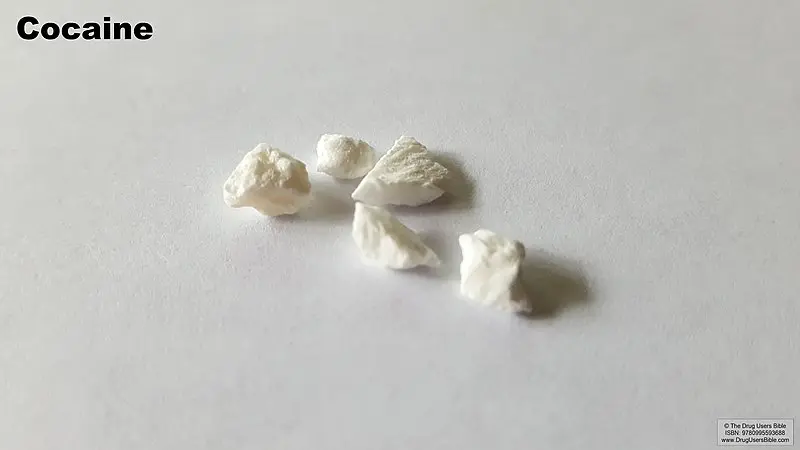
Uneven off-white chunks. The shape comes from how the block broke, not from how pure it is.
The table below lists the shapes cocaine turns up in and what each one actually indicates, which is usually something about processing rather than about quality.
Forms of cocaine, and what each one does and does not indicate
Form
Looks like
Tells you
Flake or shard
Hard, glassy, breaks with a sharp edge
Pressed and broken from a block, nothing more
Chunk or rock
Chalky, crumbles under pressure
Often recompressed powder, sometimes crack
Fine powder
Loose, sometimes clumping
The most worked form, and the easiest to cut
The colour of cocaine
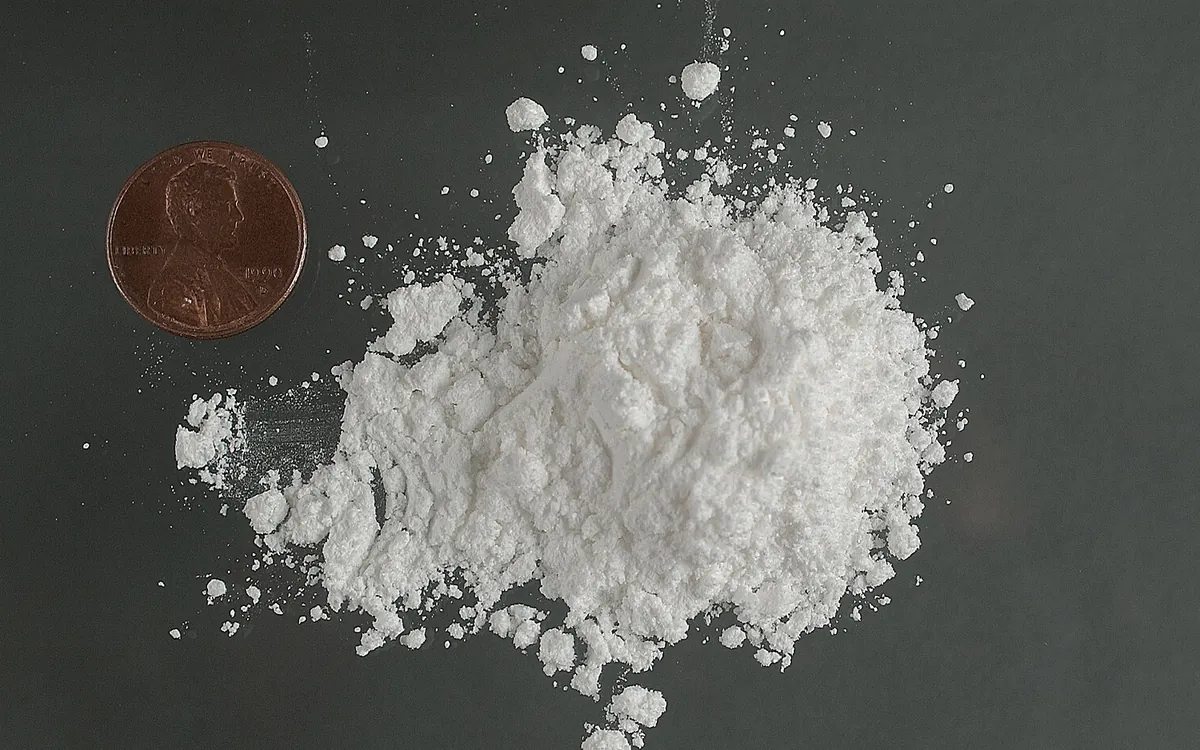
Cocaine hydrochloride is white, and so is almost everything used to cut it. Levamisole, phenacetin, benzocaine and lidocaine are all white powders, which is the first reason colour is a poor guide here: a bag that is half cut still looks exactly like cocaine.
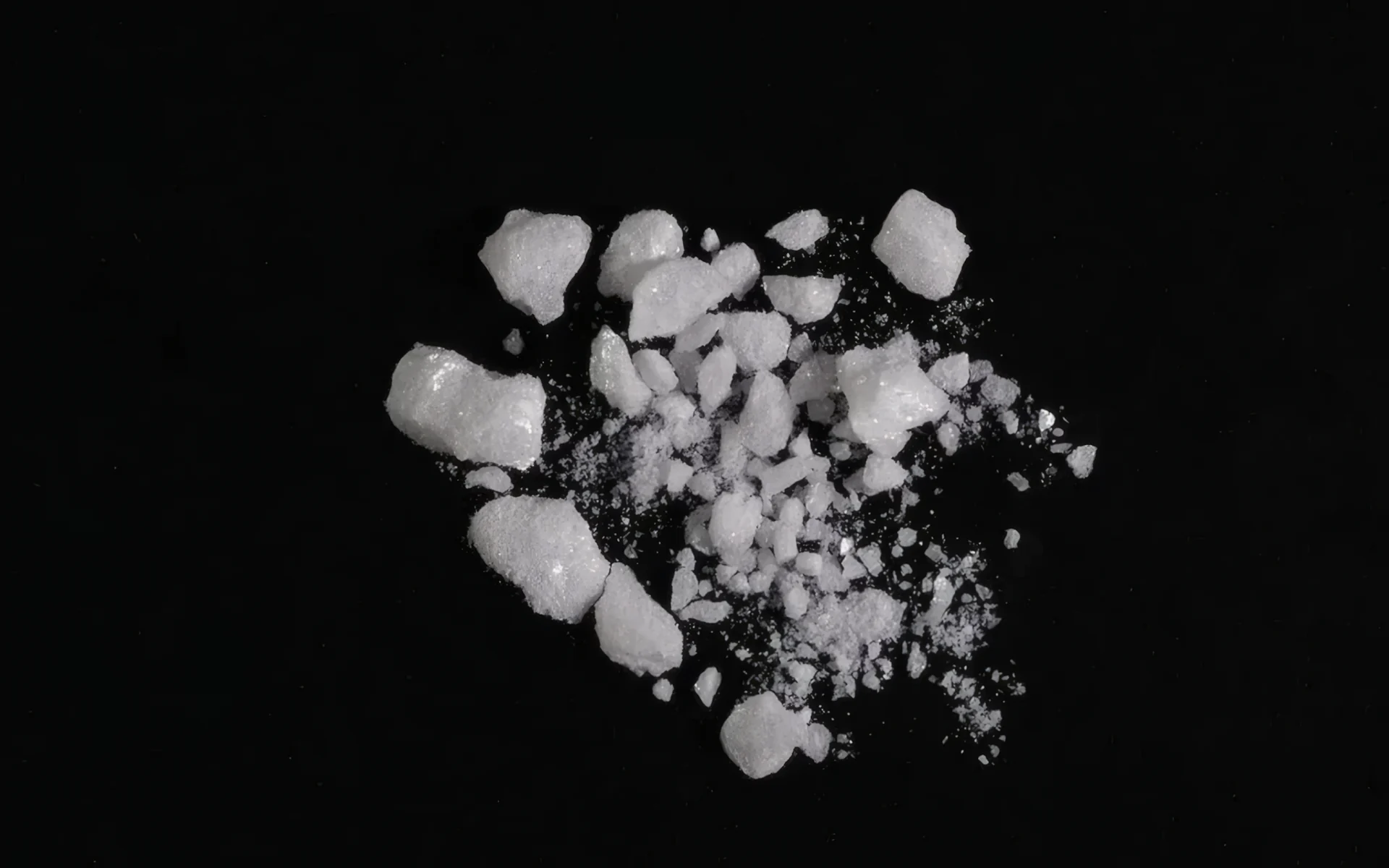
Cocaine hydrochloride. Levamisole, phenacetin and benzocaine all look like this too, so a half-cut bag still looks right. Photo: US Drug Enforcement Administration, public domain.
Where colour does appear it comes from the refining rather than from the cut. Cocaine is pulled out of leaf into a paste first, and that paste is beige to brown. Every stage of purification takes more of the colour out, so a yellow or cream tint means plant material or solvent that survived the last step. Acetone and ether are used along the way, and material that was not properly dried keeps both a faint yellow and a solvent smell.
Pink is the exception, because pink cocaine usually is not cocaine. Tusi is pink powder named after the sound of 2C-B, and it commonly contains neither 2C-B nor cocaine, but ketamine and cathinones with dye added. The pink there is a brand name you can see.
People read pearly flake as a grade. The shine comes from how the material was crystallised and pressed, so it tells you about the last person who handled it rather than about how much cocaine is in it.
The texture and shine of cocaine
The shine people look for is real but it is a physical property, not a chemical one. Cocaine compresses into a glassy solid, so a hard flake with a reflective break does tell you the material was compressed rather than whipped up from powder. It does not tell you what was compressed. Benzocaine and other caines recrystallise into bright shiny flakes of their own, which is exactly why they are used.
Substances that can look like cocaine
Levamisole, phenacetin, benzocaine, lidocaine, procaine and caffeine are all white or near white at the amounts involved, and several of them are chosen because they mimic the appearance or the numbing. A sample can be almost entirely cut and still look correct.
What cocaine appearance can tell you
Appearance does carry a little real information. Visible colour separation, damp clumping or a strong chemical smell are all worth noticing. So is an oily film, which suggests poor drying. These tell you something was done badly, not what the sample is.
Why appearance cannot identify cocaine
Nothing above identifies a substance. Appearance cannot tell you which molecule you have, it cannot tell you how much of it is there, and it cannot see the cuts, because the things added to cocaine are chosen partly for looking like it. Two samples that look identical can be different substances at different strengths.
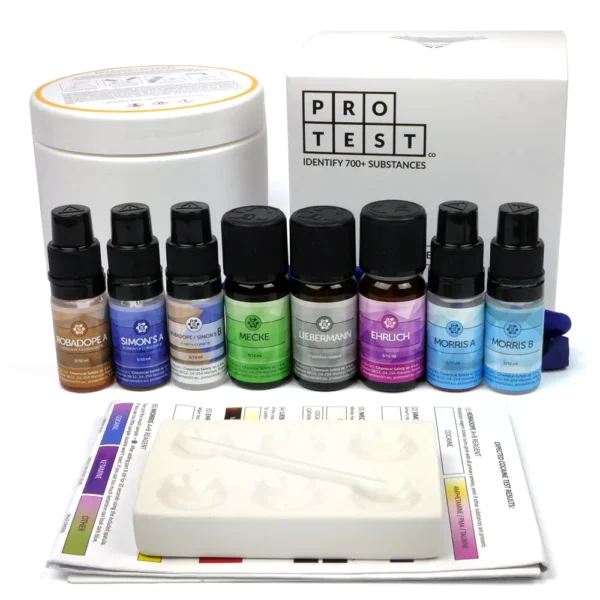
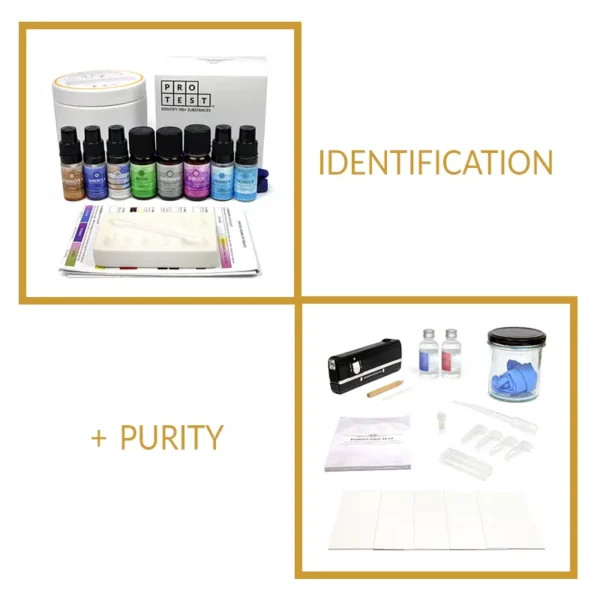
That is not a reason to give up on knowing. It is the reason chemistry exists, and the steps are quick. A reagent answers what the substance is. A testing card separates the sample and shows what else is in there along with a rough percentage. A laboratory analysis gives you an exact figure when the answer has to be exact.
For identity and cuts on your own sample, the first link below. The second puts a number on it. The third is the full laboratory analysis for when an estimate is not enough.
No test result can tell you a substance is safe. No substance is 100% safe.This article is published for harm reduction purposes. It does not encourage the use of psychoactive substances and does not replace medical advice.