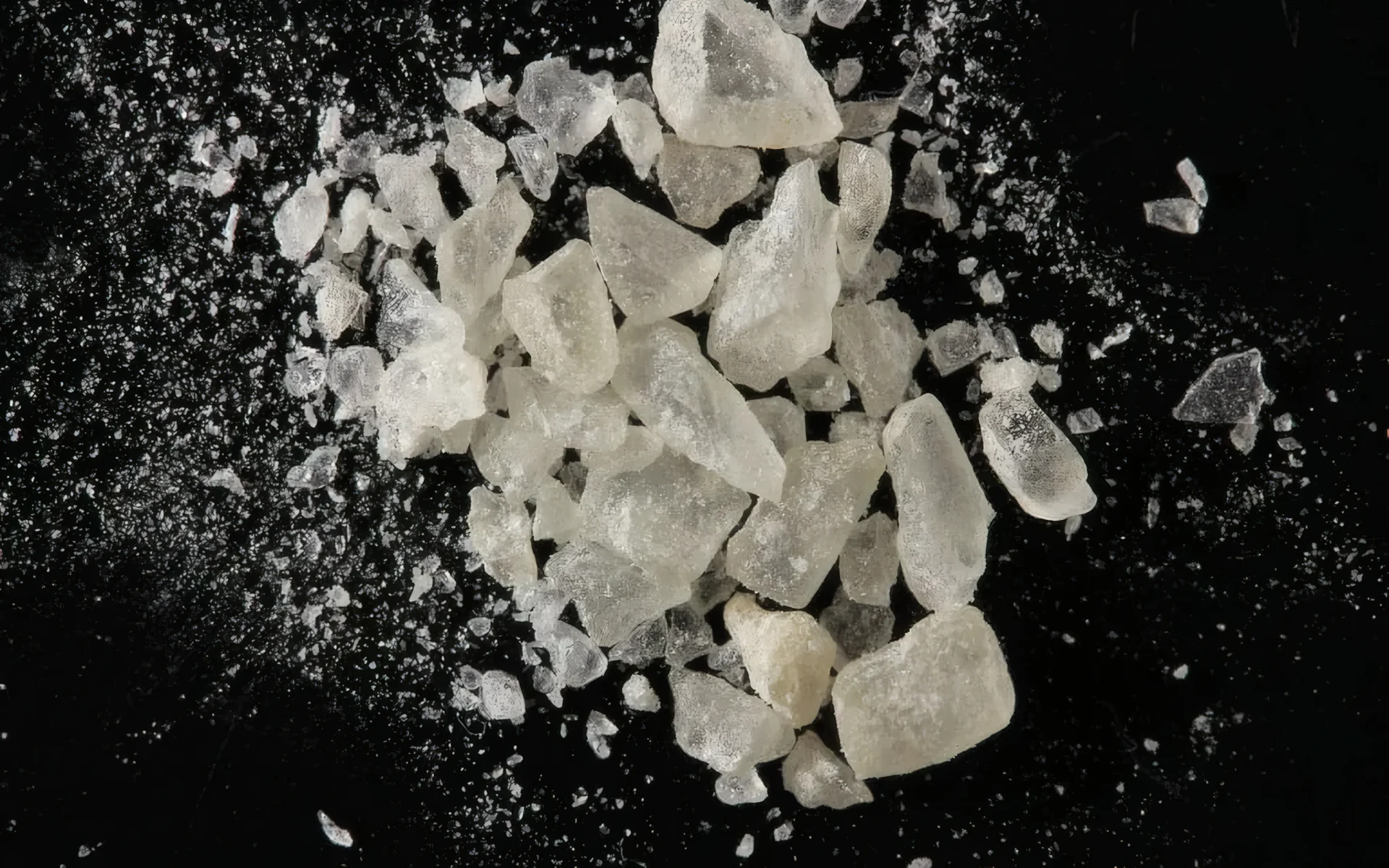
MDMA reaches people as pressed pills in every colour and shape a press can make, as chunky off-white or brown crystals, and as powder. The pill format is the problem: the colour, the logo and the shape are decided by whoever owned the press, and they carry no information about what is inside.
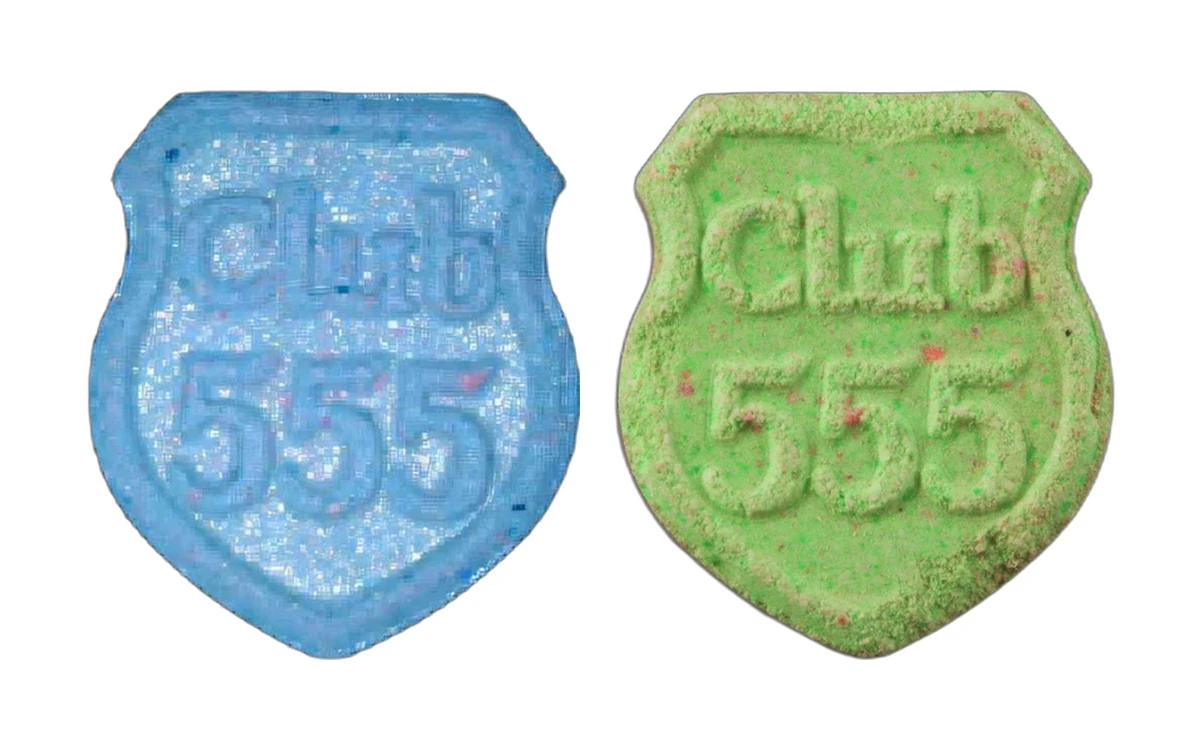
Two Club 555 pills from the same press. Both are PMMA, not MDMA. PMMA comes on slowly, so people take more, and it is dangerous at amounts MDMA is not. A reagent tells them apart.
The table below lists the shapes MDMA turns up in and what each one actually indicates, which is usually something about processing rather than about quality.
Forms of MDMA, and what each one does and does not indicate
Form
Looks like
Tells you
Pressed pill
Any colour, any logo, often shield or animal shapes
Tells you about the press, nothing else
Crystal
Chunky, off-white to brown or grey, glassy edges
Less processed, still says nothing about dose
Powder
Loose, white to brown
Could be crushed crystal or could be anything
The colour of MDMA
MDMA hydrochloride is white when it is clean. Pills are a separate question, because a pill is dyed on purpose and the colour was chosen by whoever owned the press. Crystal and powder are where colour means anything at all, and it means less than most people think.
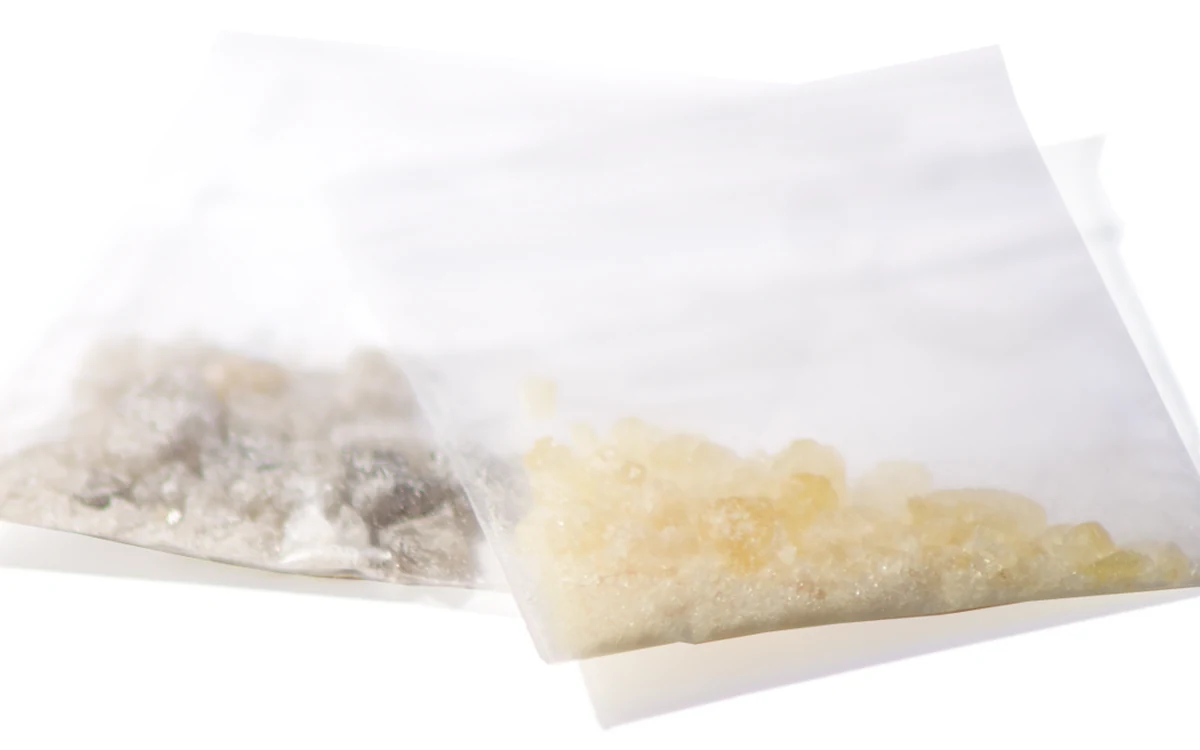
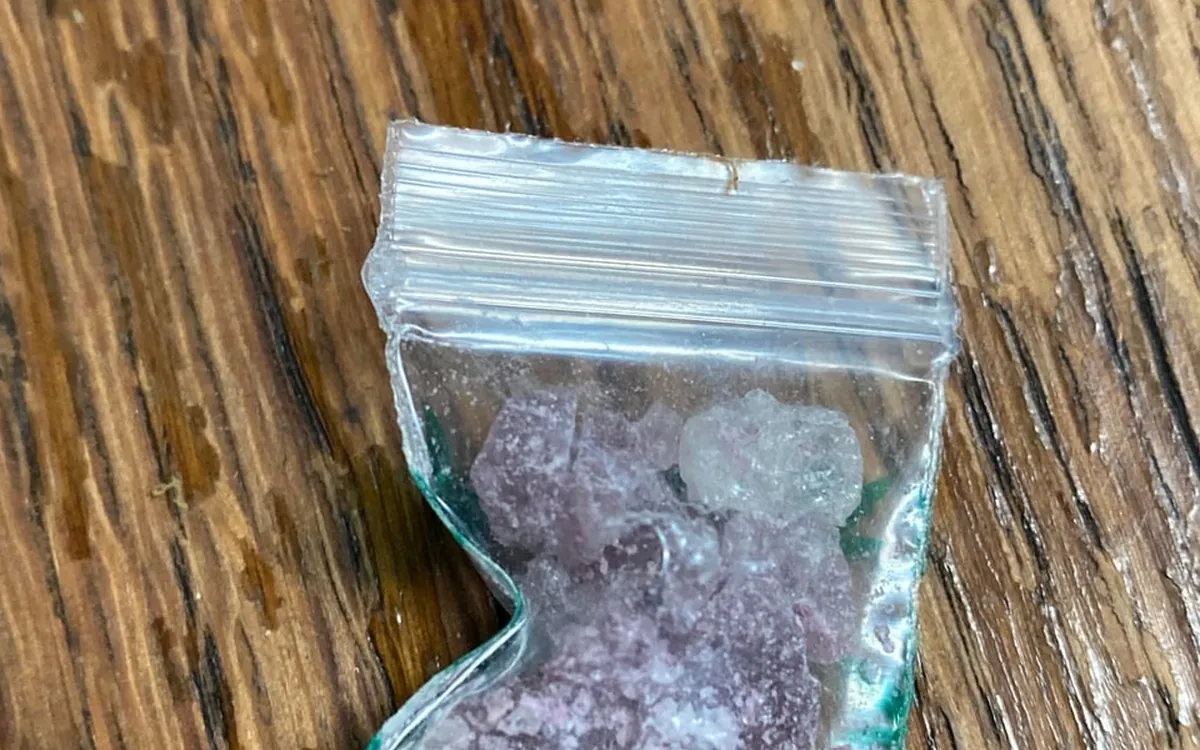
Two bags sold as the same thing. Neither colour is a grade, and neither one predicts what is inside.
Brown, tan and yellow all come from the same place. MDMA is made from PMK, and the route leaves behind oils, condensation products and oxidation products that are strongly coloured even in tiny amounts. When the salt crystallises out of a mixture that was not fully cleaned, those colours crystallise with it. Material also darkens in storage, because the same compounds keep oxidising in the bag.
So brown means the batch was washed less thoroughly than a white one. It does not mean weak. A trace of a strongly coloured impurity will colour a whole gram, and the rest of that gram can still be MDMA.
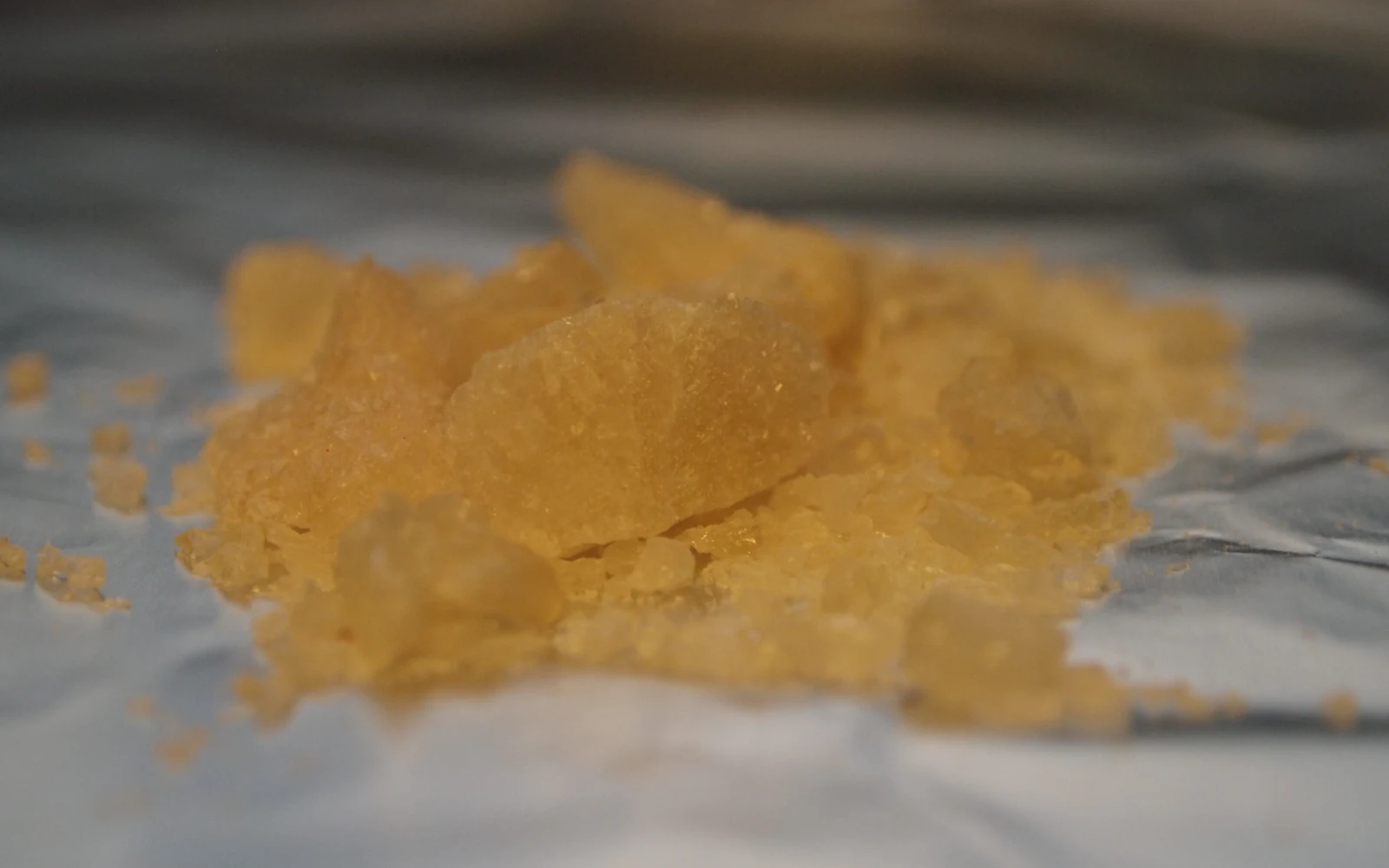
Tan crystal. The colour comes from the synthesis, not from a cut, and it is not a purity scale. Photo by Thawt Hawthje, CC BY 2.0.
Purple, green and blue are a different question, and the honest answer is that nobody can give you a clean one.
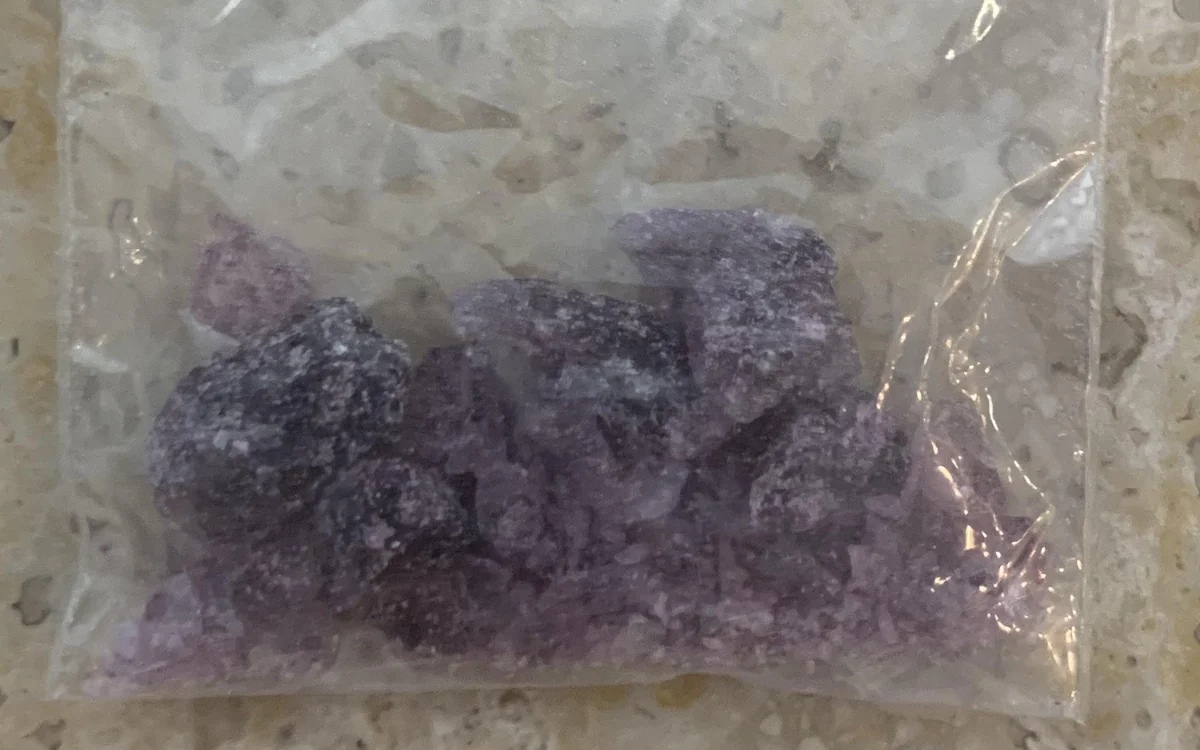
Purple molly. Sold as a premium grade, and there is no measurement behind the grade. Photo from Reddit.
The Vancouver Island Drug Checking Project runs mass spectrometry on everything brought to it. Roughly a quarter of its MDMA samples are purple-ish. Its instruments cannot separate added dye from an impurity, the purple samples share no impurity in common, and the service reports no relationship between colour and purity.
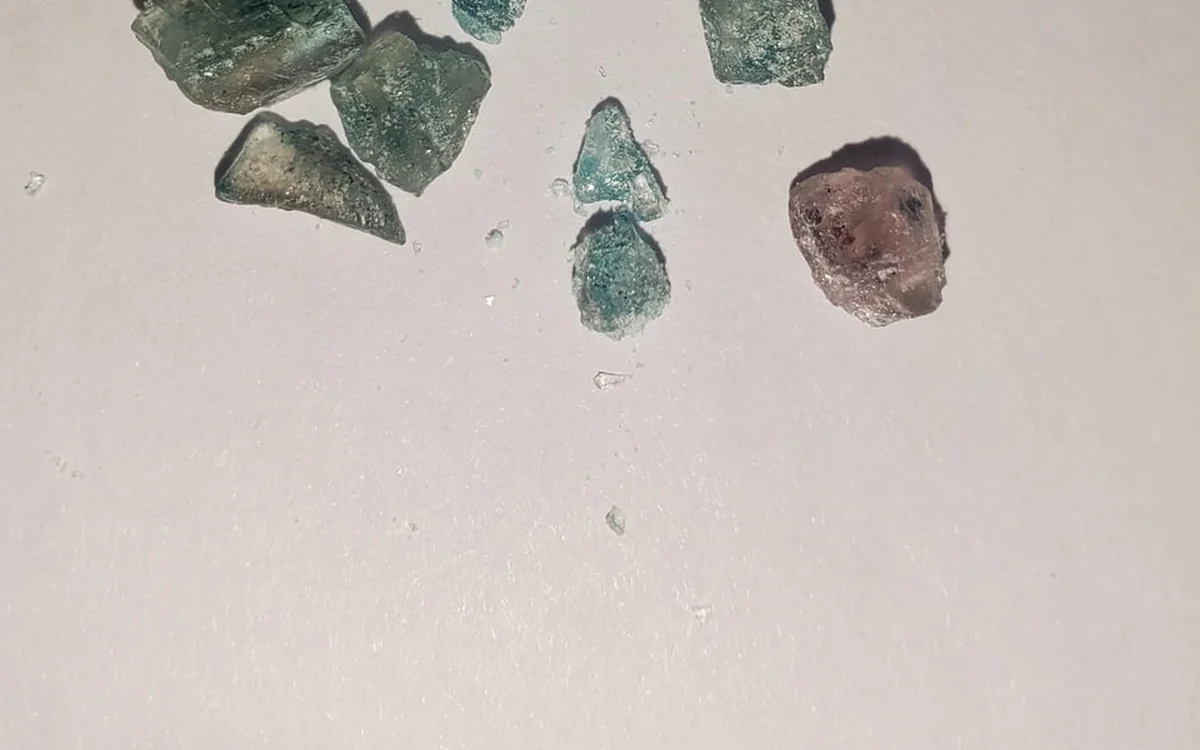
Green and blue have a more specific story, and it runs against the usual assumption. People who wash and recrystallise their own material report that purple crystal turns green or blue after repeated acetone and isopropanol washes. A mixed colour is made of more than one compound, washing takes out whichever one dissolves first, and what stays behind is the rest of the colour. On that reading, green and blue crystal has been cleaned more than the purple it started as, not less.
Purple and teal in the same bag. This is what the washing reports describe, caught halfway. Photo from Reddit.Shards from one batch. Blue green next to brown purple, and no way to rank them by eye. Photo from Reddit.
Those are user reports rather than laboratory work, so treat the mechanism as the best reading available and not as a settled fact. What it does rule out is the simple version, the one where a stronger colour means a dirtier batch.
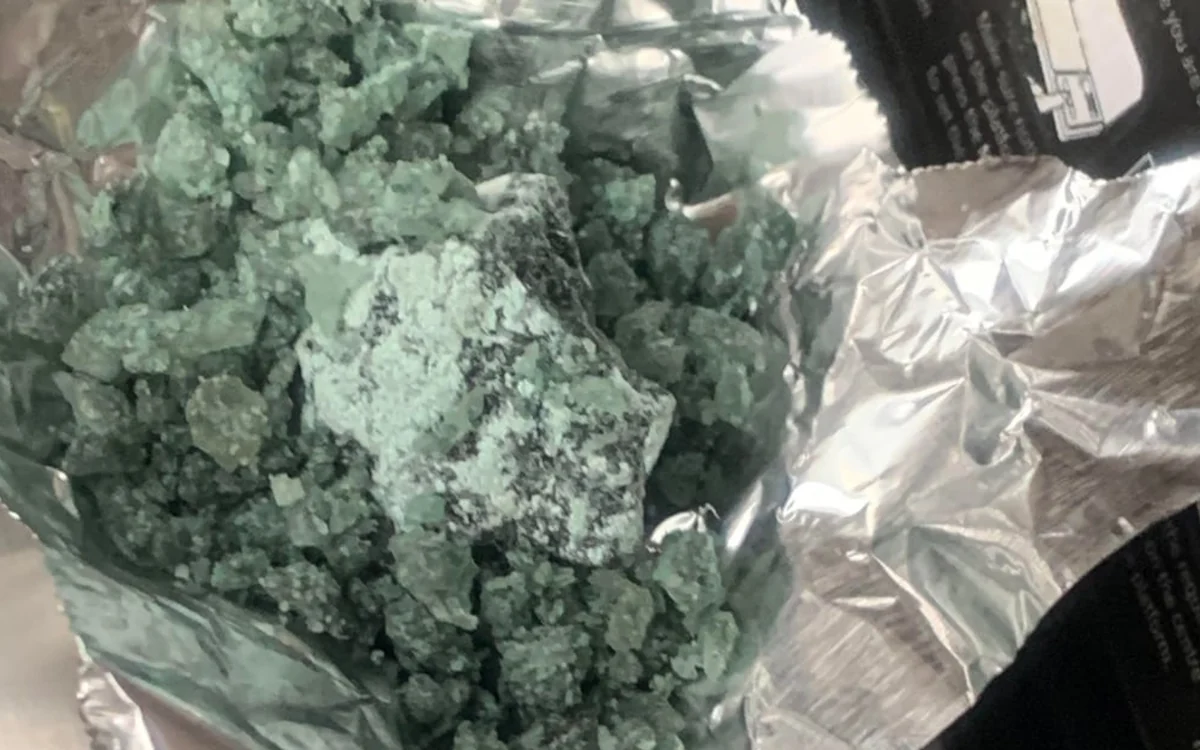
The far end of the green range. Reagent tested positive for MDMA, which colour could never have told anyone. Photo from Reddit.
Dye is the other half of the answer and it never goes away. Anyone can colour a crystal, and a colour with a story attached sells better than one without. That is the whole economy behind purple molly: a premium grade with no measurement under it.
The same service reports something that matters more than the colour. Over two years, 7.4% of samples sold as MDMA held another active substance, most often MDA, and 12.2% held no MDMA at all. Those are their samples rather than yours, and the only way your bag joins a number like that is if someone looks at it.
The texture and shine of MDMA
Crystal MDMA breaks with a glassy edge and smells faintly of liquorice or sassafras to some people. That smell is a genuine hint, though it is subjective and absent often enough to be useless as a test. Pills tell you even less: a clean press with sharp edges is a sign of equipment, not of contents.
Substances that can look like MDMA
The photograph above is the point. Pills sold as MDMA have contained PMMA, cathinones, amphetamine, caffeine and nothing at all, in presses indistinguishable from the real thing. Because a press stamps whatever powder it is given, two pills with the same logo from the same batch can differ.
What MDMA appearance can tell you
Appearance gives you one genuinely useful thing on pills, which is size. A large, heavy pill can hold a very large dose, and the strongest pills in Europe are physically bigger than they were a decade ago. That is a reason to weigh and divide, not a reason to trust the stamp.
Why appearance cannot identify MDMA
Nothing above identifies a substance. Appearance cannot tell you which molecule you have, it cannot tell you how much of it is there, and it cannot see the cuts, because the things added to MDMA are chosen partly for looking like it. Two samples that look identical can be different substances at different strengths.
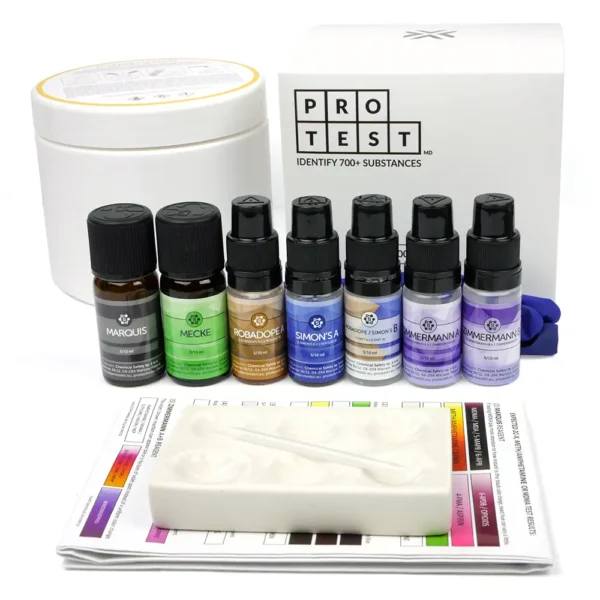
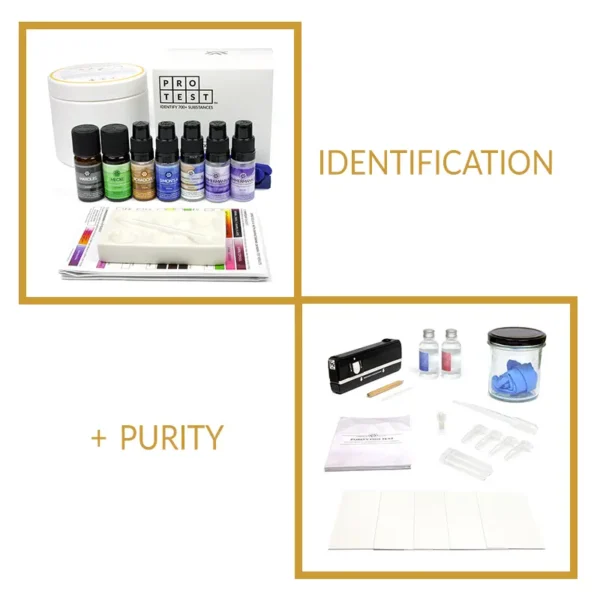
That is not a reason to give up on knowing. It is the reason chemistry exists, and the steps are quick. A reagent answers what the substance is. A testing card separates the sample and shows what else is in there along with a rough percentage. A laboratory analysis gives you an exact figure when the answer has to be exact.
For identity and cuts on your own sample, the first link below. The second puts a number on it. The third is the full laboratory analysis for when an estimate is not enough.
No. It is dye chosen for branding. The same logo in two colours can be the same batch, and the same colour can be two different substances.
Does brown crystal mean dirty MDMA?
Not usually. Brown often comes from the synthesis itself. It is not a purity scale.
Is purple molly stronger or purer?
There is no evidence for it. A drug checking service that has analysed thousands of samples finds no relationship between colour and purity, and cannot tell dye from impurity in the purple ones.
Do sharp crystals mean it is real?
No. Several cathinones form similar crystals, and some are sold deliberately as MDMA.
Is a bigger pill stronger?
Often it holds more, so dividing matters. But size tells you about volume, not about which substance is in it.
No test result can tell you a substance is safe. No substance is 100% safe.This article is published for harm reduction purposes. It does not encourage the use of psychoactive substances and does not replace medical advice.